





















Gala Lighting Design in San Diego: A Production Guide for Nonprofit Fundraisers
A gala is not a party with a speech attached. It is a fundraising instrument, and every production decision either supports the ask or works against it. Lighting is the element planners most often treat as decor when it is actually infrastructure — it controls where the room looks, how the program reads on camera, and whether the paddle raise feels like a moment or an interruption.
If you are planning a fundraiser at a hotel ballroom, museum, or estate venue this season, here is how experienced production teams approach gala lighting design in San Diego, and where budget actually moves the needle.
Start With the Run of Show, Not the Color Palette
Most gala lighting conversations begin with “we want blush and gold.” That is a useful input, but it is the wrong starting point. The first document your lighting designer should see is the run of show.
A typical fundraiser has at least four distinct lighting states: guest arrival and cocktails, seated dinner, the formal program, and the after-party or dessert reception. Each one has a different job. Arrival lighting should make the room photograph well while people are still standing and networking. Dinner lighting needs enough table illumination that guests can read a menu and see their tablemates without the room feeling lit like a conference breakout. Program lighting has to pull every eye to the stage and hold it there. After-party lighting gets to be loud.
Those four states are programmed in advance and called by a technician during the event. That single decision — having someone actively running lighting rather than setting it once and walking away — is the clearest dividing line between a gala that feels produced and one that feels rented.
Stage and Podium Lighting Is Where Donations Are Won
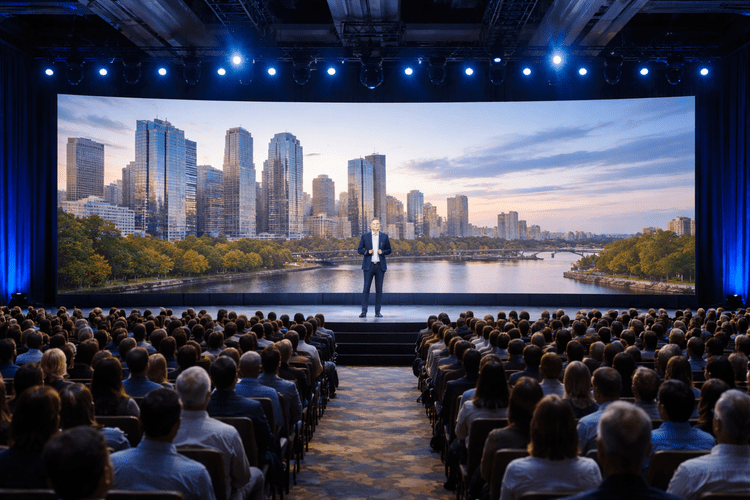
Stage design ranks among the top factors in how attendees perceive overall event quality, and the stage is where your executive director, your honoree, and your auctioneer will stand. Underlighting that area is the most expensive mistake in the room.
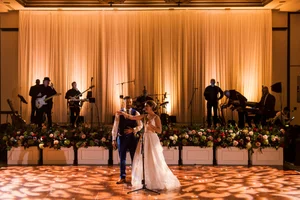
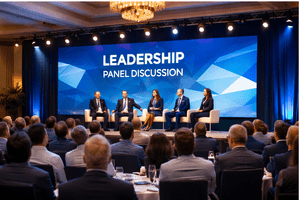
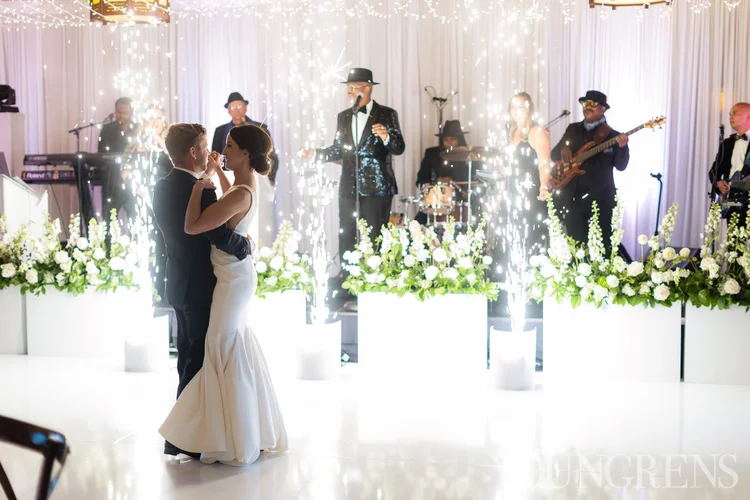
At minimum, a gala stage needs front key light warm enough to render skin tones naturally, a backlight or hair light to separate speakers from the backdrop, and a controlled wash on any scenic or branded element behind them. Hotel ballroom house lighting almost never accomplishes this. House downlights typically come straight down from the ceiling, which puts speakers in raccoon-eye shadow and makes every photo and video clip unusable.
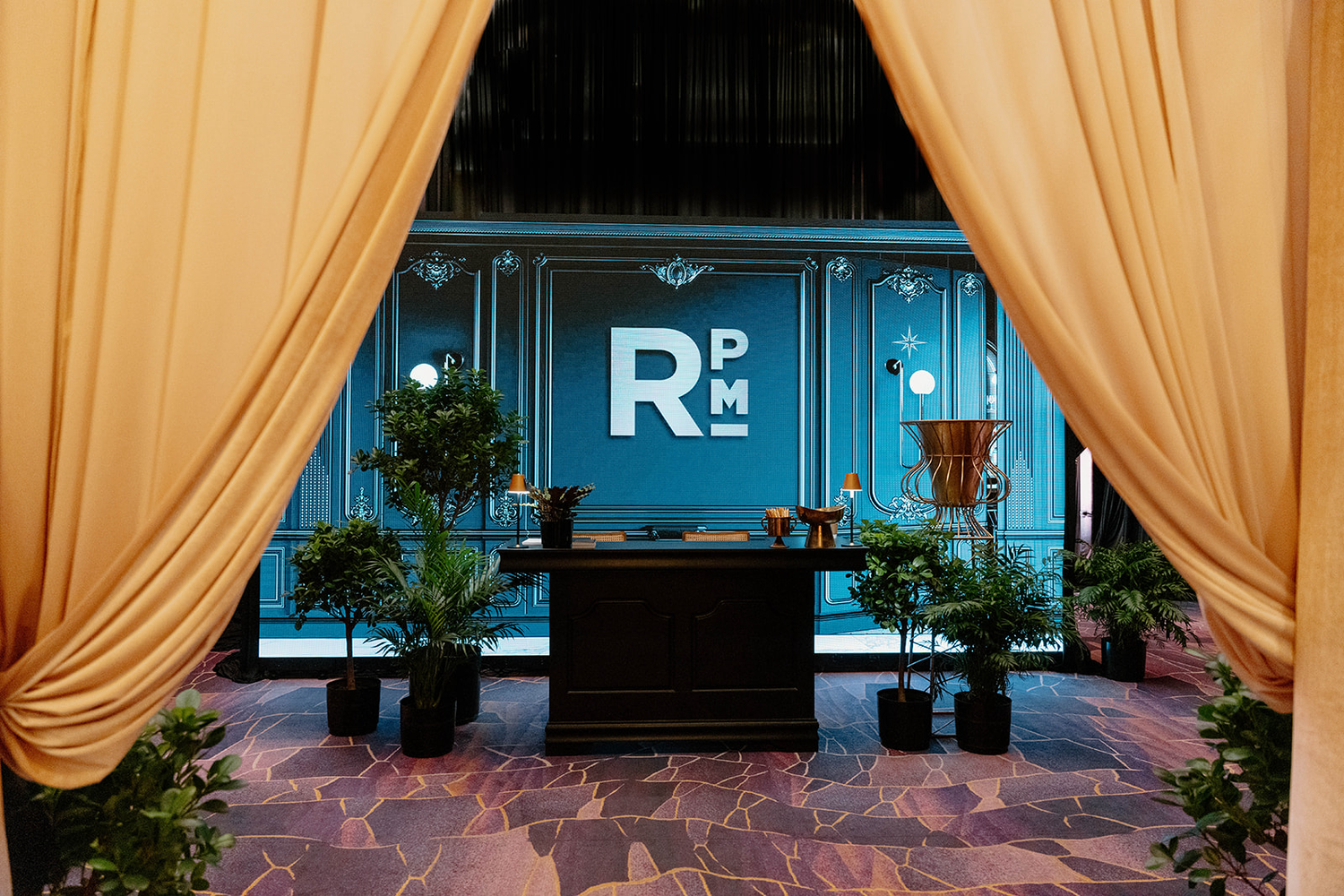
Pair that with a gobo projection of your organization’s logo on the stage backdrop or a side wall, and you have brand presence in every photo taken all night without printing a single banner.
Uplighting Does the Heavy Lifting on Room Transformation
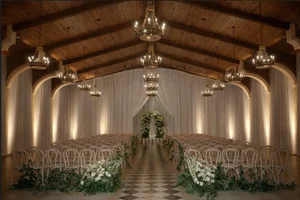
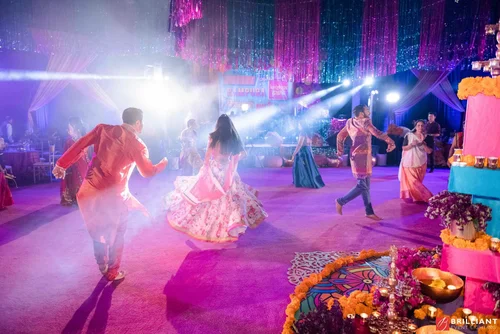
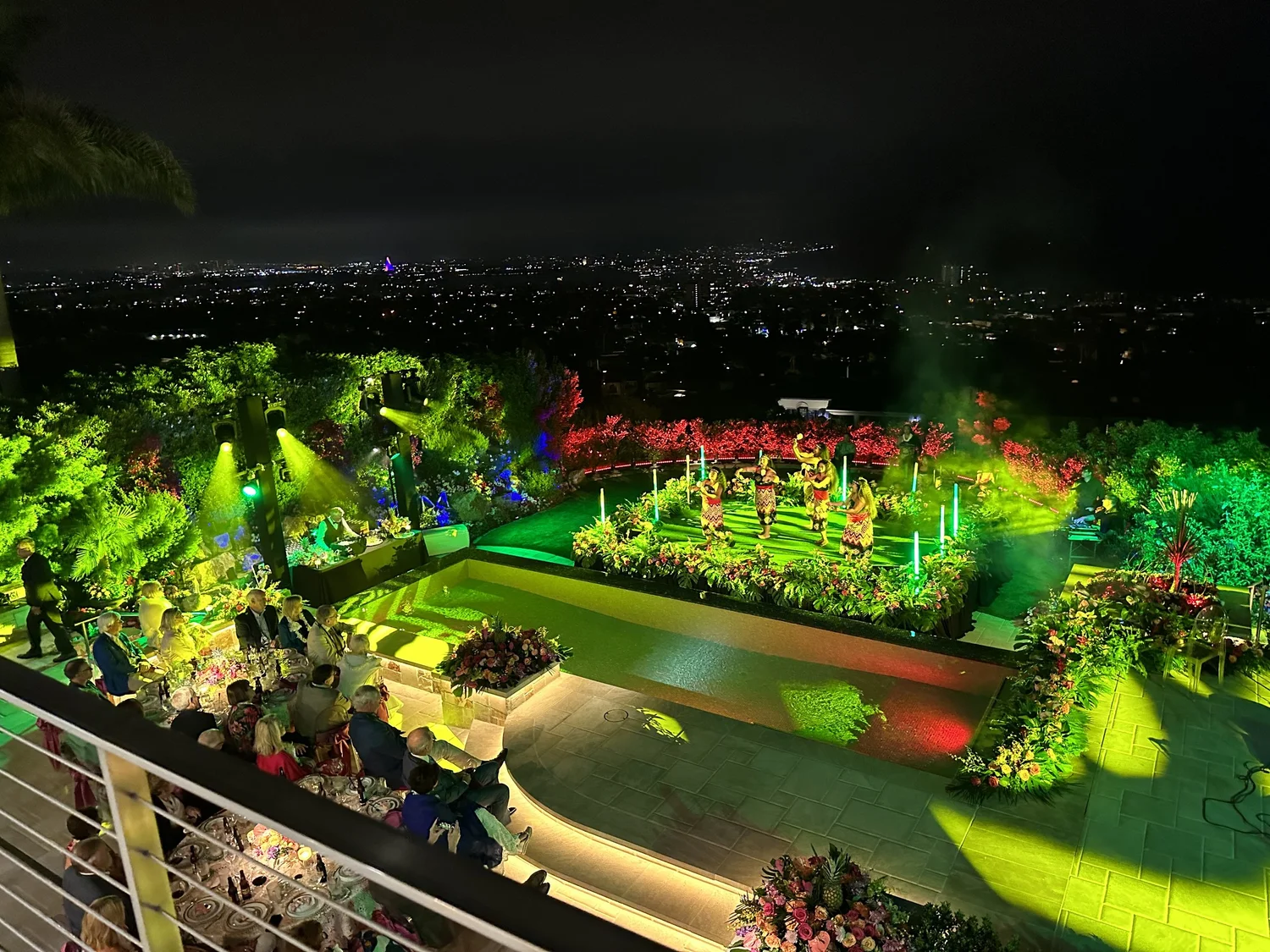
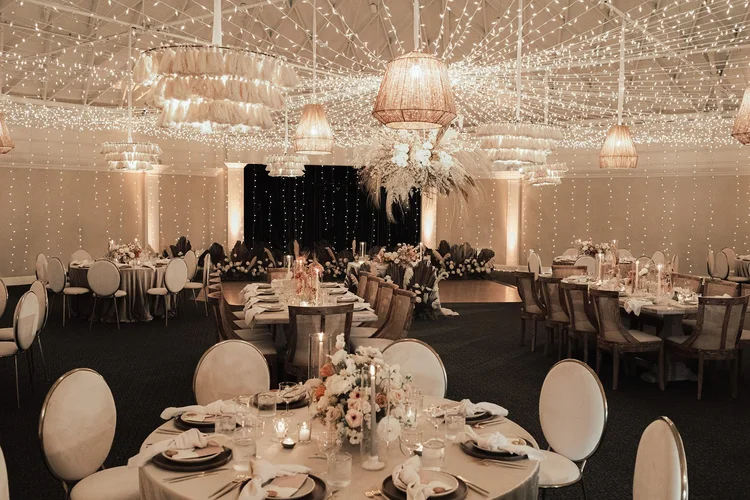
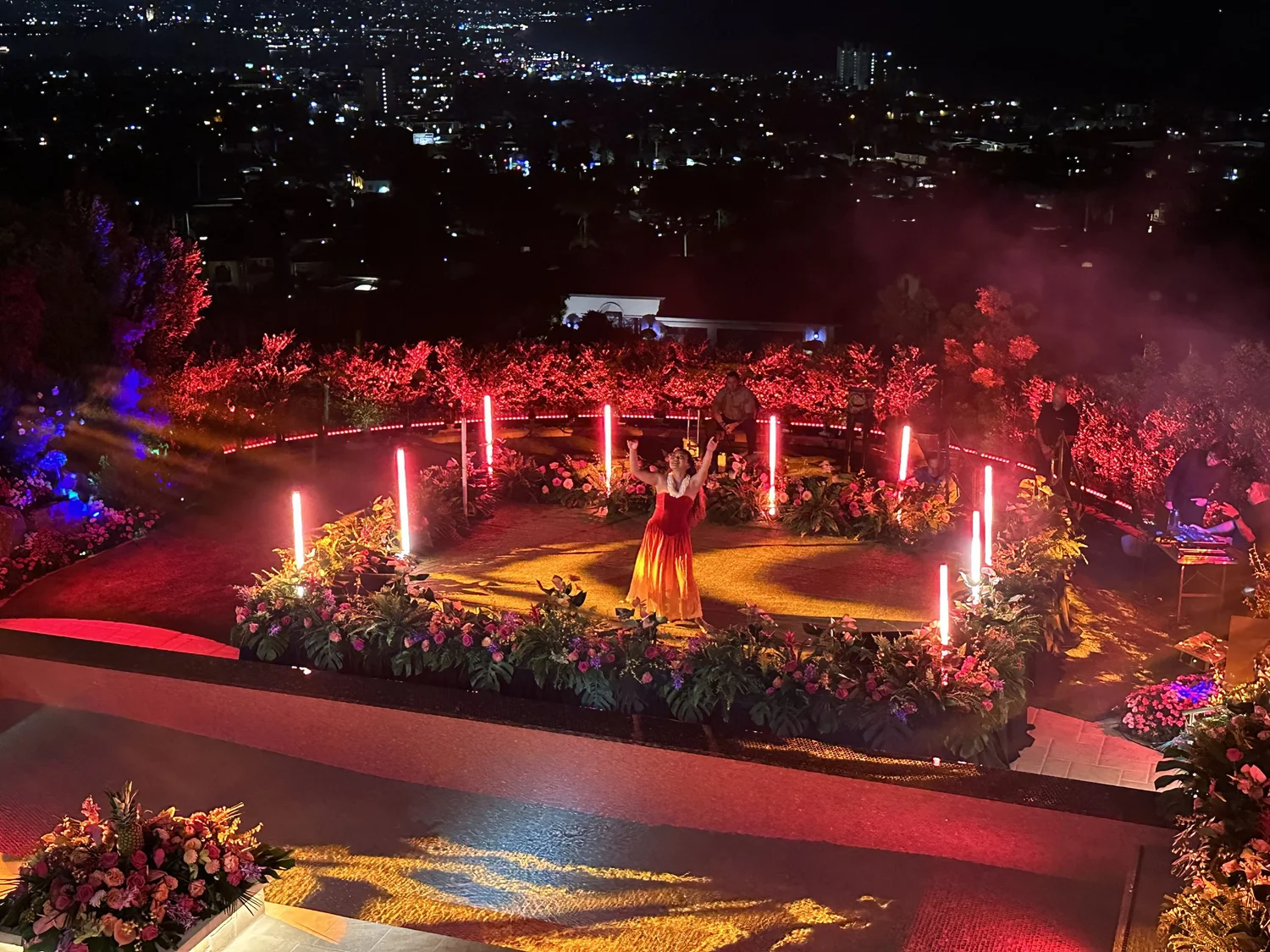
LED uplighting remains the highest-return line item in most gala budgets. Fixtures placed at the perimeter wash walls, columns, and architectural details in color, which changes the character of a ballroom far more dramatically than centerpieces at the same cost.
Two practical notes specific to fundraisers. First, choose a color that flatters people and food — deep saturated blues and purples look striking in an empty room and drain color from faces at dinner. Warm amber, soft blush, and pale gold photograph better and keep the space feeling hospitable. Second, build color change into the program. Shifting the room to your brand color during the mission video, then back to warm for the ask, is a cue guests feel without consciously registering it.
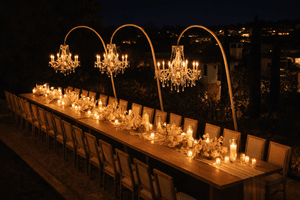
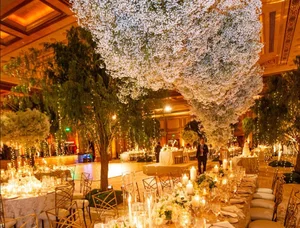
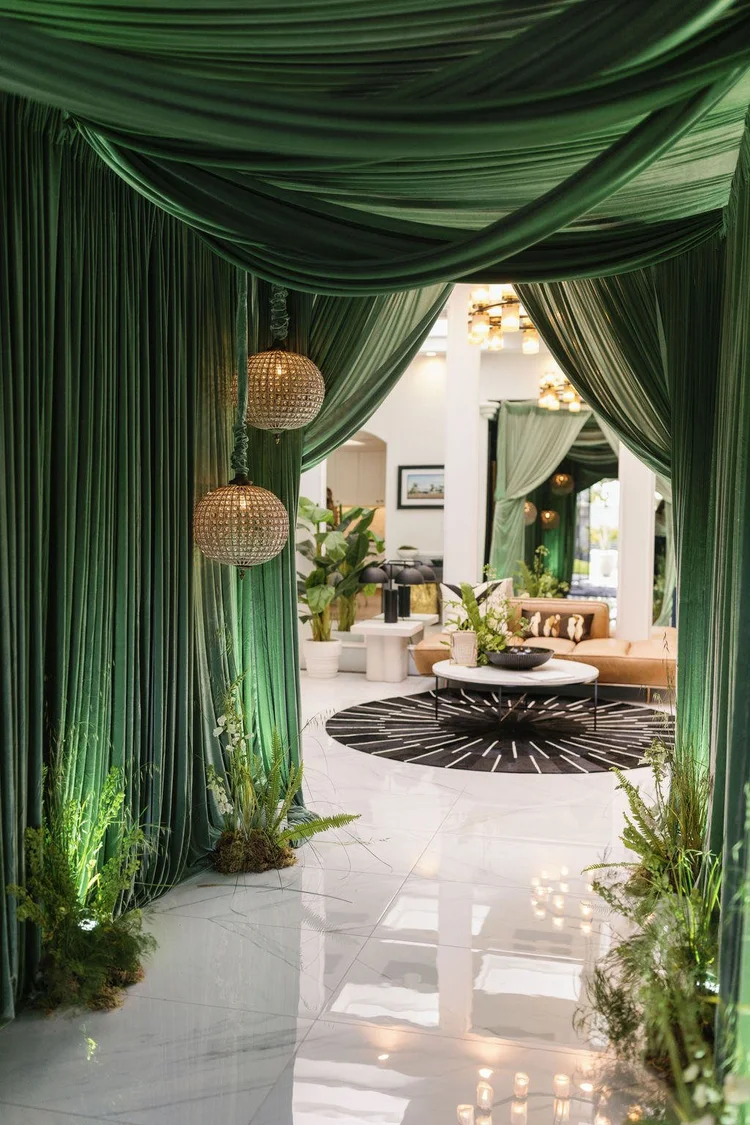
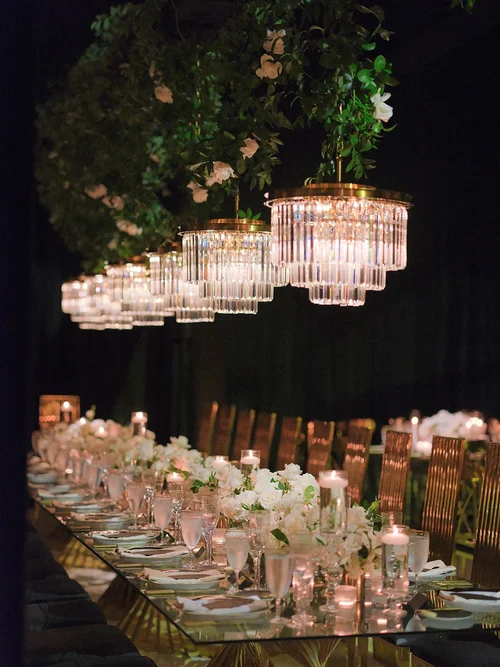
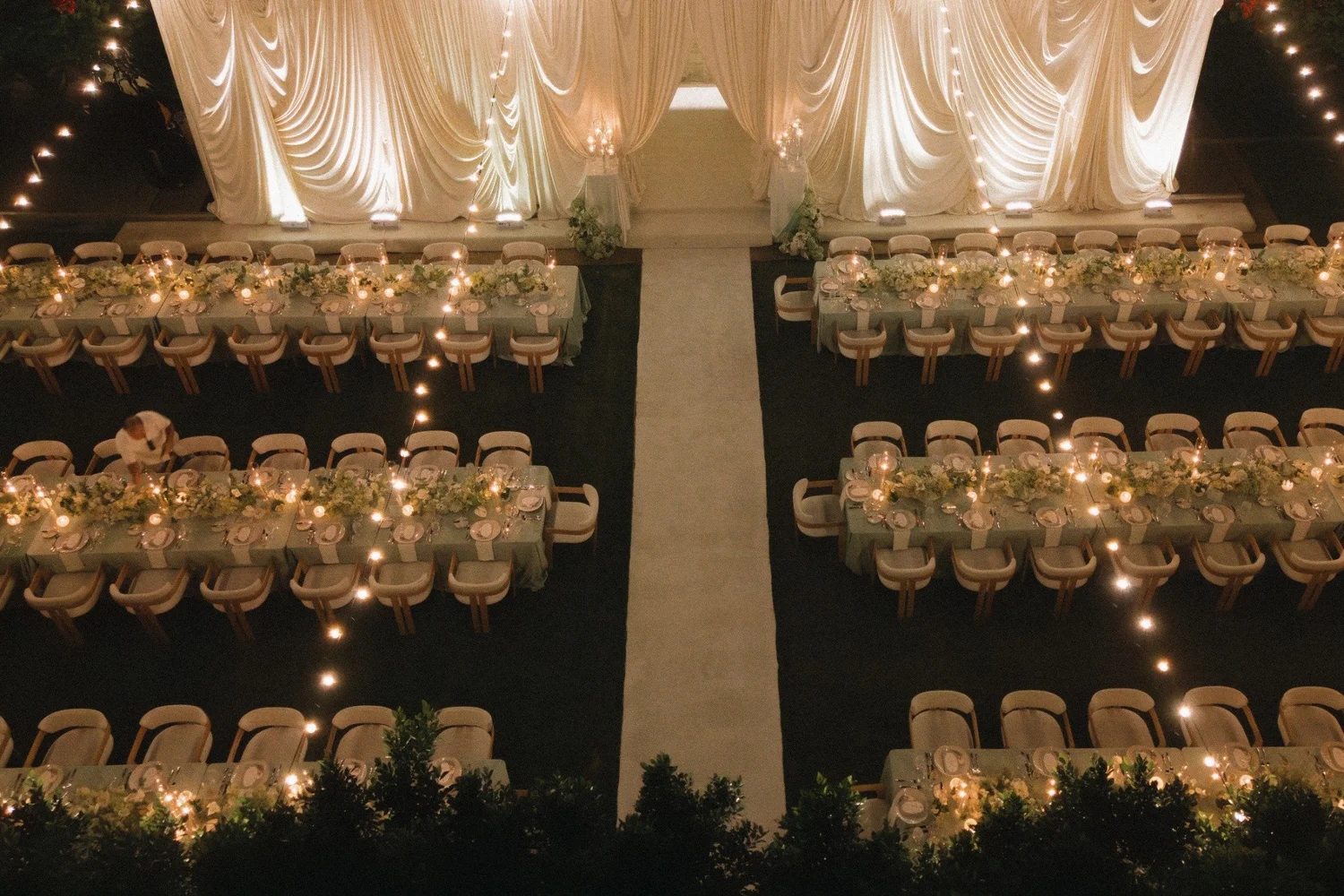
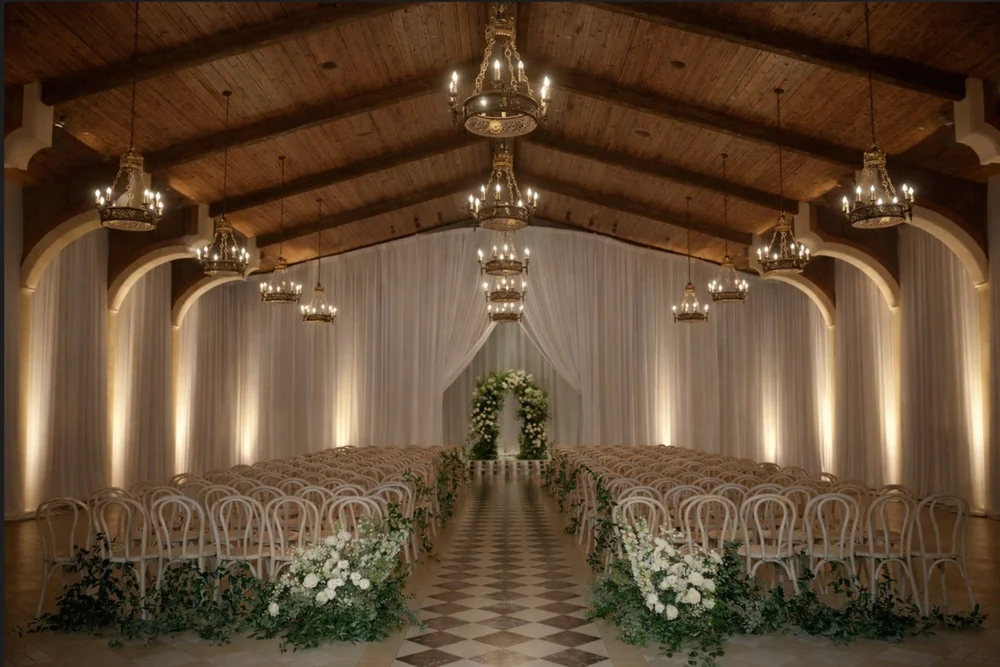
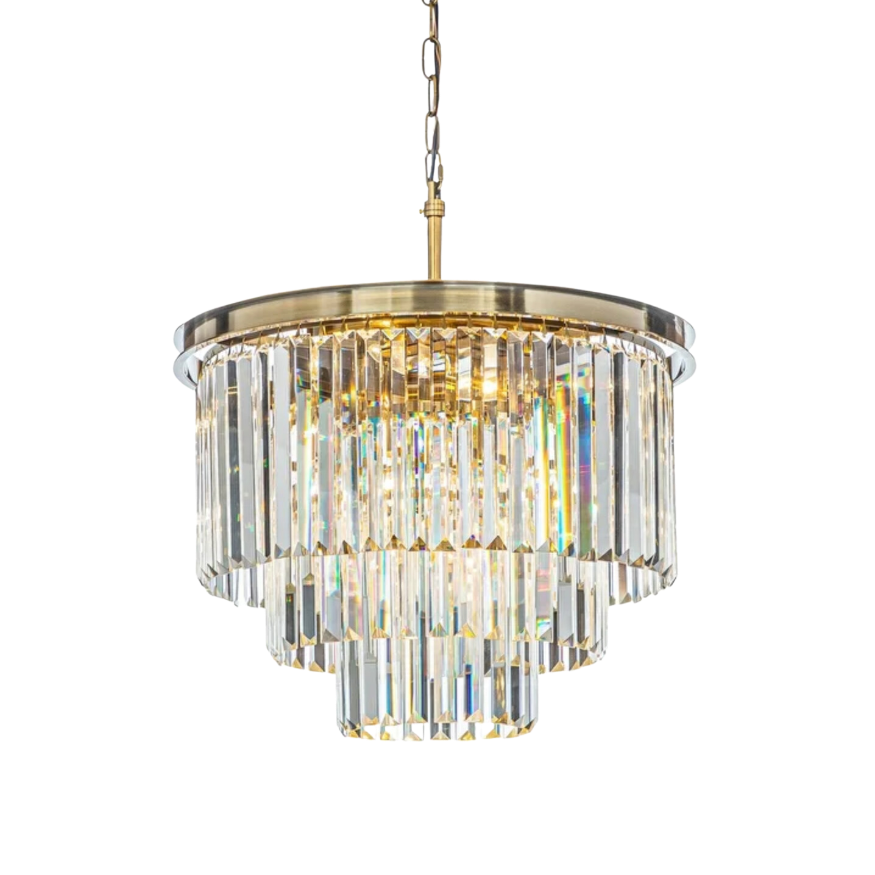
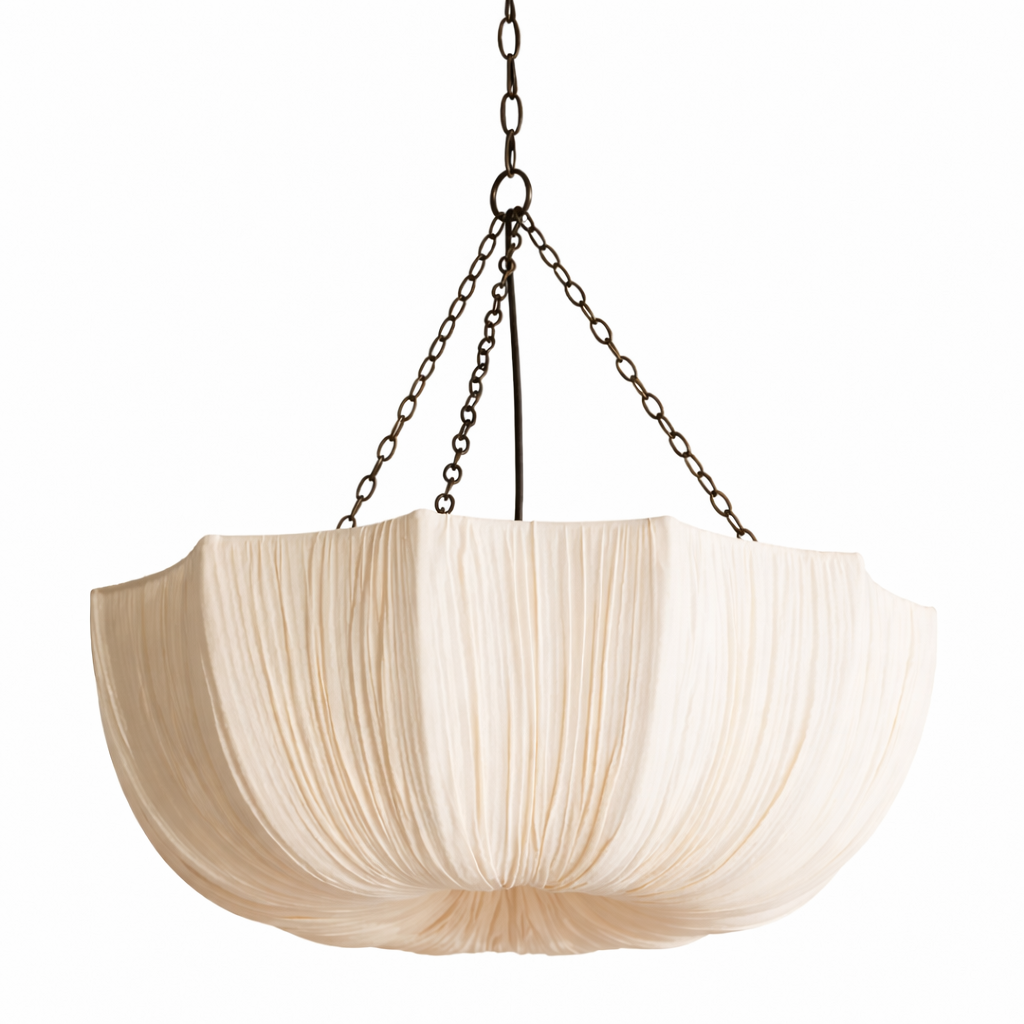
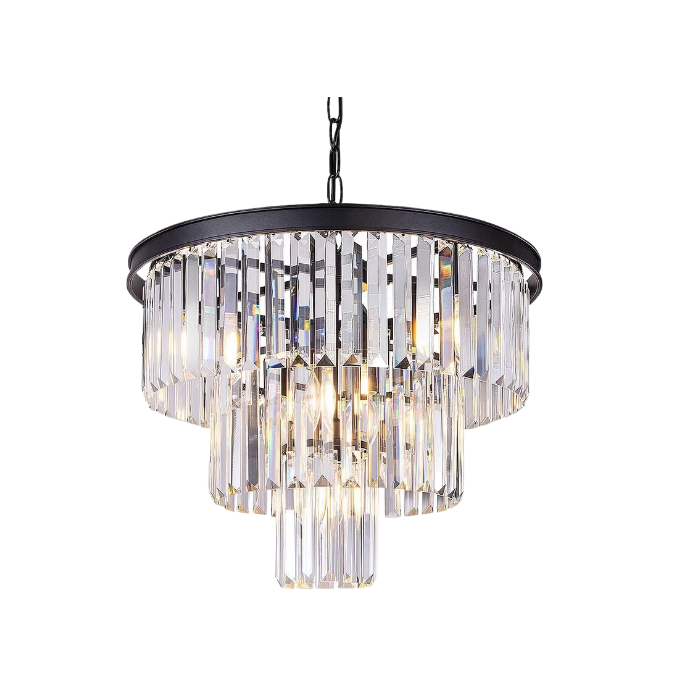
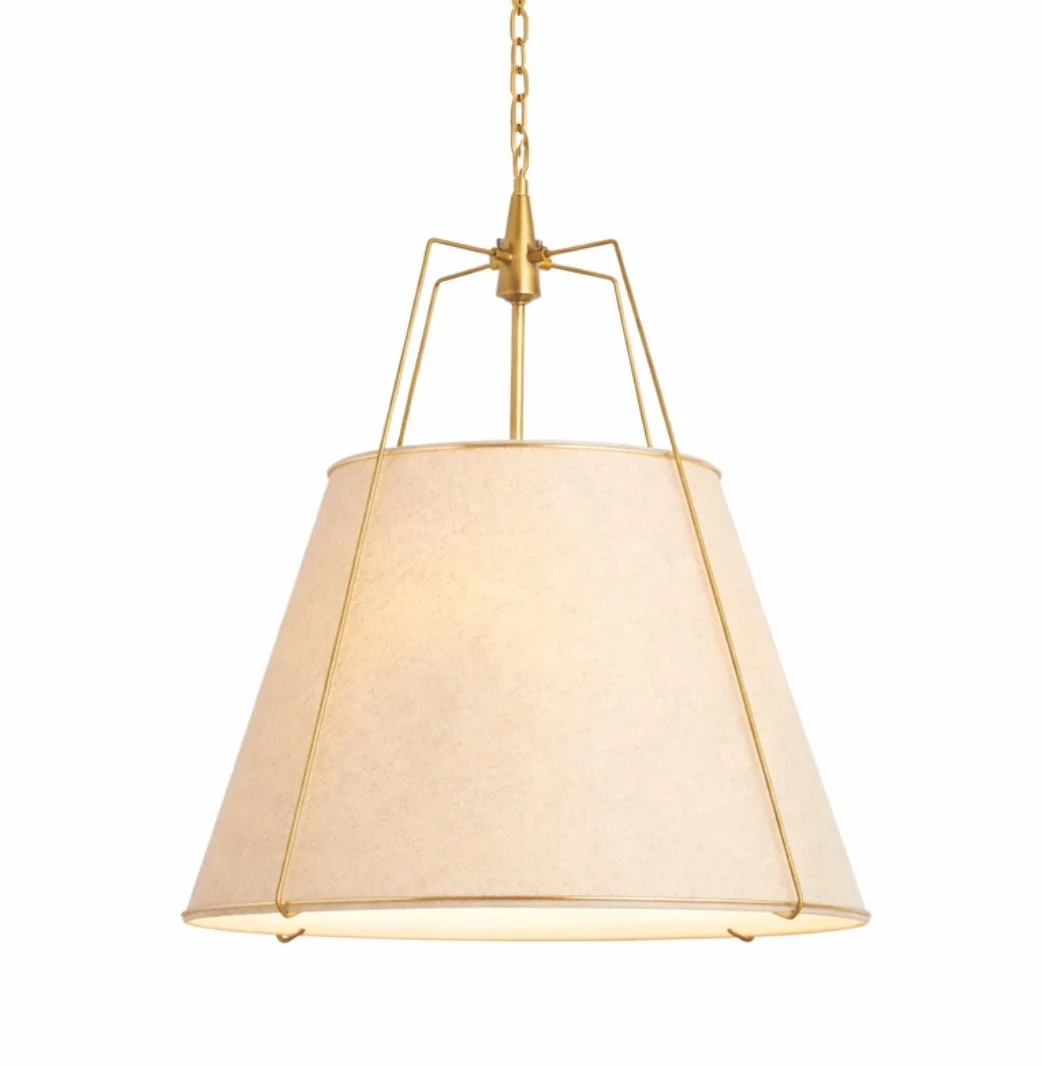
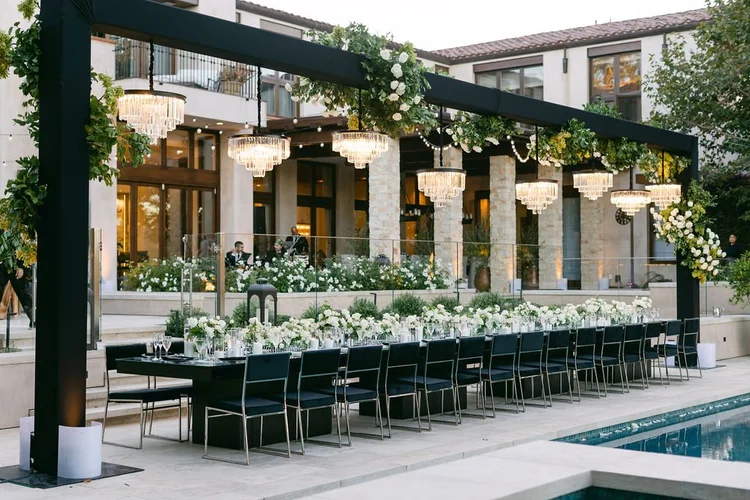
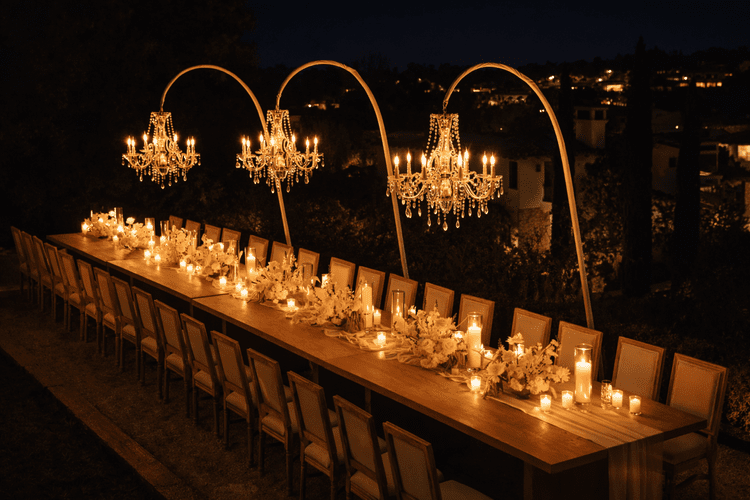
Ceiling treatments, pin spotting on centerpieces, and chandelier or draping installations build from there. Pin spotting in particular is worth the modest cost: it makes florals read in a dimmed room instead of disappearing.
Plan for Cameras From the Beginning
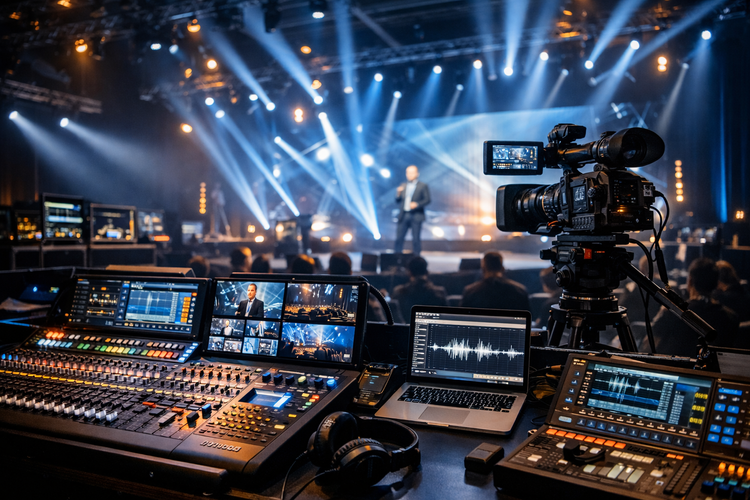
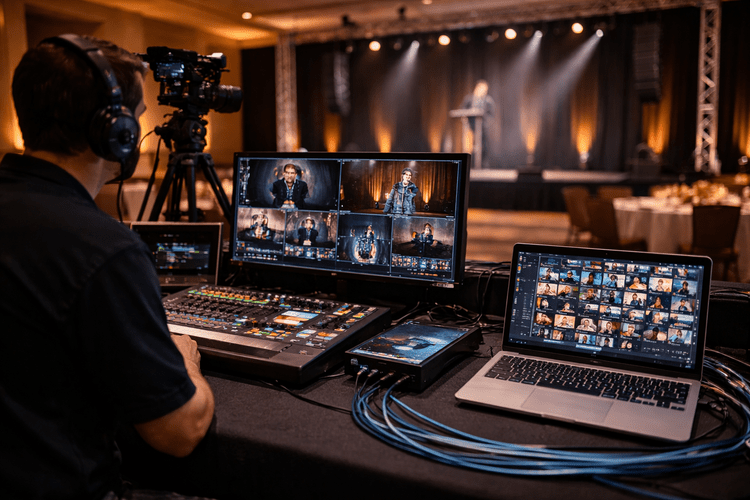
Livestream segments, mobile bidding, and video storytelling are now standard at fundraisers, and cameras have different lighting requirements than human eyes. A room that looks beautifully moody to a guest at table twelve can be unusable to a camera at the back of the house.
If you are recording the program, streaming it, or hiring a videographer whose footage will be used in next year’s campaign, tell your lighting designer before the design is finalized. Camera-friendly design generally means higher and more even light levels on stage, avoiding color on faces, and coordinating LED wall or projection brightness so screen content does not blow out on camera while the speaker in front of it falls into shadow. Retrofitting this on site is expensive and usually imperfect.
The same logic applies to the paddle raise. Auctioneers need to see raised paddles across the room, and guests need to see each other giving — that visible social proof is part of what drives the number up. Dropping the room to near-dark during the ask is a common and costly error.
Venue Realities Across San Diego County
Every venue imposes its own constraints, and knowing them early prevents budget surprises.
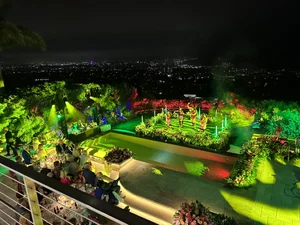
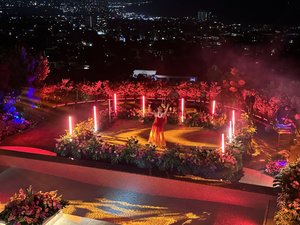
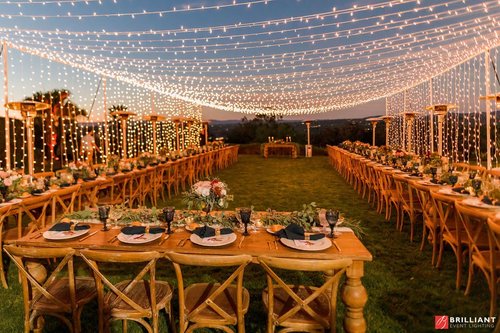
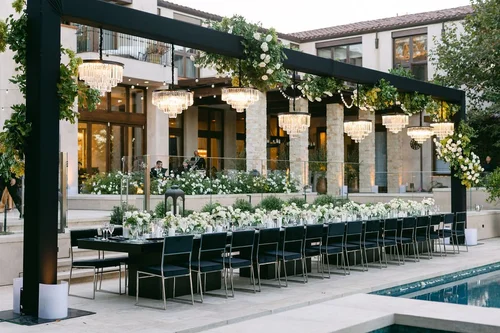
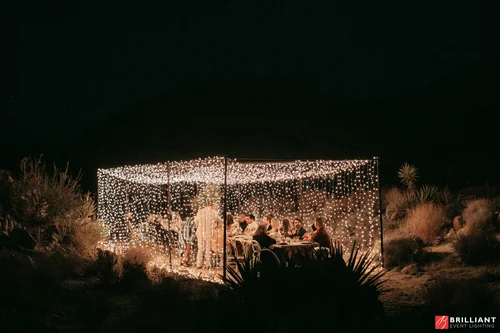
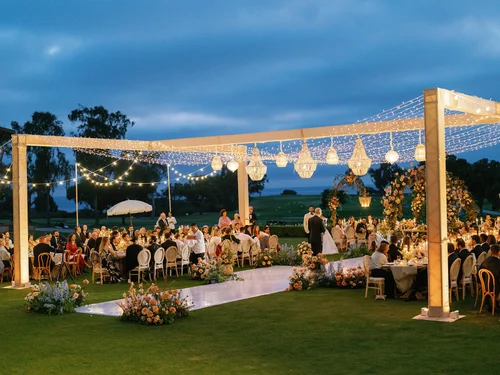
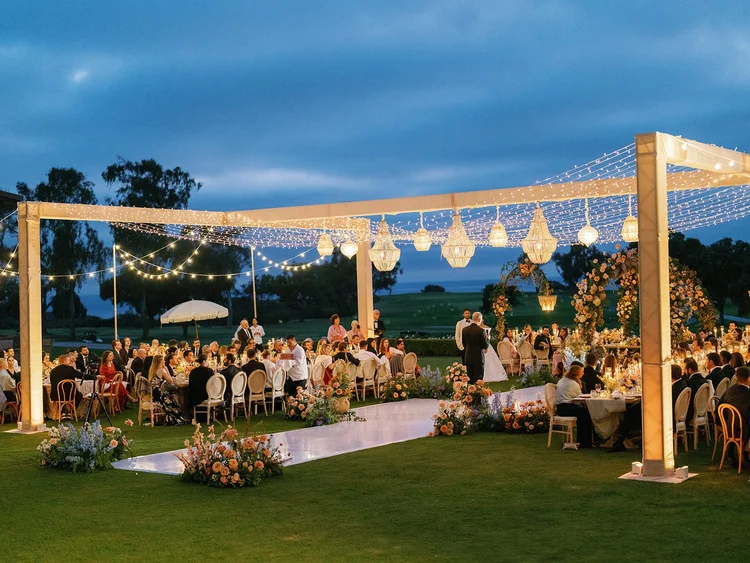
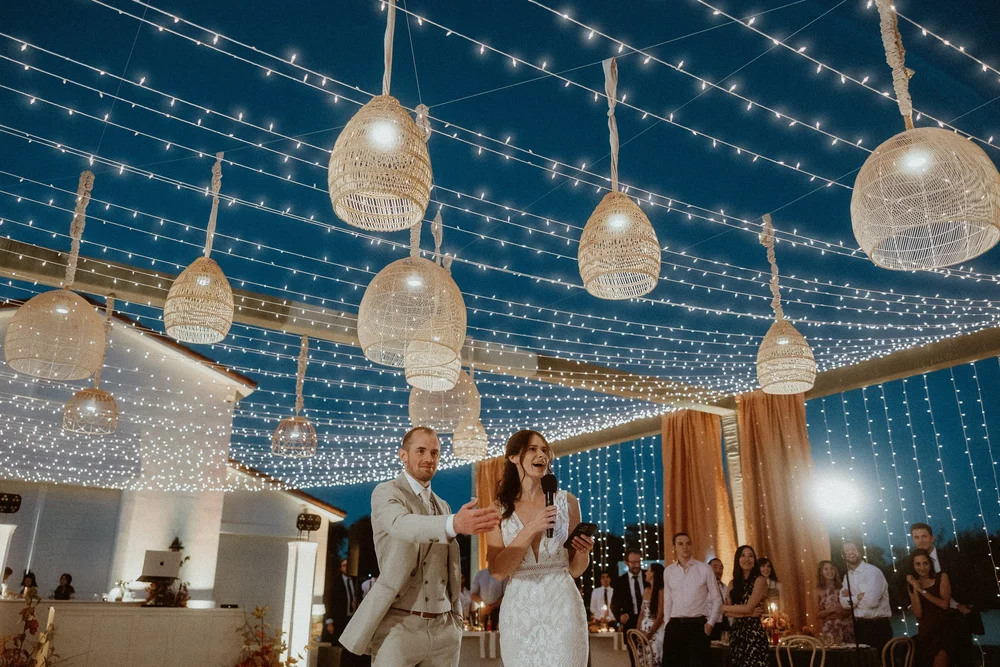
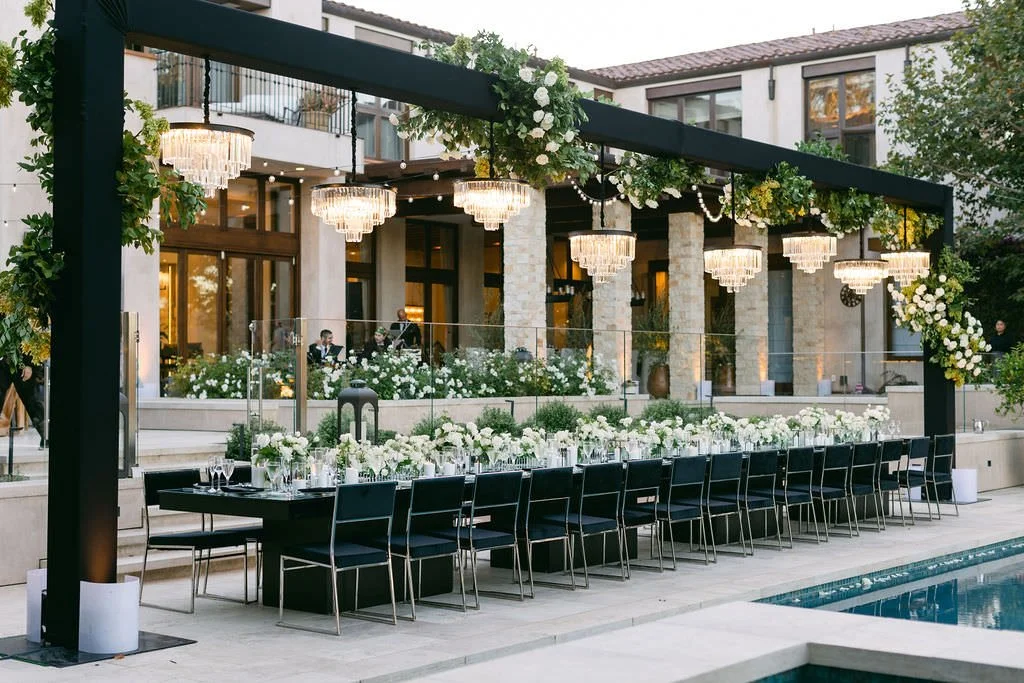
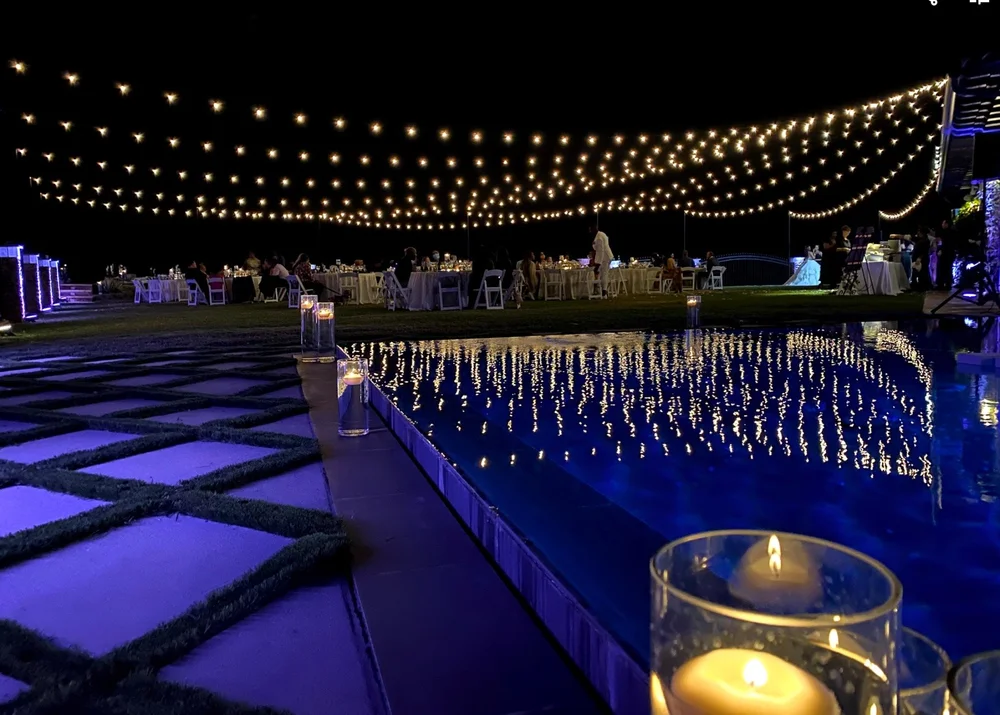
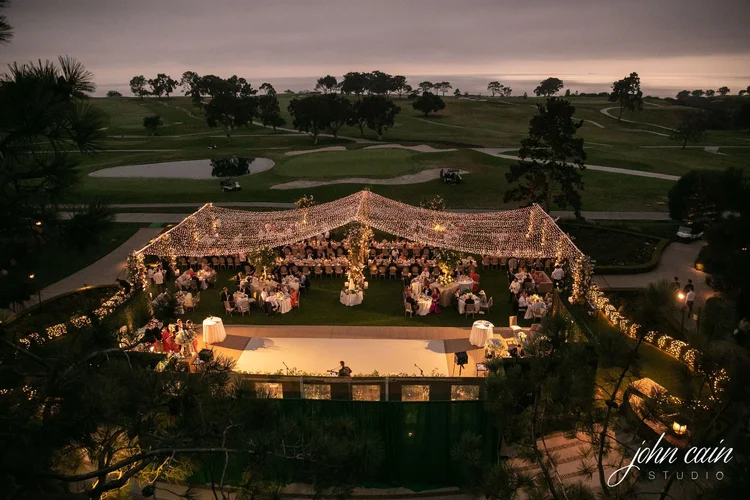
Downtown and resort ballrooms typically have rigging points, adequate power, and in-house AV relationships that may restrict outside vendors — confirm those rules before you book anything. Museum and historic venues in Balboa Park often limit wall attachments and require freestanding solutions. Outdoor and estate venues introduce power distribution, weather protection, and noise ordinance considerations, and generally need more fixtures because there are no walls to bounce light. Tented events require a full rigging plan since the structure itself carries every fixture.
A site visit with your production team, ideally alongside your venue coordinator, resolves most of these questions in an hour.
What to Budget
Gala lighting and production budgets vary widely with venue size, guest count, and program complexity. As a rough frame: uplighting and a basic stage wash for a 200-guest ballroom sits at the entry level, while adding programmed lighting states with an on-site technician, gobo branding, pin spotting, and a properly lit stage with video support moves into full production territory. The useful question is not what lighting costs, but what percentage of an event that will raise six figures should go toward making the ask land. Most nonprofits under-invest here relative to catering.
Good gala lighting design in San Diego pays for itself in donor experience, in usable photo and video assets, and in the simple fact that a room that feels considered makes people more generous.
Plan Your Gala Lighting With a Production Partner
Brilliant Event Lighting designs and produces lighting, draping, staging, rigging, LED walls, and full AV production for nonprofit galas, corporate events, and luxury weddings across Southern California. If you are planning a fundraiser and want a design that supports your program rather than decorating around it, request a free estimate at brillianteventlighting.com/estimate.