




























How to Light a Tented Wedding Reception: A Southern California Guide
A tented reception is one of the most romantic ways to celebrate a wedding in Southern California. Whether the tent sits on a private estate in Rancho Santa Fe, a clifftop in Malibu, or a vineyard in Temecula, the structure gives you a blank canvas the venue itself never could. The trade—off is that an empty tent at sunset can feel cavernous, cold, and unfinished. Lighting is what turns that bare frame into the warm, layered, photo—ready space your guests will remember.
How to Light a Tented Wedding Reception
This guide walks through how to plan tented wedding reception lighting from the ground up, covering the practical layers that professional designers use, the design choices that drive the mood, and the technical realities of power, rigging, and safety. It is written for couples, planners, and venue coordinators producing tented weddings anywhere from San Diego to Santa Barbara.
Why Tented Lighting Demands a Different Approach
Most ballrooms arrive with a baseline of architectural light. A tent does not. Sailcloth, clear—top, and frame tents have no fixtures of their own, so every lumen in the room has to be designed in. That sounds intimidating, but it is actually the reason tented receptions can be so spectacular. With nothing competing, every chandelier, string light, and color wash you add becomes part of the visual story.
The other reality is that tents lose their drama at the worst possible moment. Guests arrive at golden hour, when the natural light still does the work for you. By the time toasts begin, the sun is gone and so is the ambient glow. Without an intentional lighting plan the room flattens, faces lose definition, and photographs darken. A good designer plans for that transition before the tent is ever rented.
Build the Foundation With Ambient Wash Lighting
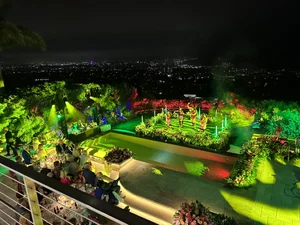
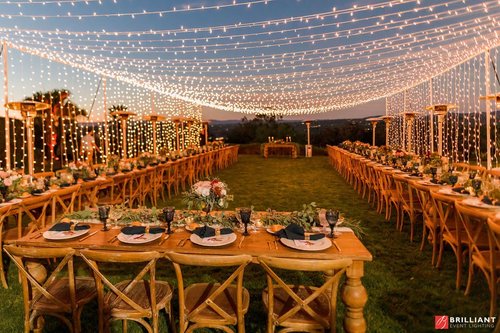
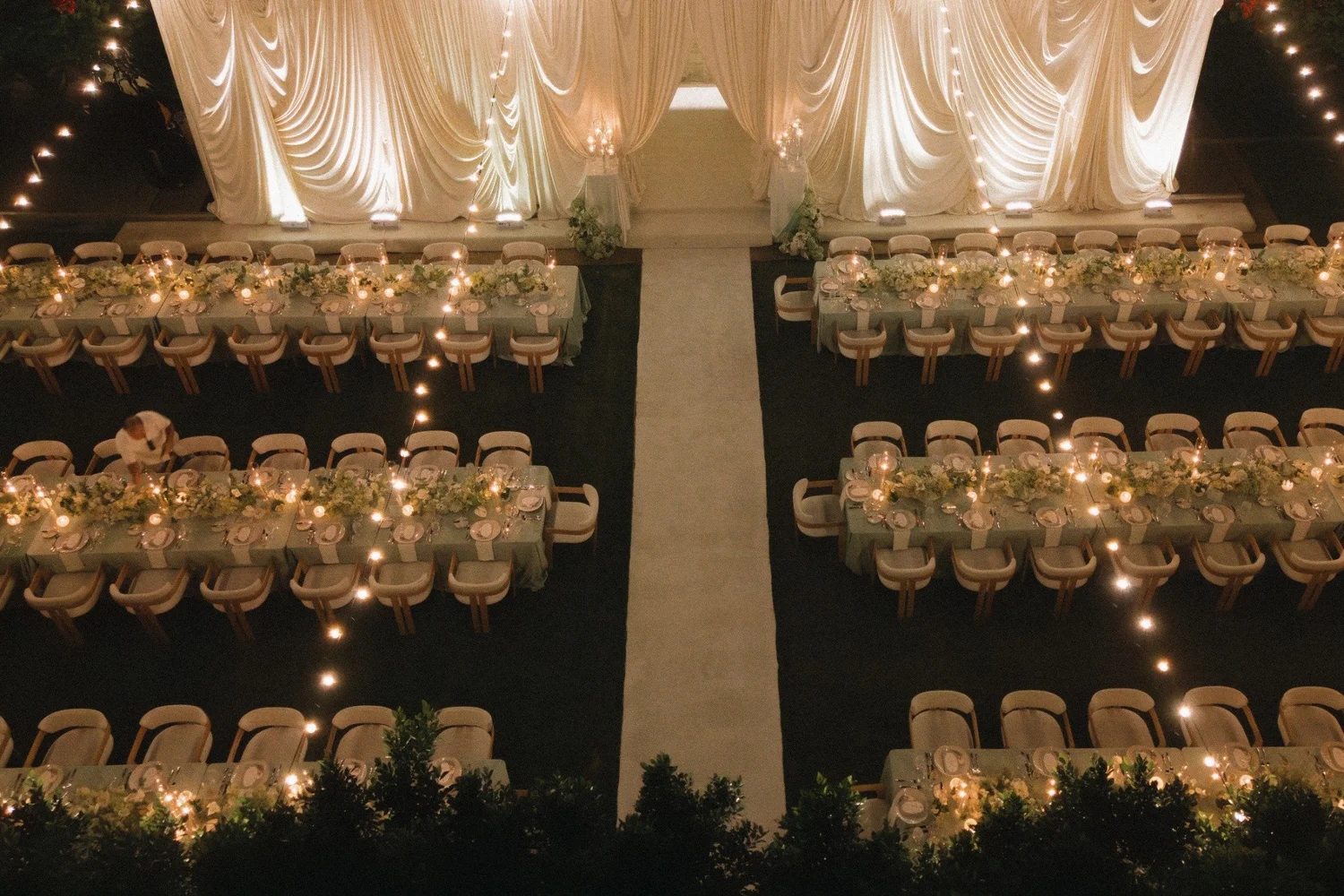
Ambient wash lighting is your base layer. It fills the tent with an even, flattering glow so guests can see each other and food, and it sets the color temperature for the entire space. For luxury tented weddings we typically use a combination of warm white globe strands or cafe lights run across the ceiling, plus perimeter uplights that wash the tent walls in a coordinated tone.
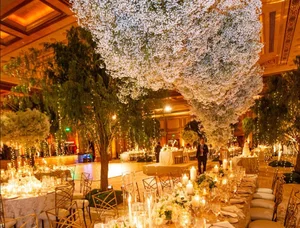
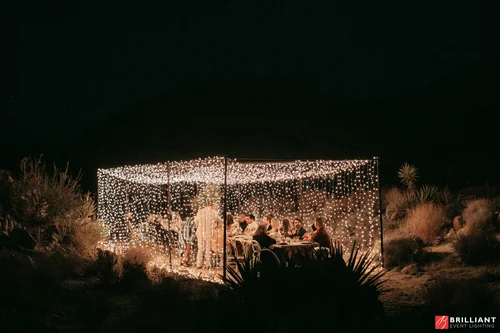
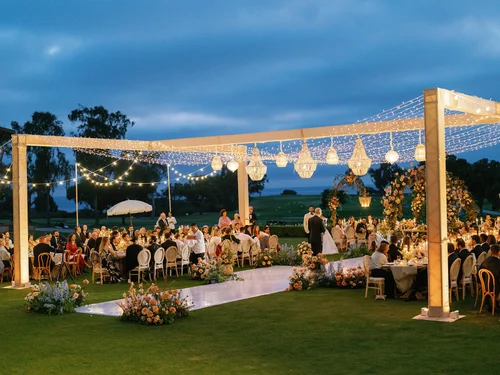
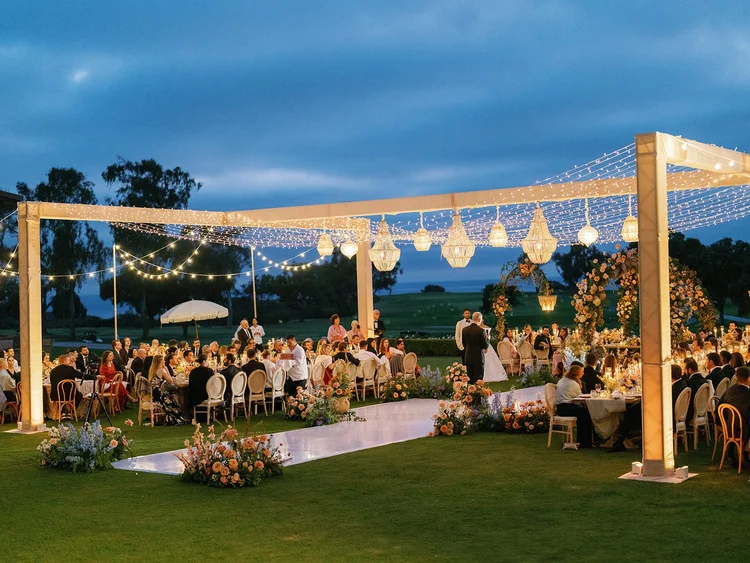
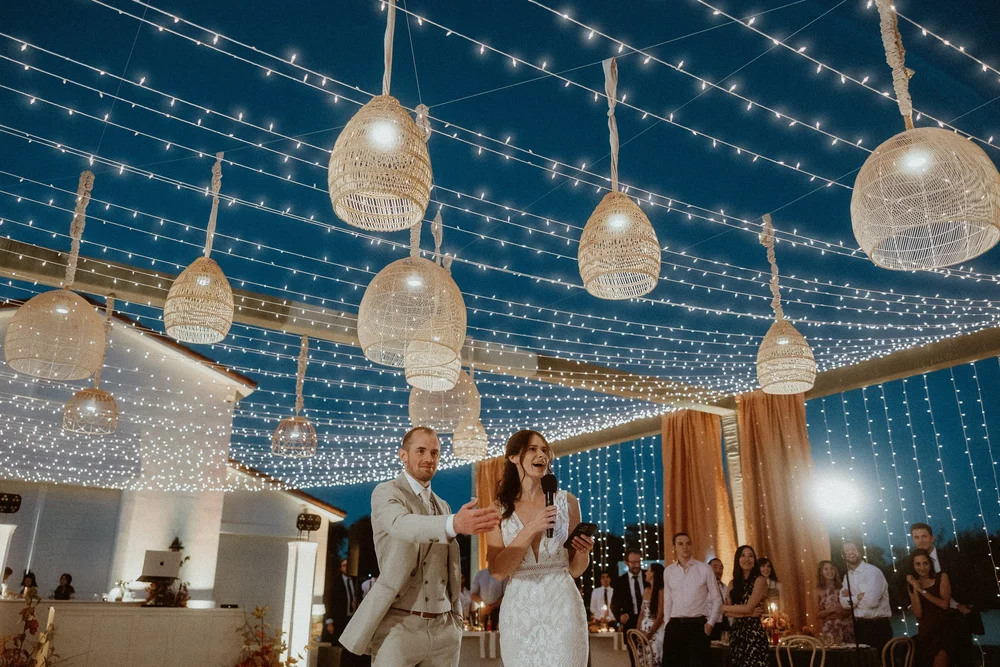
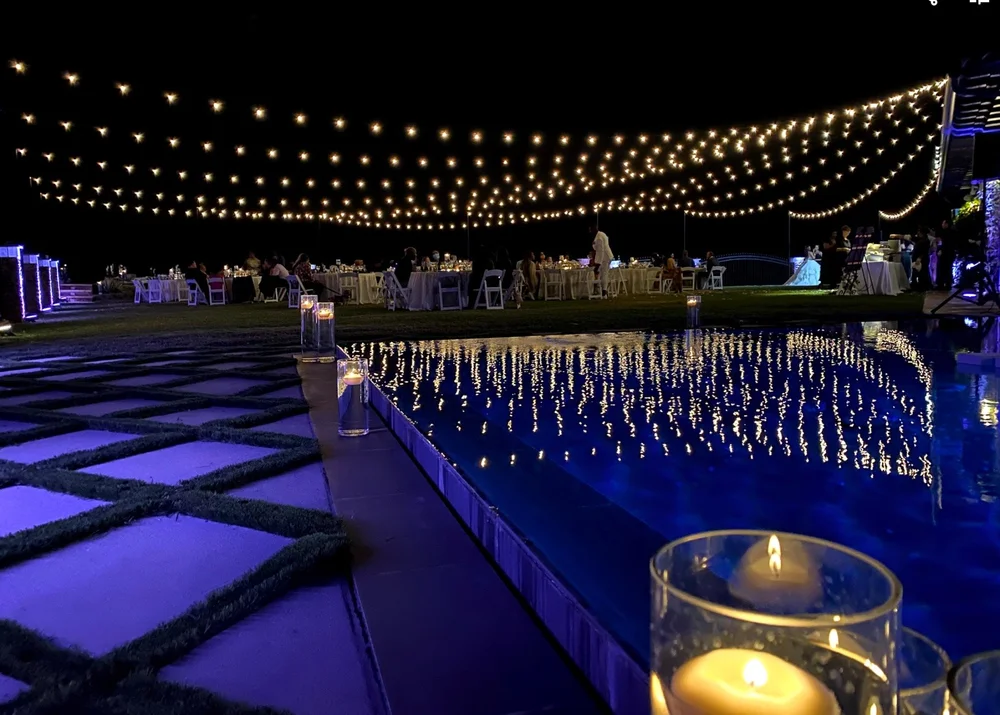
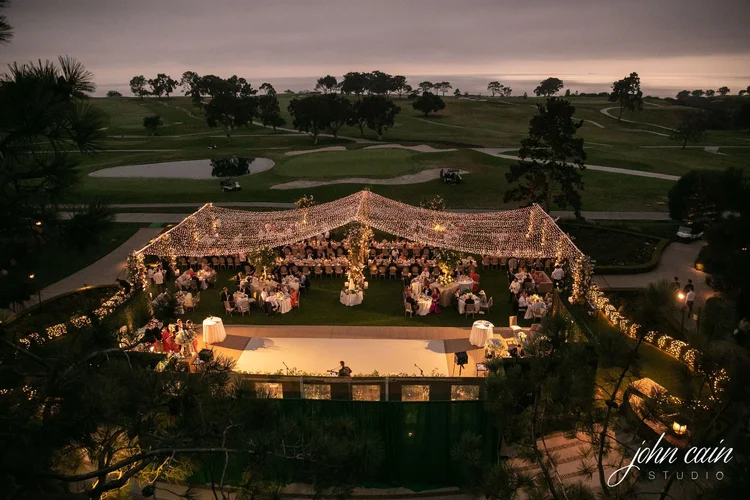
Globe and bistro strings hung in parallel rows or a crisscross pattern create the canopy effect couples ask for most. Strung at the right density, they read like a sky full of stars in photographs. Underneath that, perimeter uplighting in a soft amber, blush, or champagne hue lifts the wall fabric and gives the room a sense of architecture.
Layer In Decorative and Statement Pieces
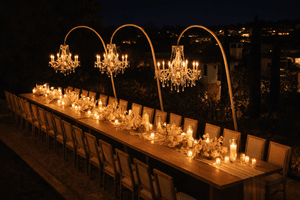
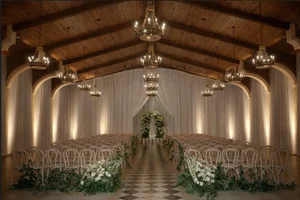
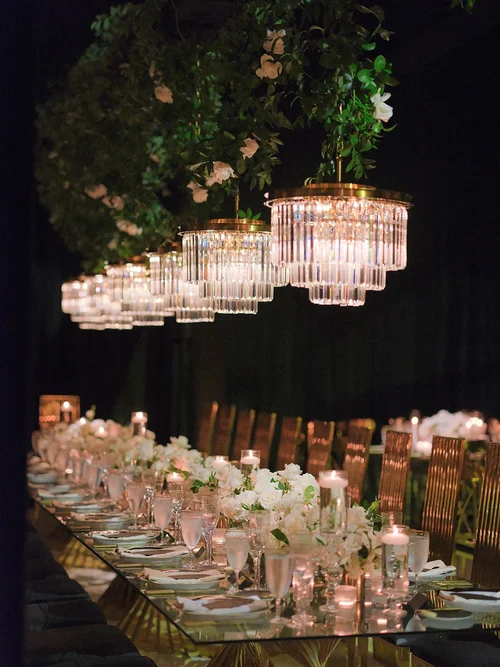
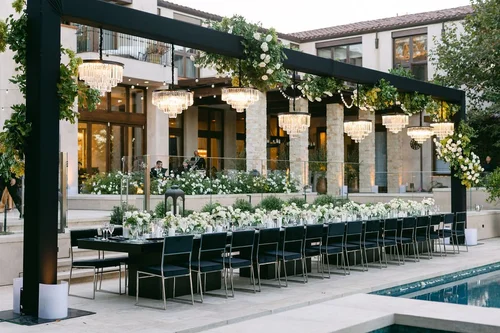
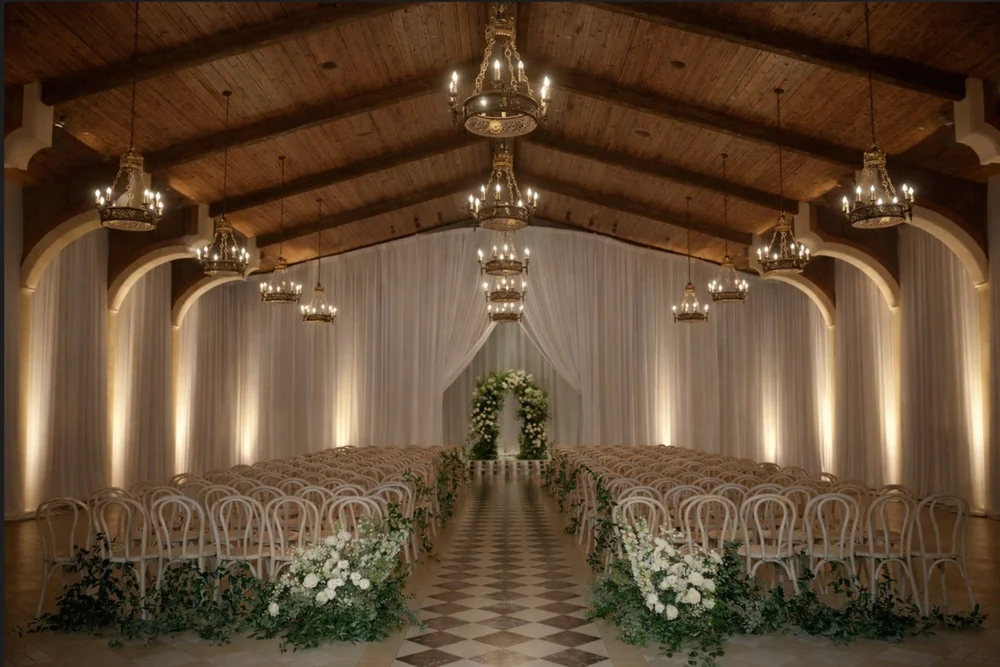
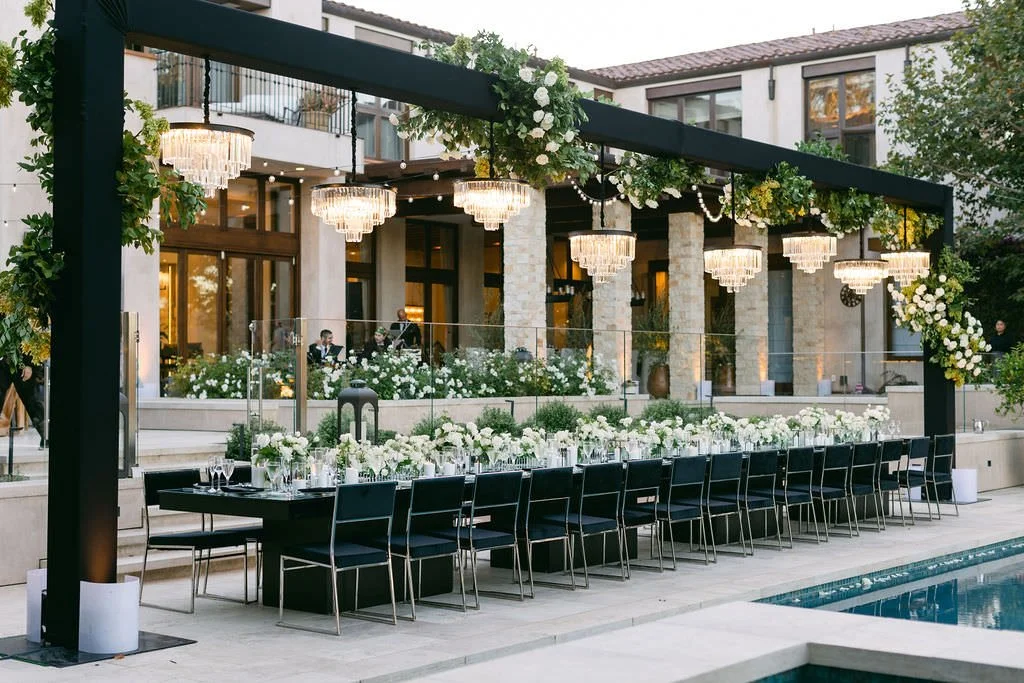
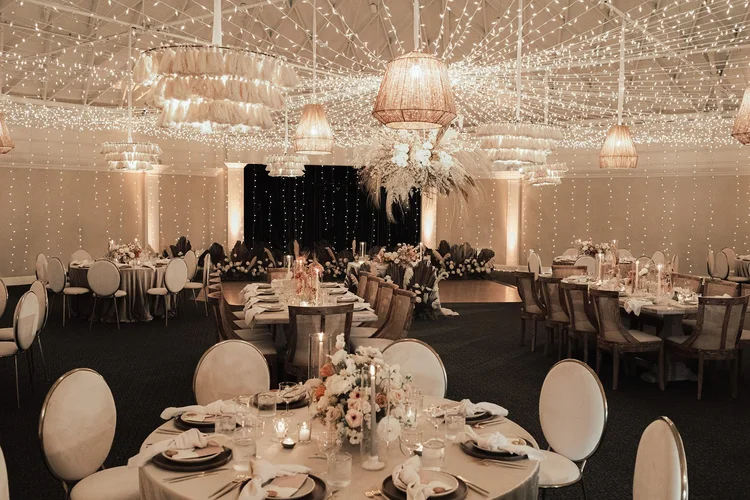
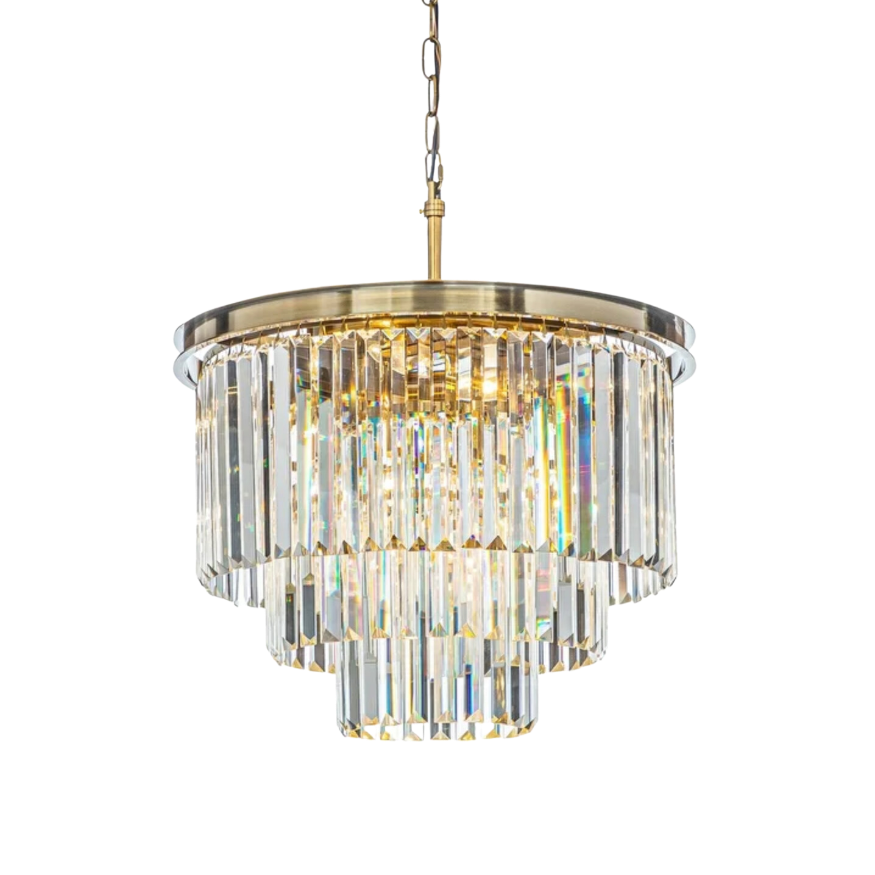
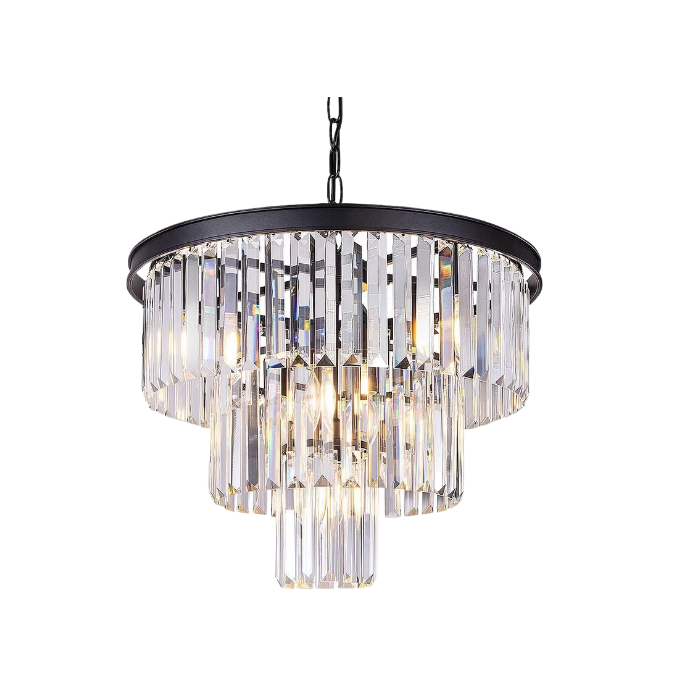
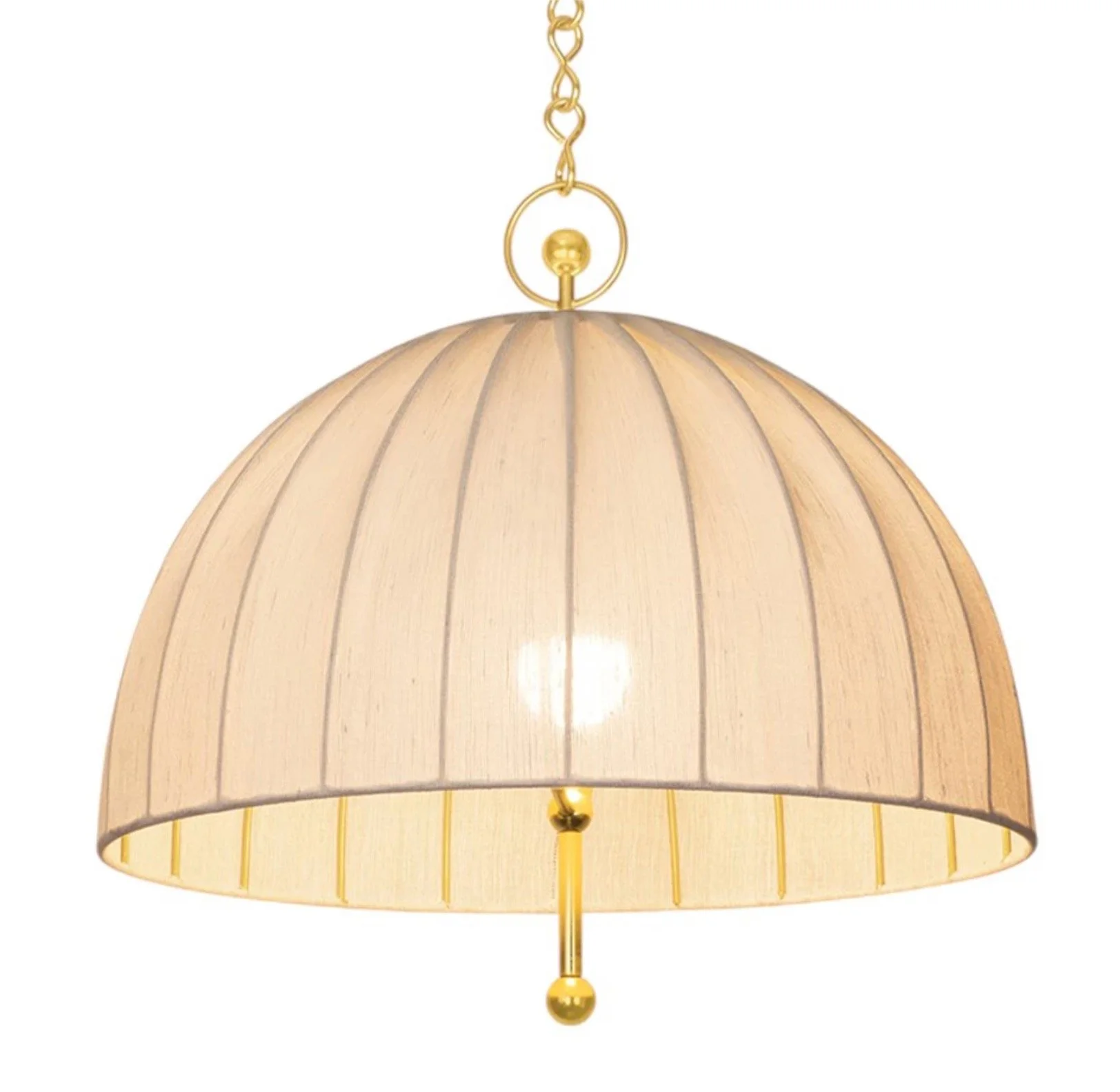
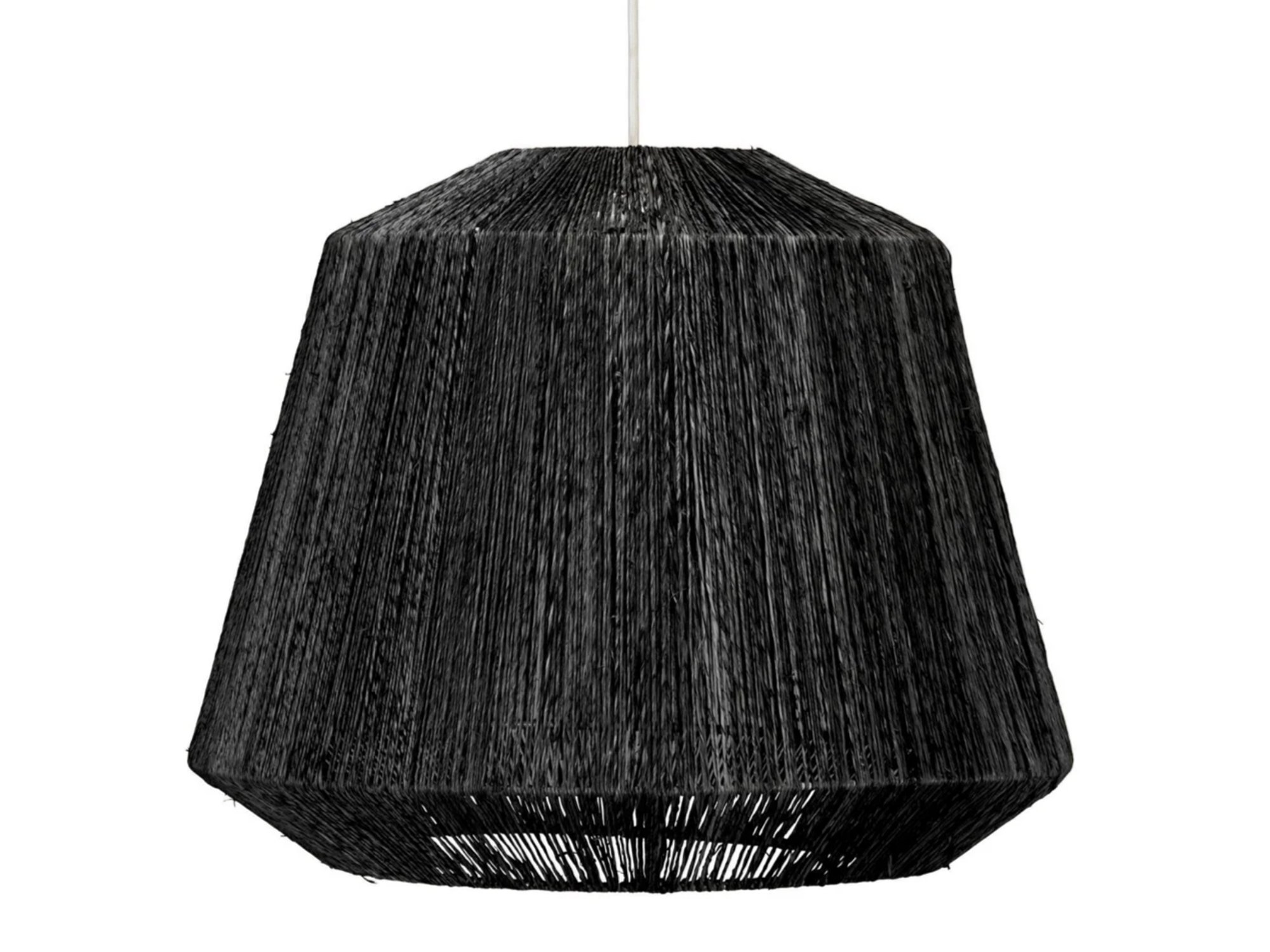
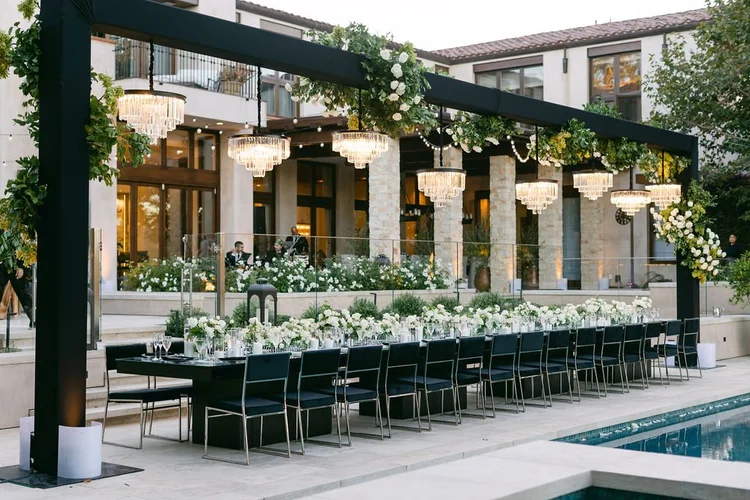
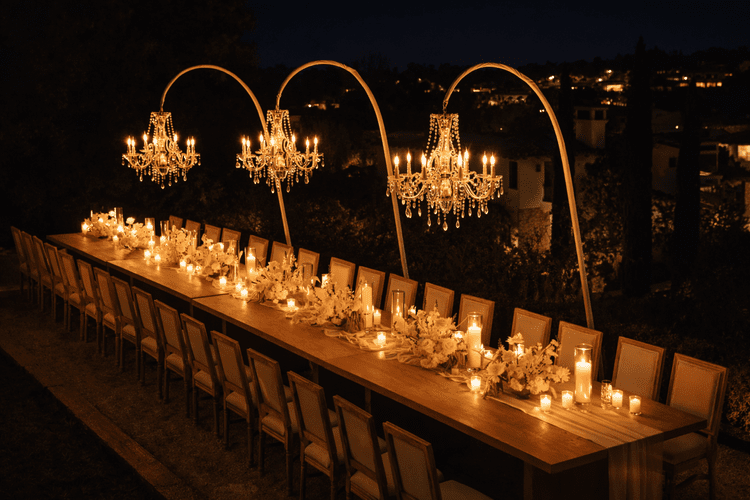
Once the base layer is set, you can introduce statement pieces that carry the design vocabulary of the wedding. Crystal or rattan chandeliers suspended from the tent center pole are a signature look at high—end Southern California estates. They give the eye a focal point and add the kind of interior—design polish that elevates a tent from event space to true reception room.
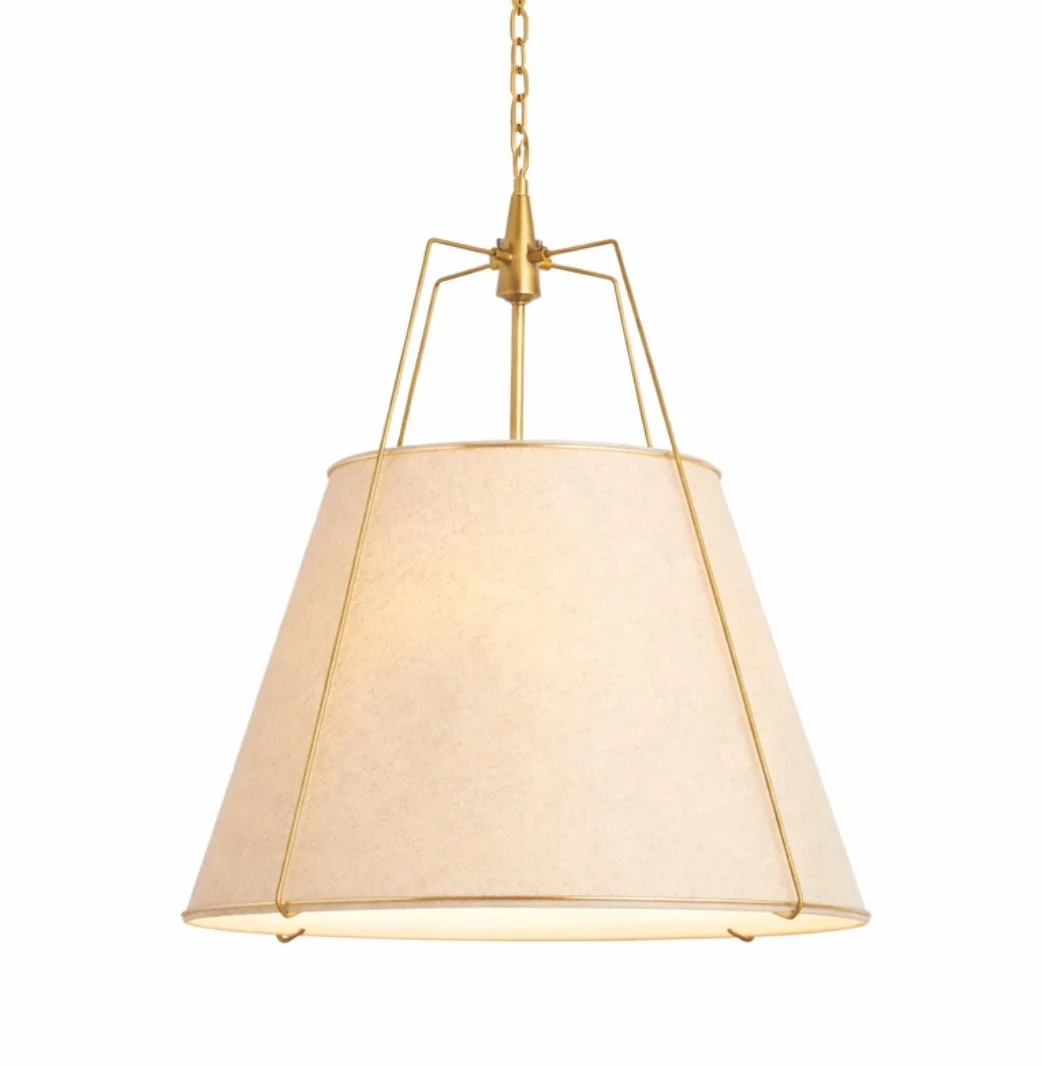
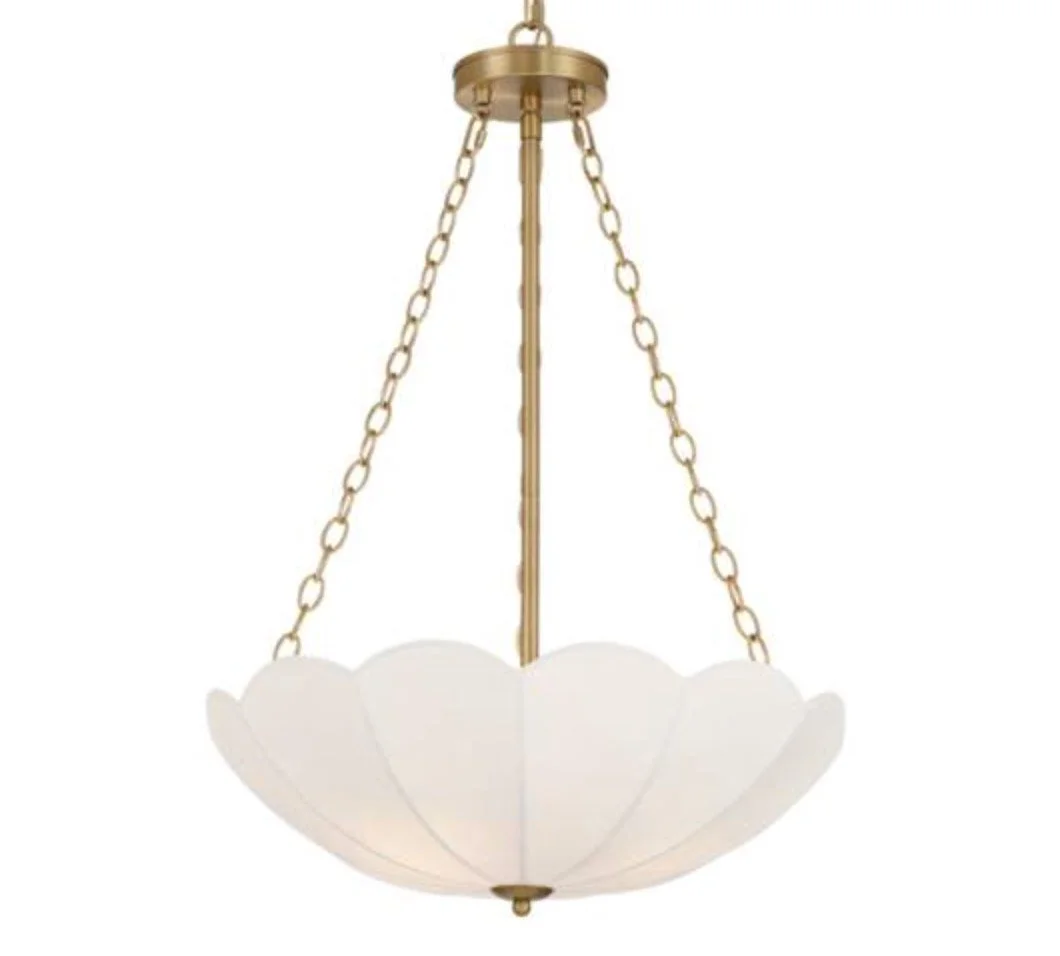
Other layered options include cluster pendants over the dining tables, market lights radiating outward from a central peak in a sunburst pattern, and curtain—of—lights walls that double as a backdrop for the head table or sweetheart setup. The goal of this layer is texture. It should feel collected, not catalog—ordered.
Pin Spotting for Centerpieces, Cake, and Florals
Pin spotting is the single biggest design upgrade you can add to a tented wedding reception, and most couples have never heard of it. A pin spot is a narrow—beam fixture aimed precisely at one object—each centerpiece, the cake, the welcome sign, the focal floral installation. Without pin spots, the tent ceiling washes the tablescape in soft, even light. With them, every floral arrangement glows from above as if lit by its own private spotlight.
Pin spots are what photographers love. They separate the foreground from the background and make florals read sharply on camera. For tented weddings with serious floral investments, skipping pin spotting is leaving your floral budget on the table.
Dance Floor Lighting Brings the Energy
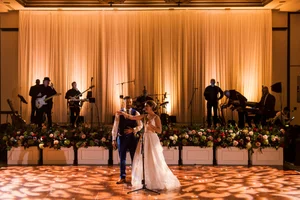
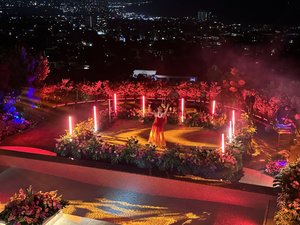
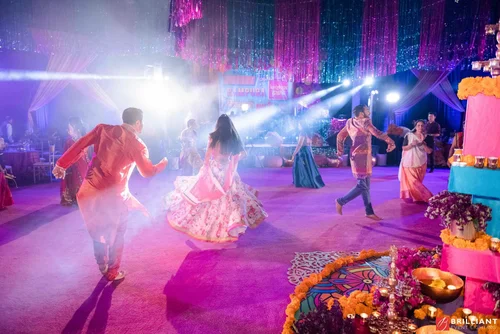
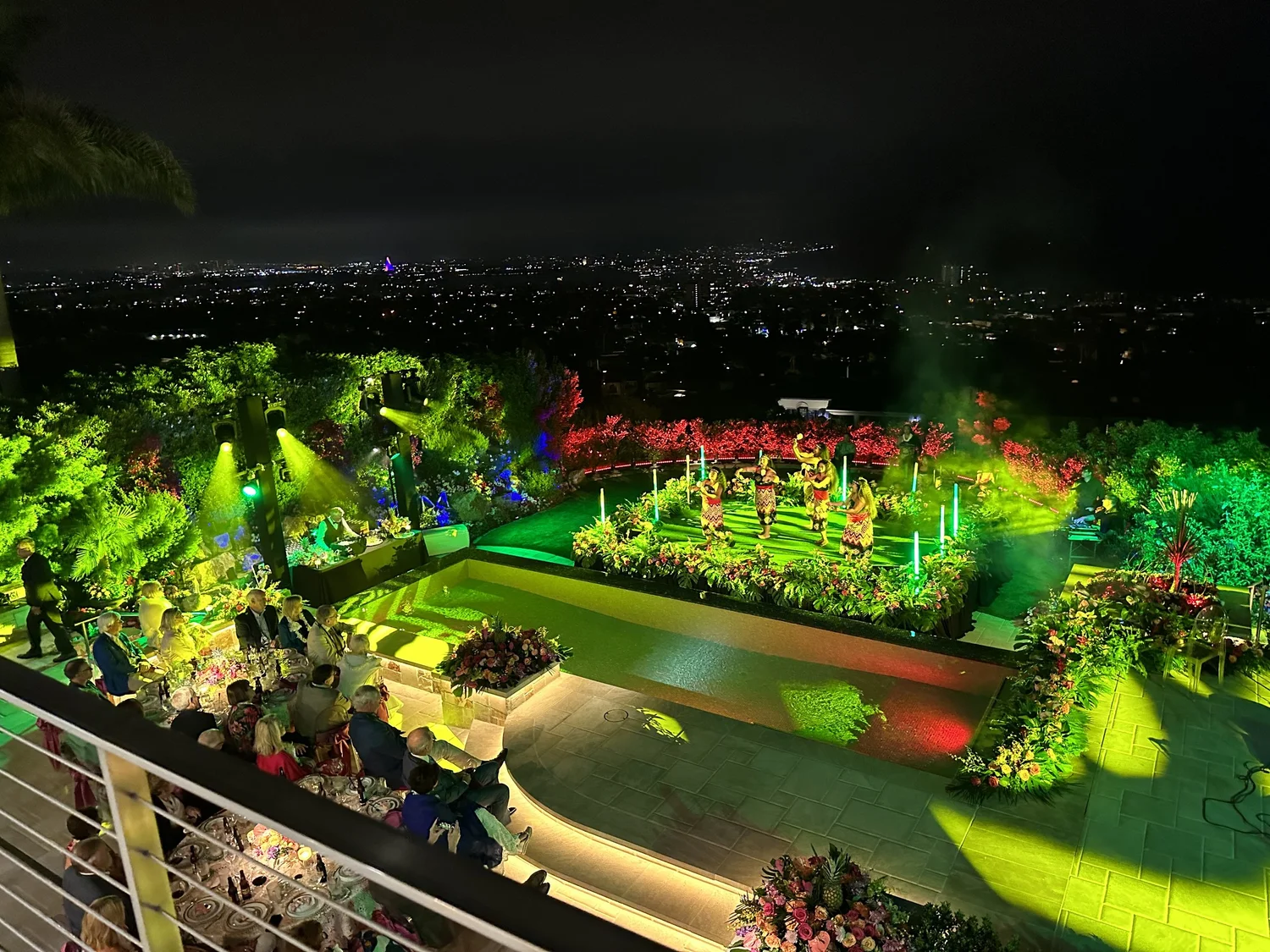
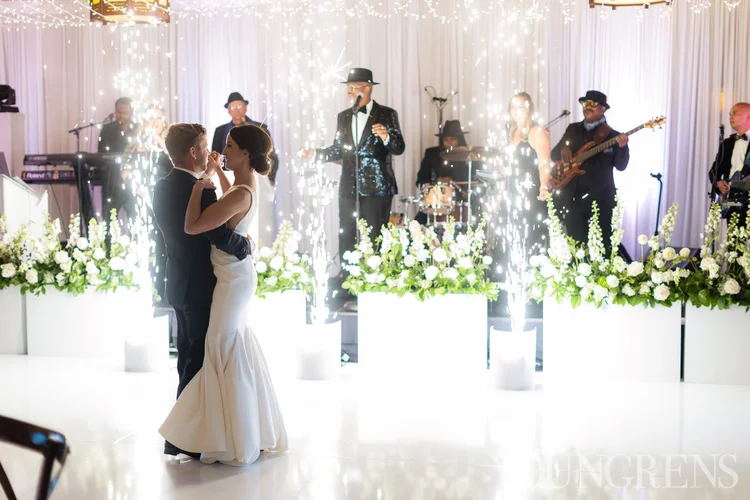
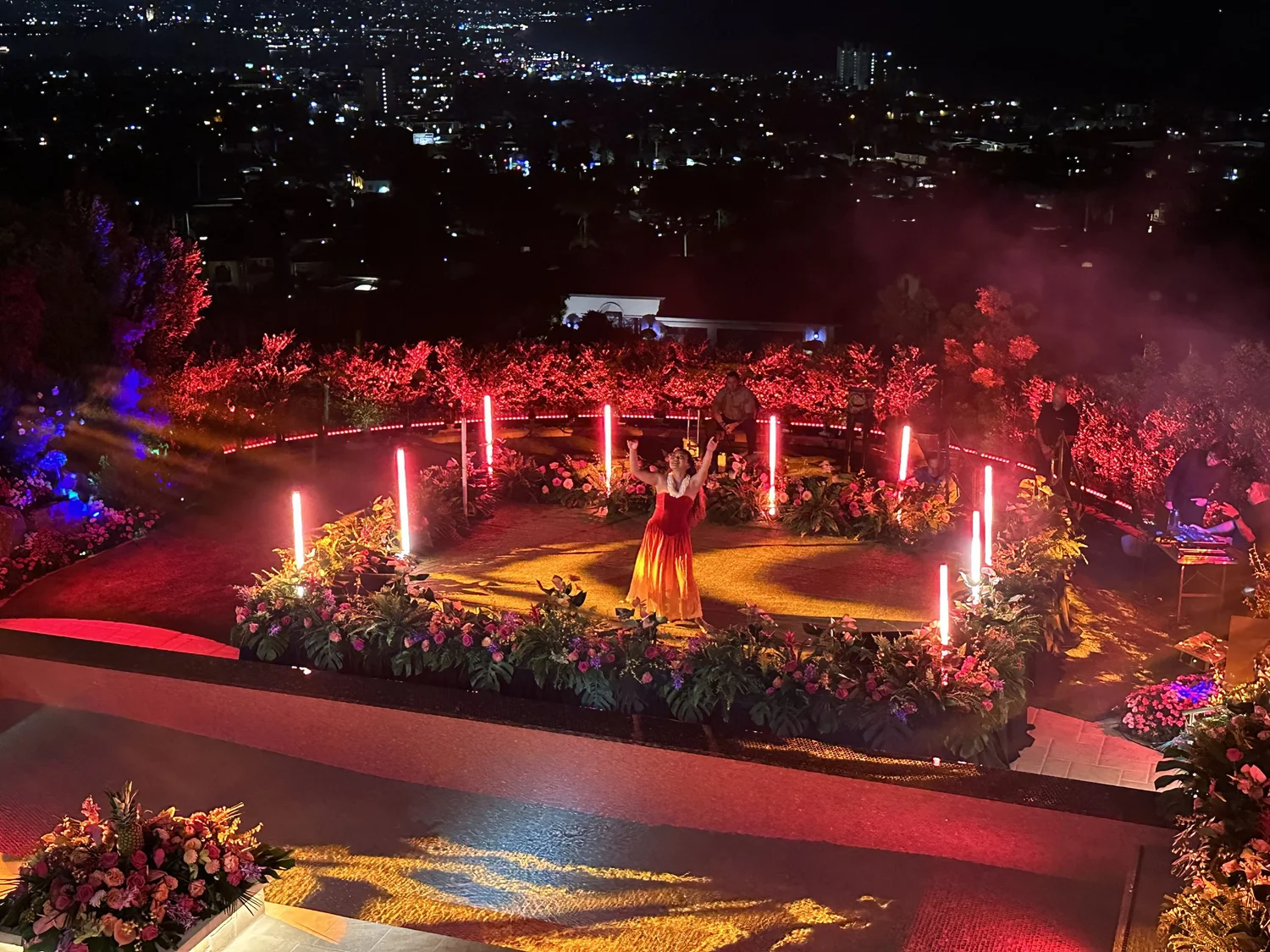
The dance floor is where lighting has to shift gears. Soft, warm dinner light is wrong for a packed floor at 10 p.m. Modern tented receptions handle this with a separate intelligent fixture package that lives quietly during dinner and comes alive once toasts wrap.
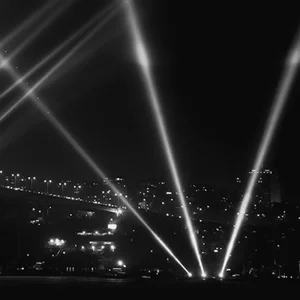
A typical dance floor rig includes moving heads or beam fixtures positioned over and around the floor, sometimes a few wash effects on truss totems, and a hazer to give the beams shape and depth in the air. The fixtures are programmed in scenes—dinner, first dance, party, last song—so the energy in the room follows the timeline of the night without anyone touching a board.
Power, Rigging, and Safety Inside the Tent
None of the design above matters if the tent cannot safely carry the load. Tented wedding reception lighting introduces real engineering questions that ballrooms never raise. Chandeliers and trussing have to hang from rated rigging points, every fixture needs a safety cable, and the entire system needs to be powered without overloading the property's residential service.
On Southern California estates, the available power is almost never enough on its own. We routinely spec a generator sized for the lighting, catering, and AV load combined, with quiet—run housings so the noise stays out of the reception. Cabling is dressed and taped so guests never see a cord, and every fixture is tested before doors open. These are the details that separate a polished production from an amateur setup, and they are non—negotiable on a wedding day.
Plan Lighting Before You Plan the Tent
The single best piece of advice we can give couples planning a tented Southern California wedding is to bring your lighting designer into the conversation before the tent is finalized. Tent height, cable runs, sidewall configuration, and rigging capacity all influence what is actually possible inside the structure. Designing lighting around a tent that has already been ordered is harder, more expensive, and almost always results in compromises the couple did not have to make.
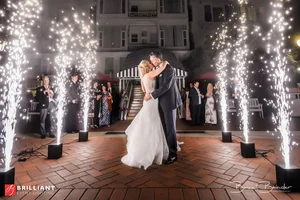
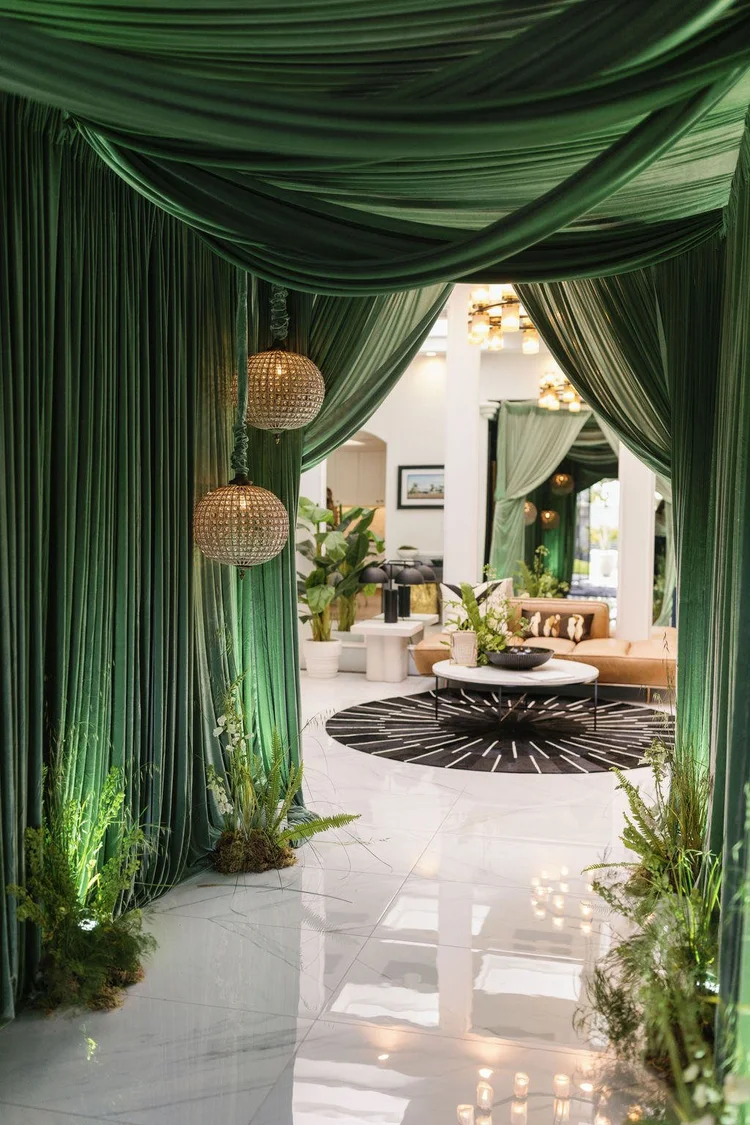
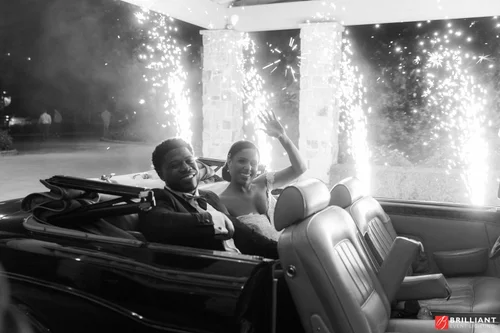
Walk the venue with your lighting team early. A short site visit at sunset tells us where natural light fails, where guests will gather, and what the tent will look like under the actual evening conditions of your wedding date. From there we can build a layered plan—ambient wash, statement pieces, pin spotting, dance floor, draping if it fits the design—that comes in on budget and looks intentional from the first guest arrival to the last sparkler exit.
Tented weddings reward couples who treat lighting as a design discipline rather than a line item. Done well, the light is what your guests will remember and what your photographer will thank you for. Done as an afterthought, even the most beautiful tent reads as half—finished.
Brilliant Event Lighting designs and produces tented wedding reception lighting at private estates, resorts, vineyards, and venues across Southern California. If you are planning a tented reception and want a thoughtful, layered lighting design that matches the rest of your wedding investment, request a free estimate at brillianteventlighting.com/estimate and we will walk you through the options for your venue and date.