




















Temecula Winery Wedding Lighting: A Complete Guide for Vineyard Receptions
Temecula Valley has quietly become one of Southern California's most sought-after wedding destinations, drawing couples from San Diego, Orange County, Los Angeles, and beyond. Rolling hills, working vineyards, and warm golden-hour sunsets give the region a built-in cinematic quality. But anyone who has produced an event in wine country knows the truth: the landscape that looks effortless at 6 p.m. can disappear into pitch black by 8:30. Thoughtful Temecula winery wedding lighting is what separates a beautiful daytime ceremony from an unforgettable nighttime celebration.
This guide walks couples, planners, and venue coordinators through how to plan lighting for a vineyard wedding in Temecula, what to budget for, and how to think about each phase of the event.
Why Vineyard Venues Need a Specialized Lighting Plan
Most Temecula wineries were built for wine, not events. That gives them charm, but it also creates real production challenges that hotel ballrooms simply do not have.
Open-air ceremony lawns and terraces look stunning at sunset, but they have almost no ambient light once the sun drops behind the hills. Reception barns and barrel rooms are typically dim by design and benefit from layered lighting to feel celebratory rather than cavernous. Power availability is often limited, with most venues offering only a handful of standard outlets in dispersed locations. Wind funnels through the valley in the late afternoon, which affects how string lights, drape, and rigged fixtures need to be installed.
A professional Temecula winery wedding lighting plan accounts for each of these realities before the first fixture goes up.
Lighting Each Phase of a Temecula Winery Wedding
A vineyard wedding usually flows through four distinct environments. Each one has a different lighting need.
Ceremony at Golden Hour
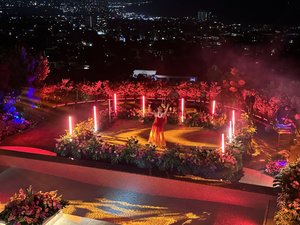
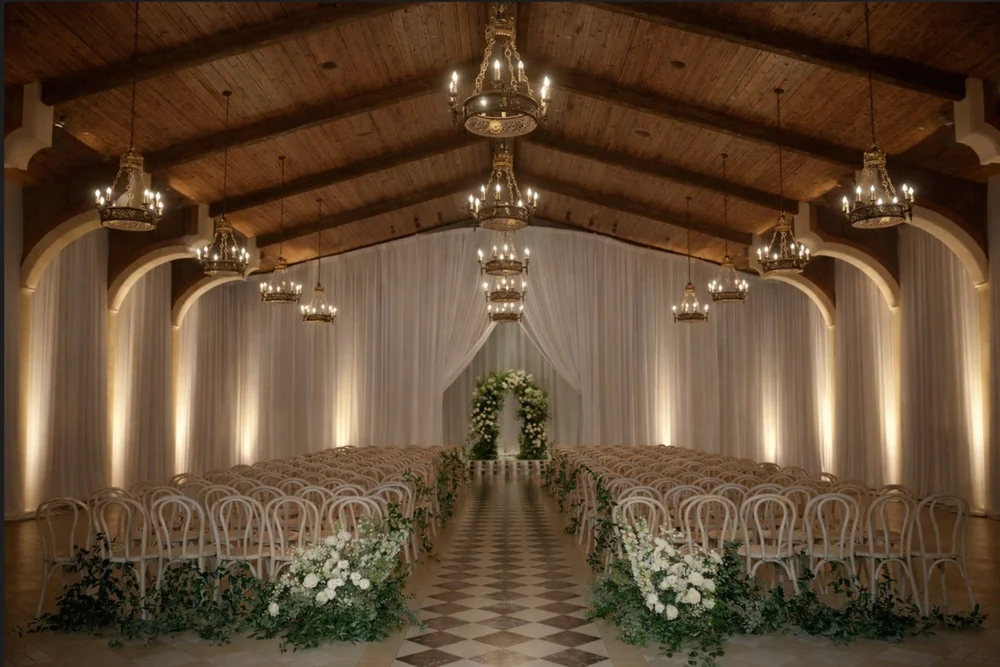
Ceremonies in Temecula are typically scheduled to land within the last hour of daylight, which means natural light does most of the work. Where lighting matters is in the transition. As the sun drops, photographers lose their natural fill, guests start to squint, and the altar can fall into shadow. Discreet pin spots on the couple, a soft uplight wash on the ceremony backdrop or arch, and warm market lighting along the aisle keep the moment beautiful through the entire ceremony, not just the first ten minutes.
Cocktail Hour Transition
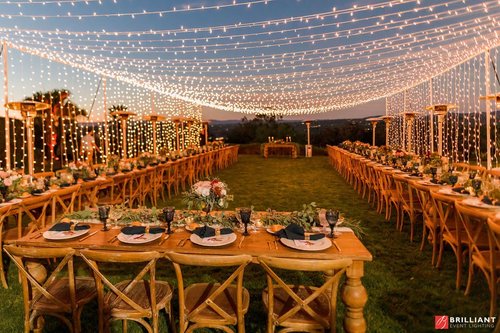
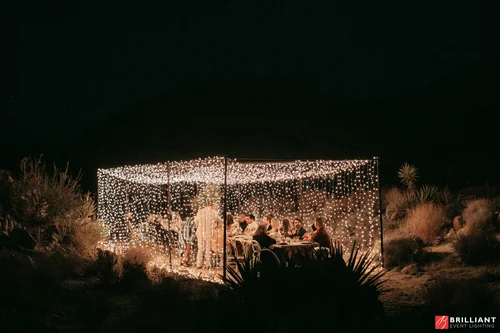
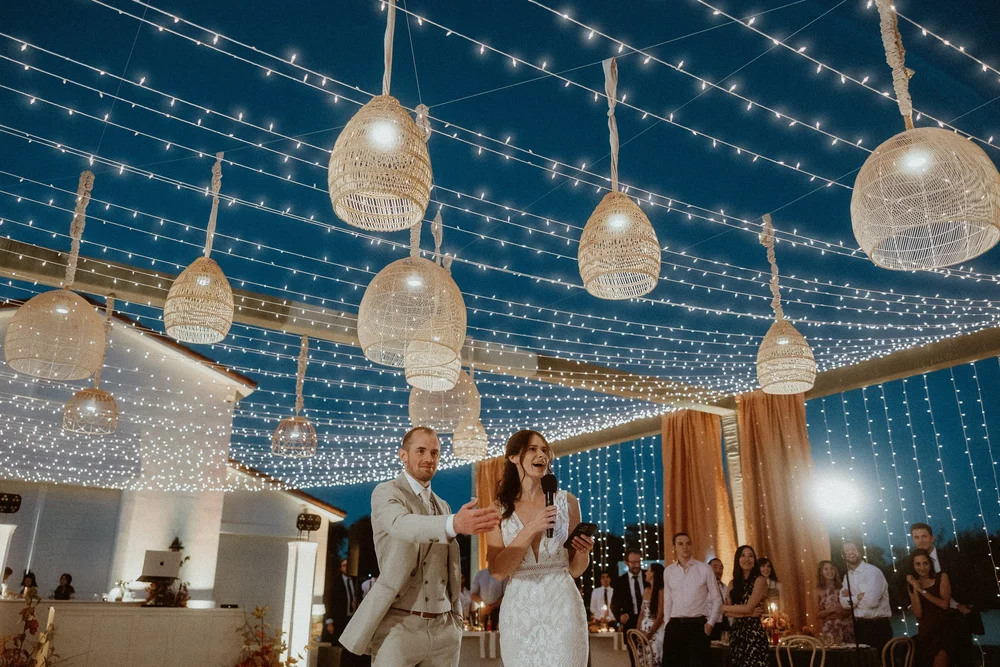
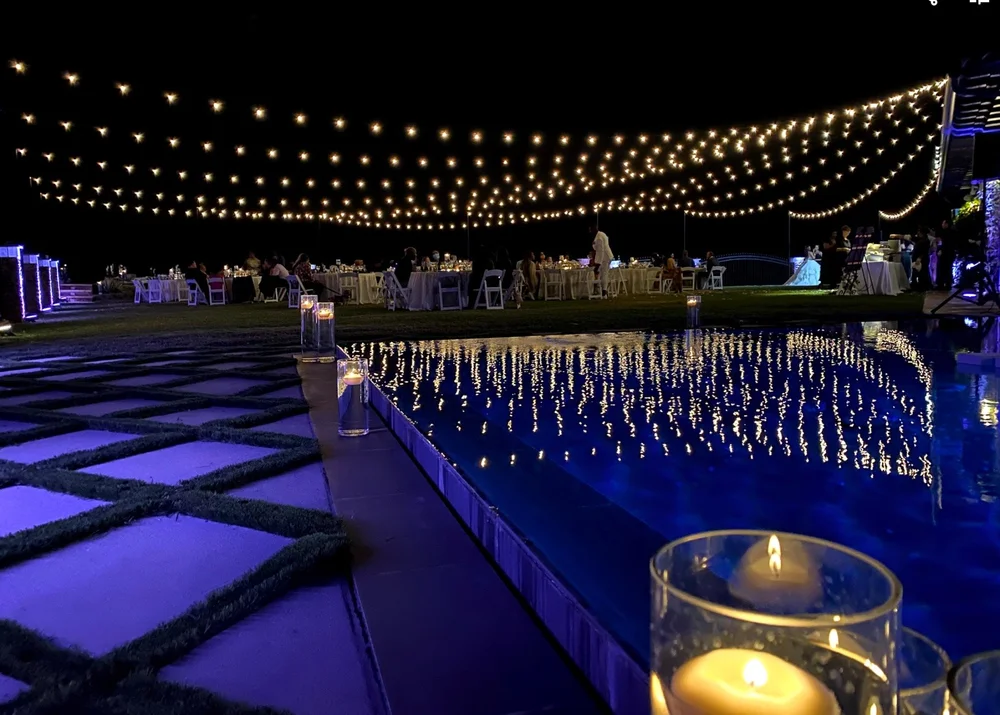
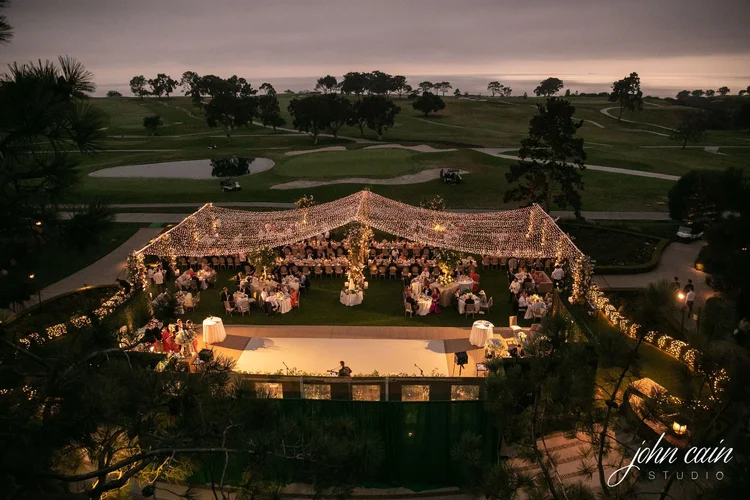
Cocktail hour is usually when the venue moves from natural light to fully artificial. This is the phase couples most often underestimate. A bar tucked under a pergola, a hors d'oeuvre station near the vine rows, and a quartet on the lawn all need separate, intentional lighting. Bistro and market string lights stretched across the cocktail area provide both functional illumination and the warm, casual atmosphere that wine country is known for. Pin spots on cocktail tables and the bar prevent them from disappearing into shadow.
Reception Dining
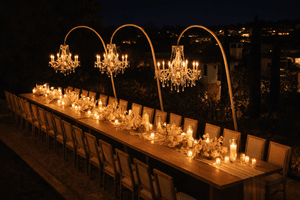
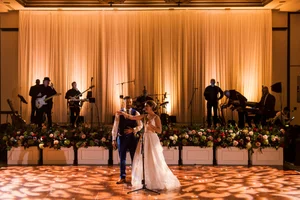
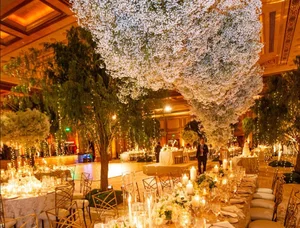
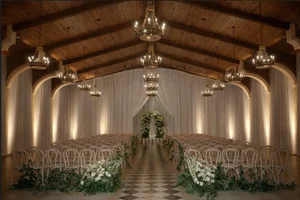
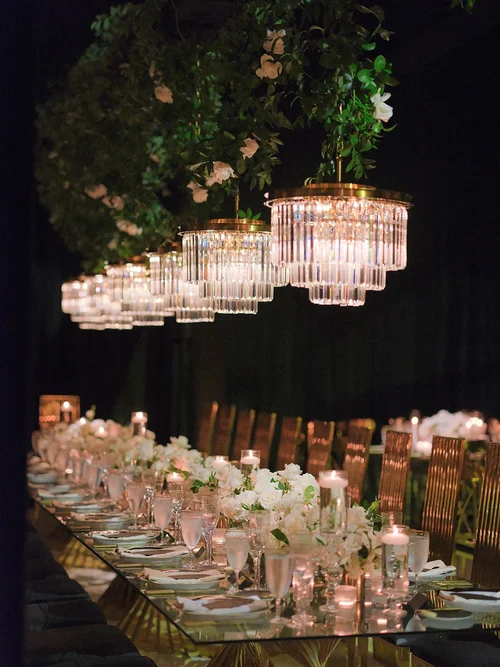
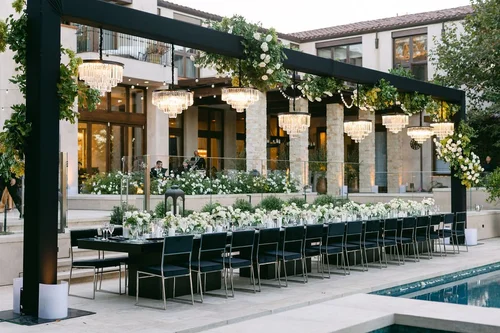
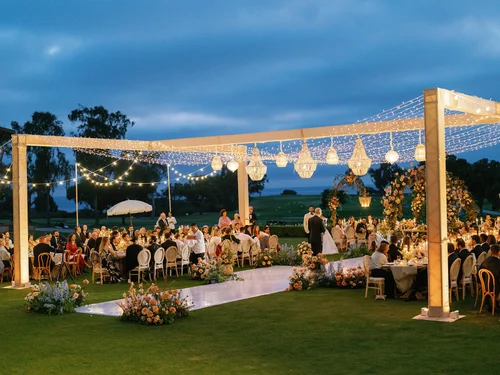
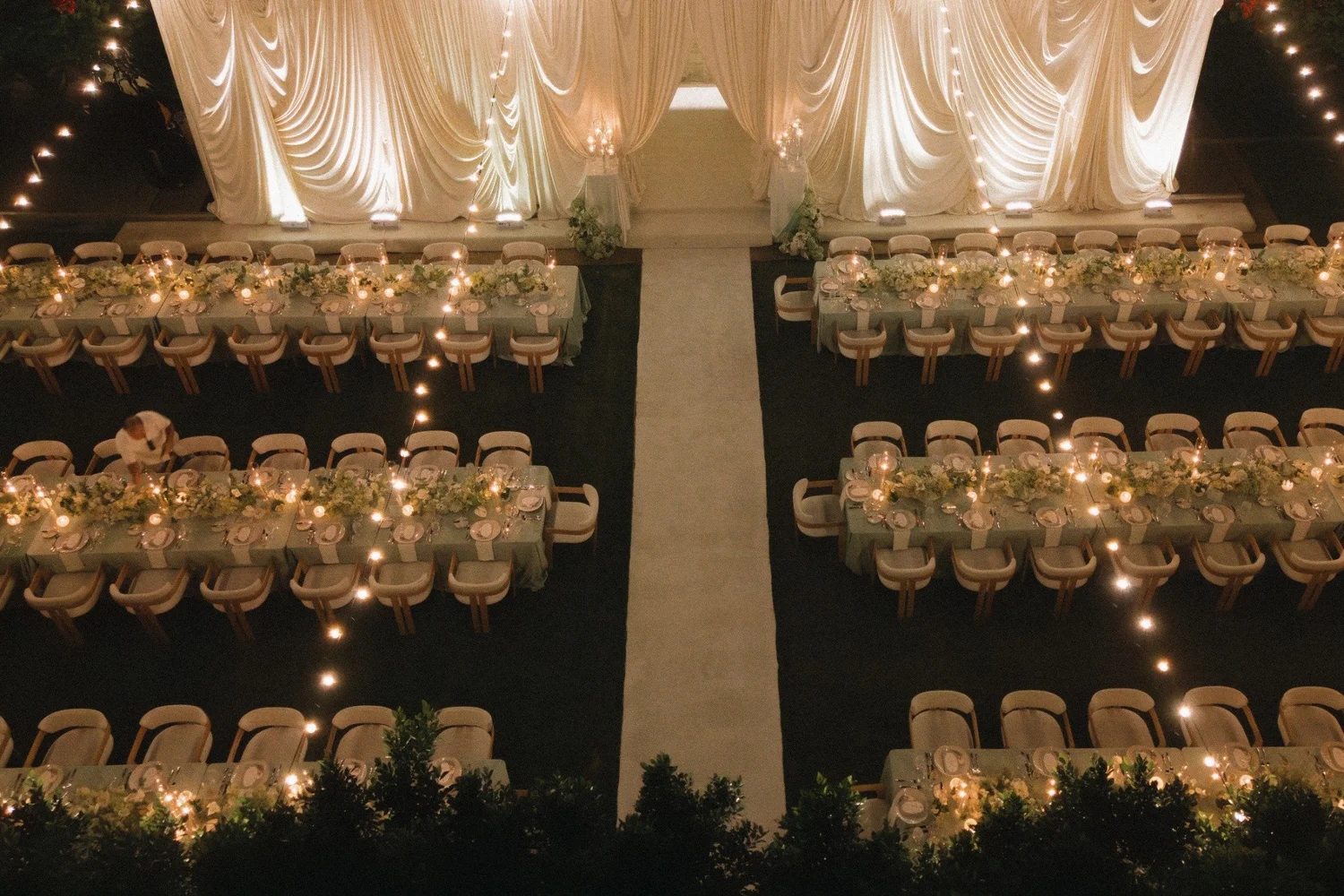
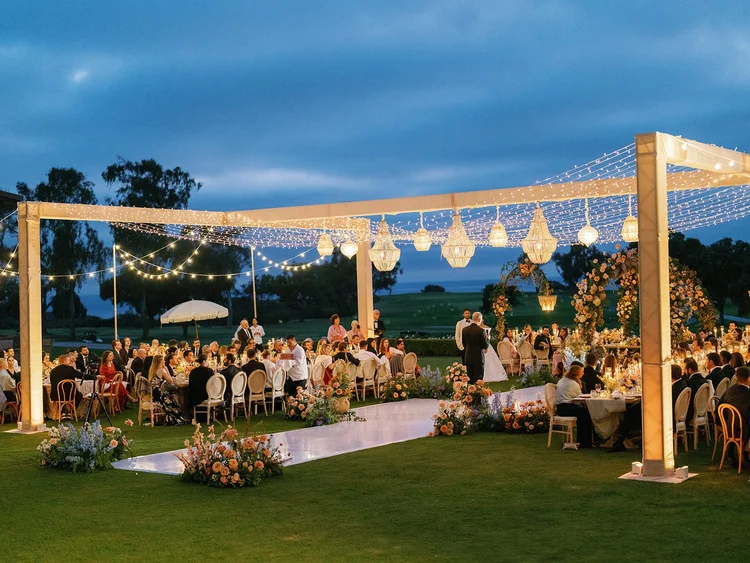
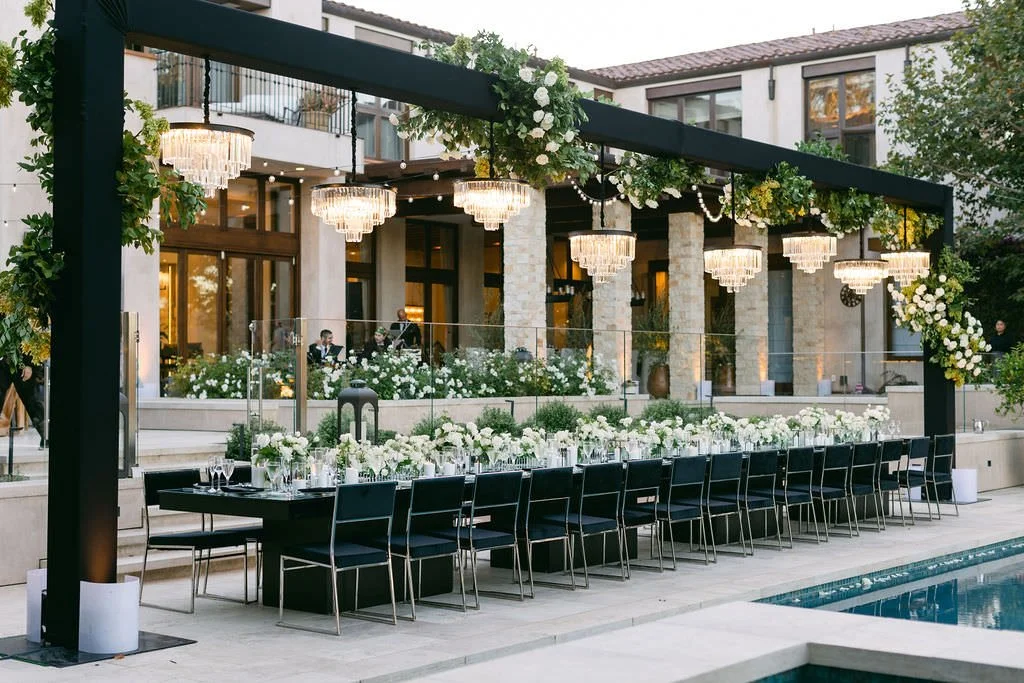
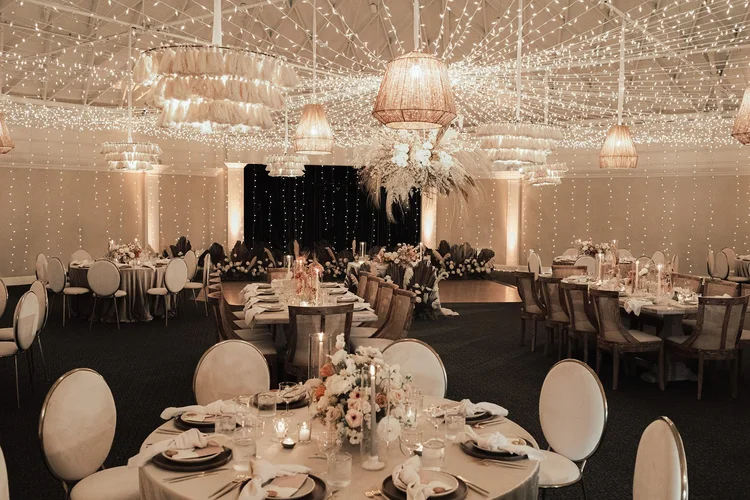
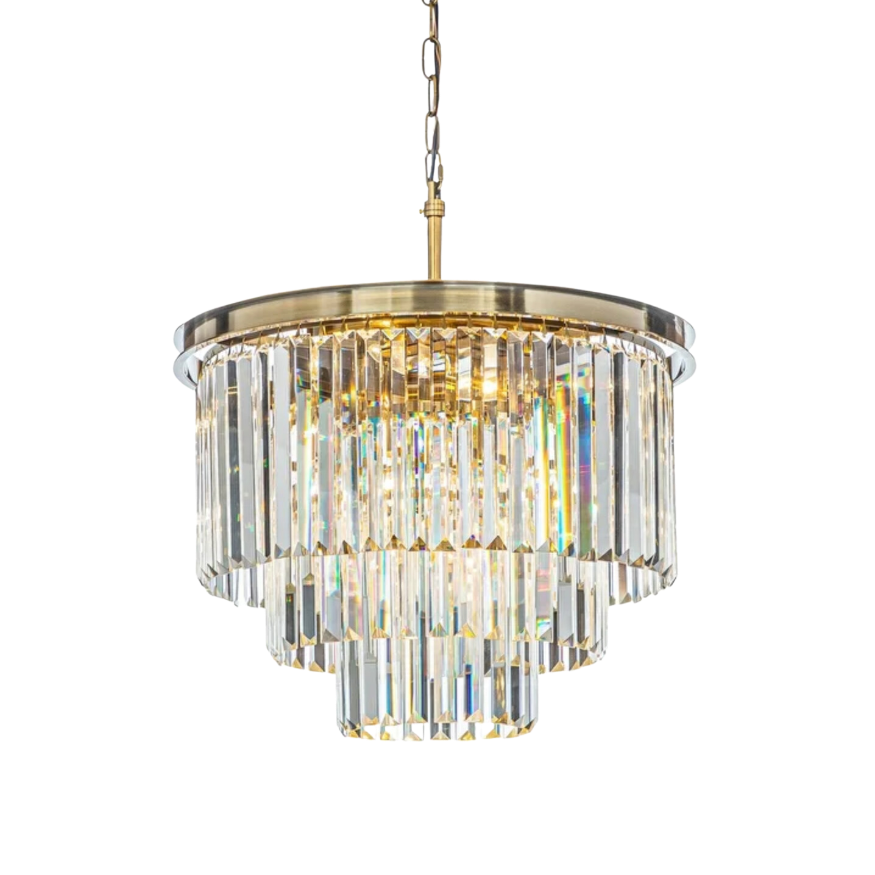
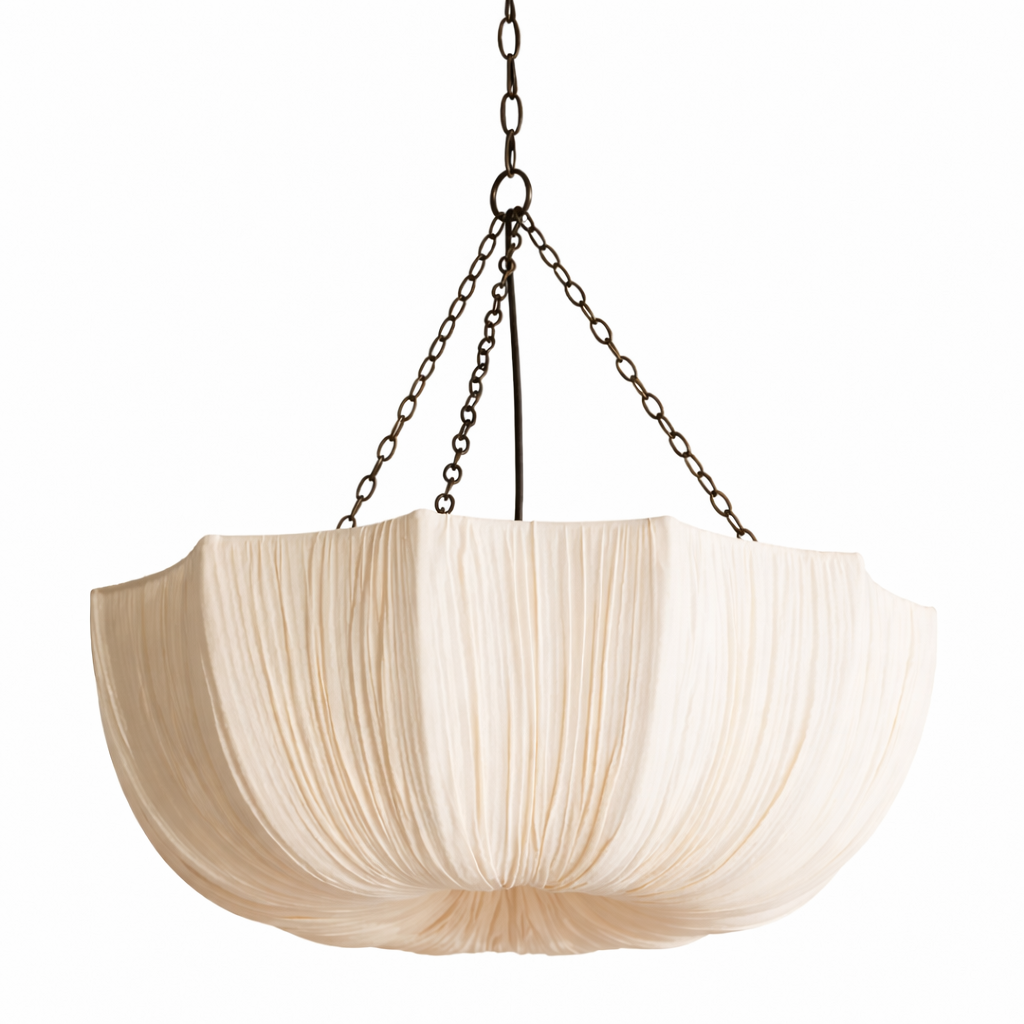
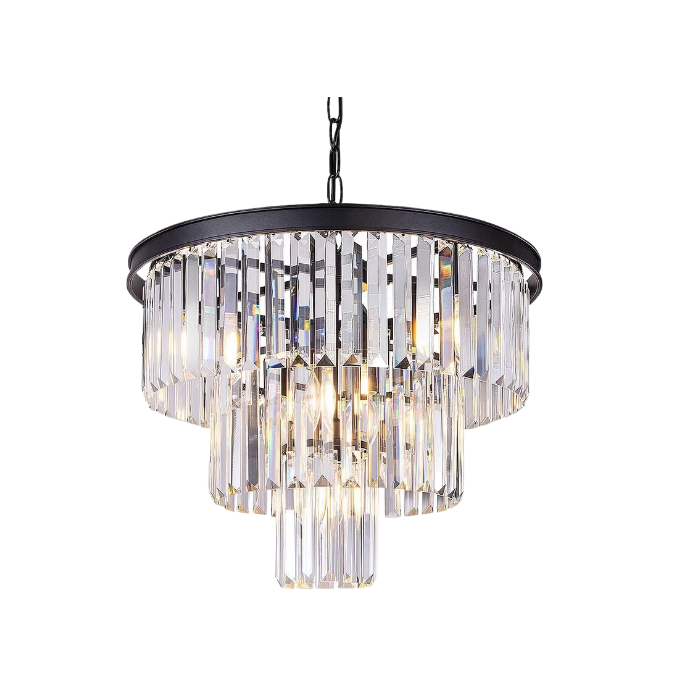
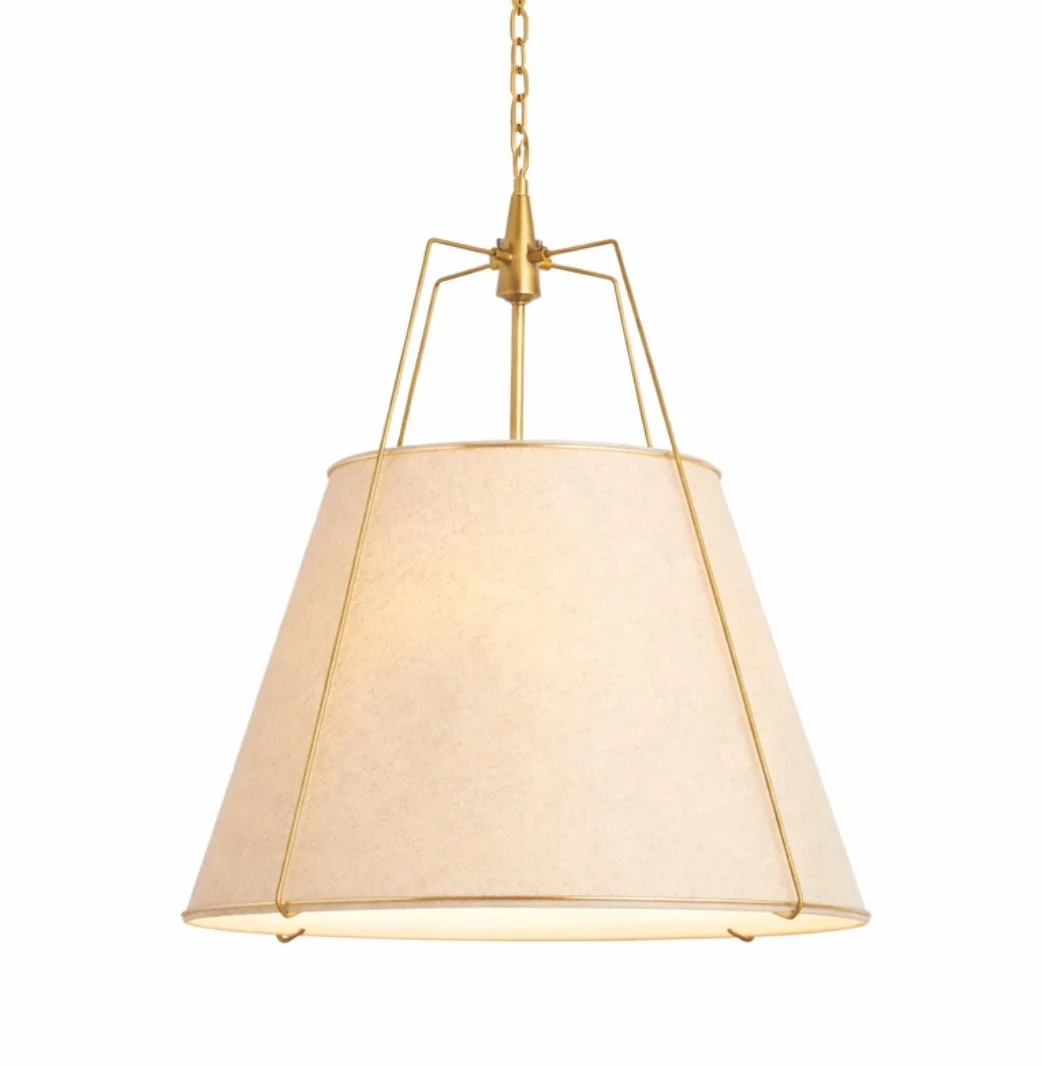
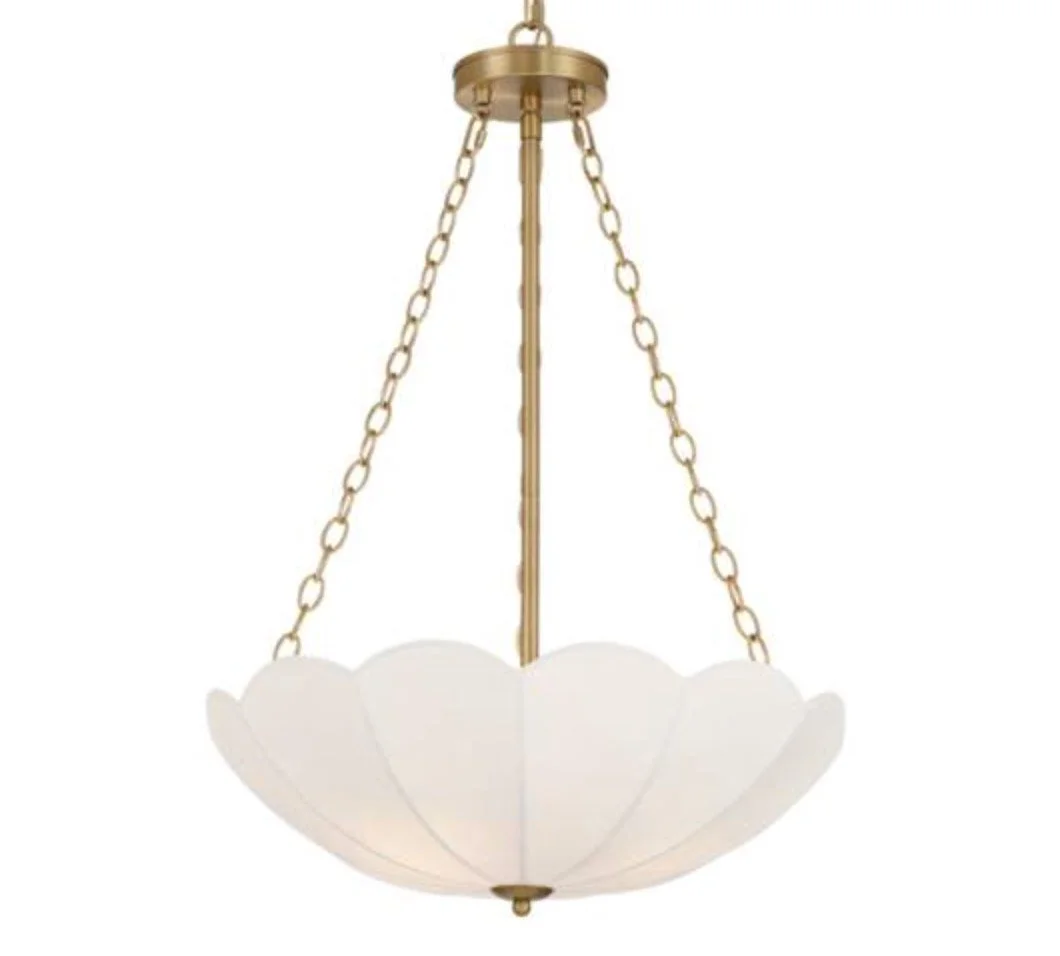
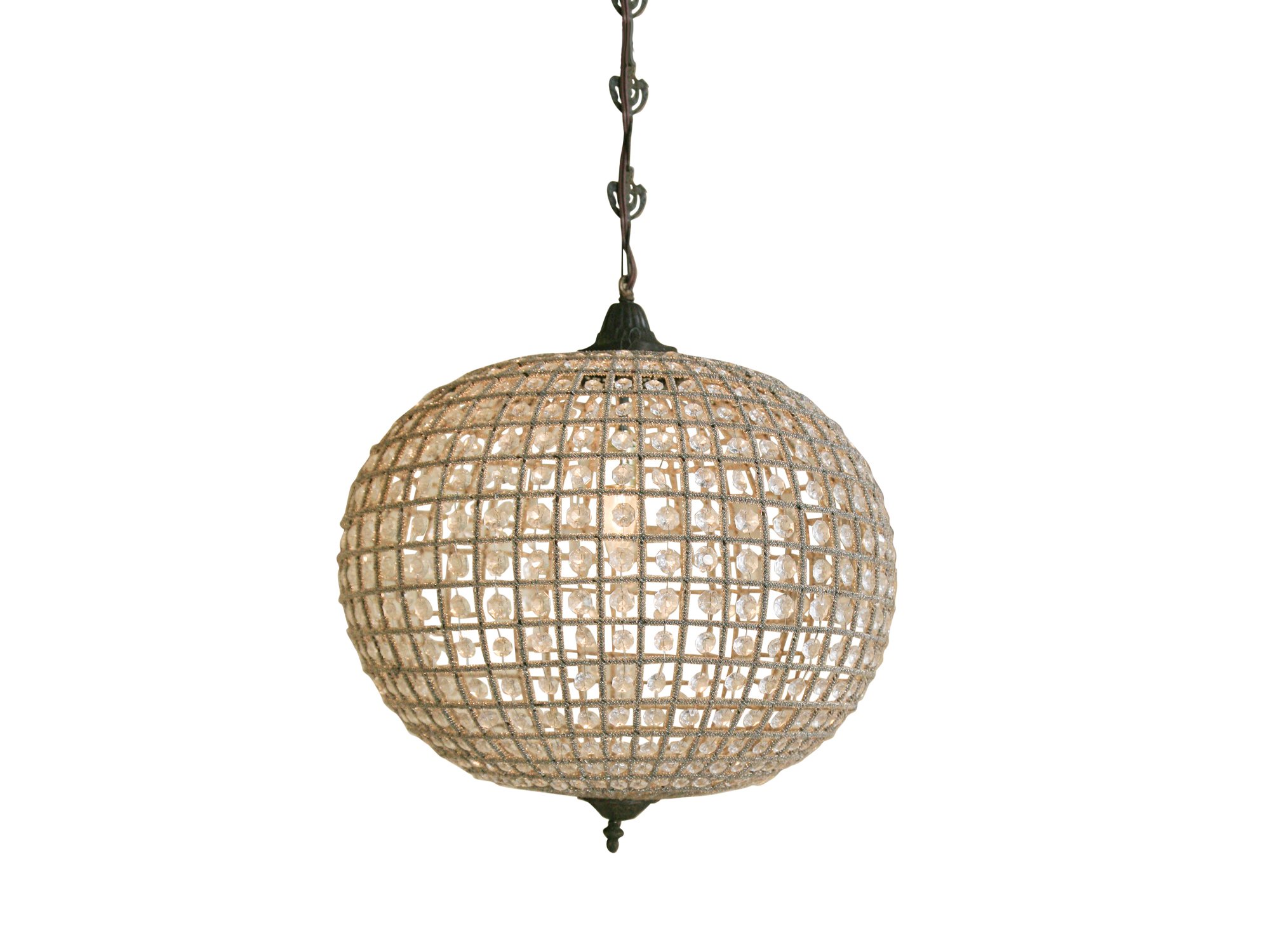
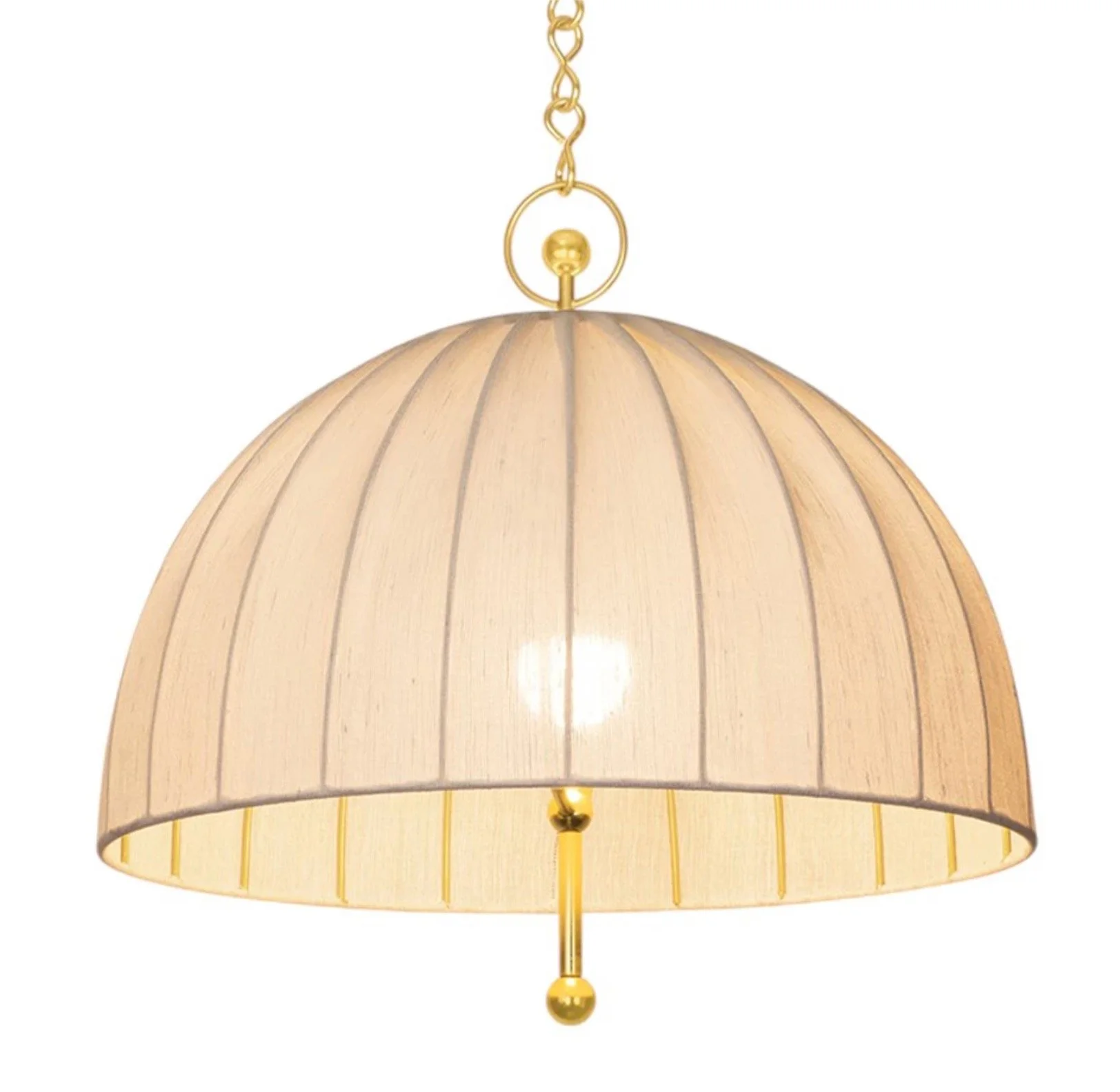
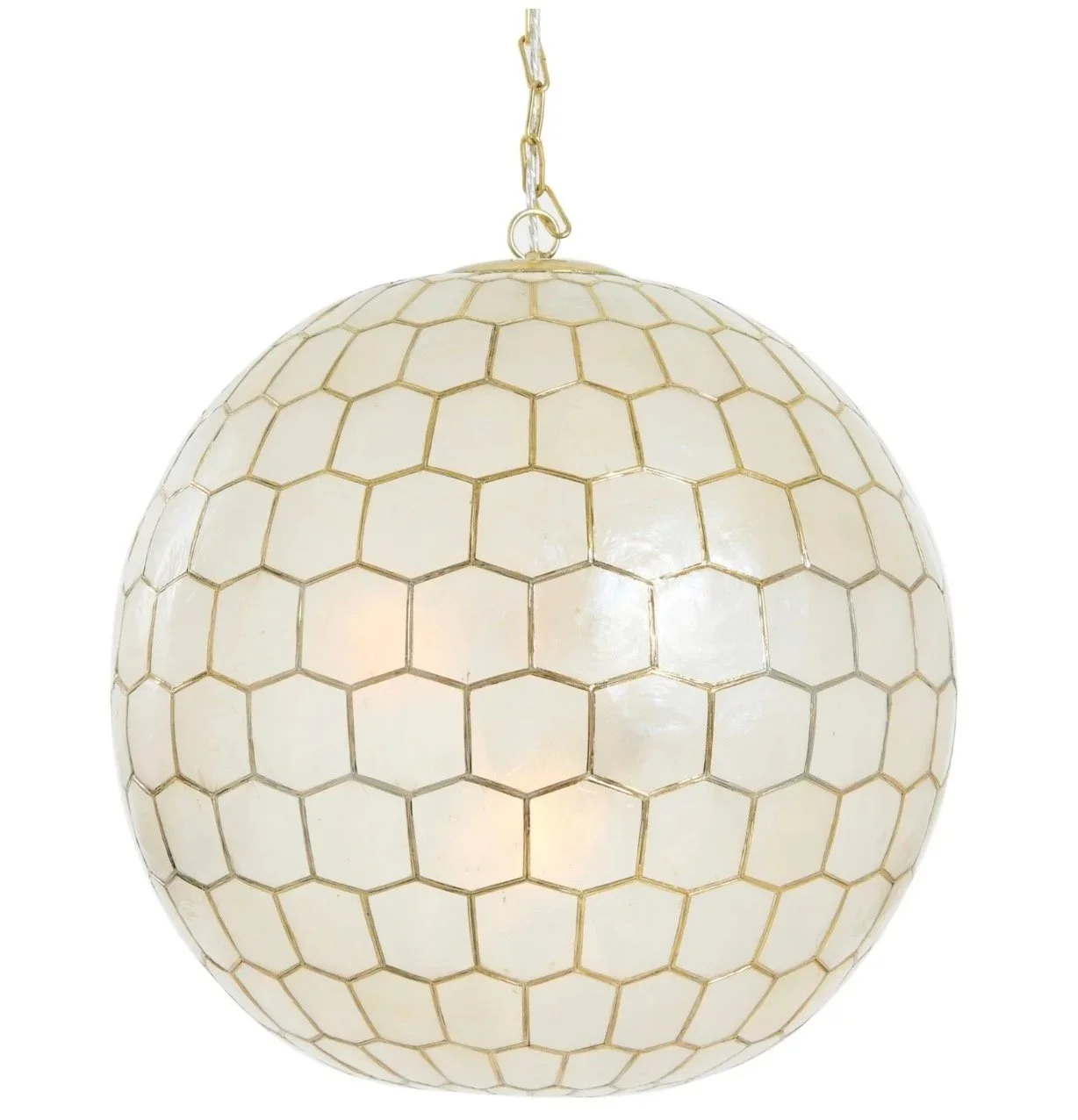
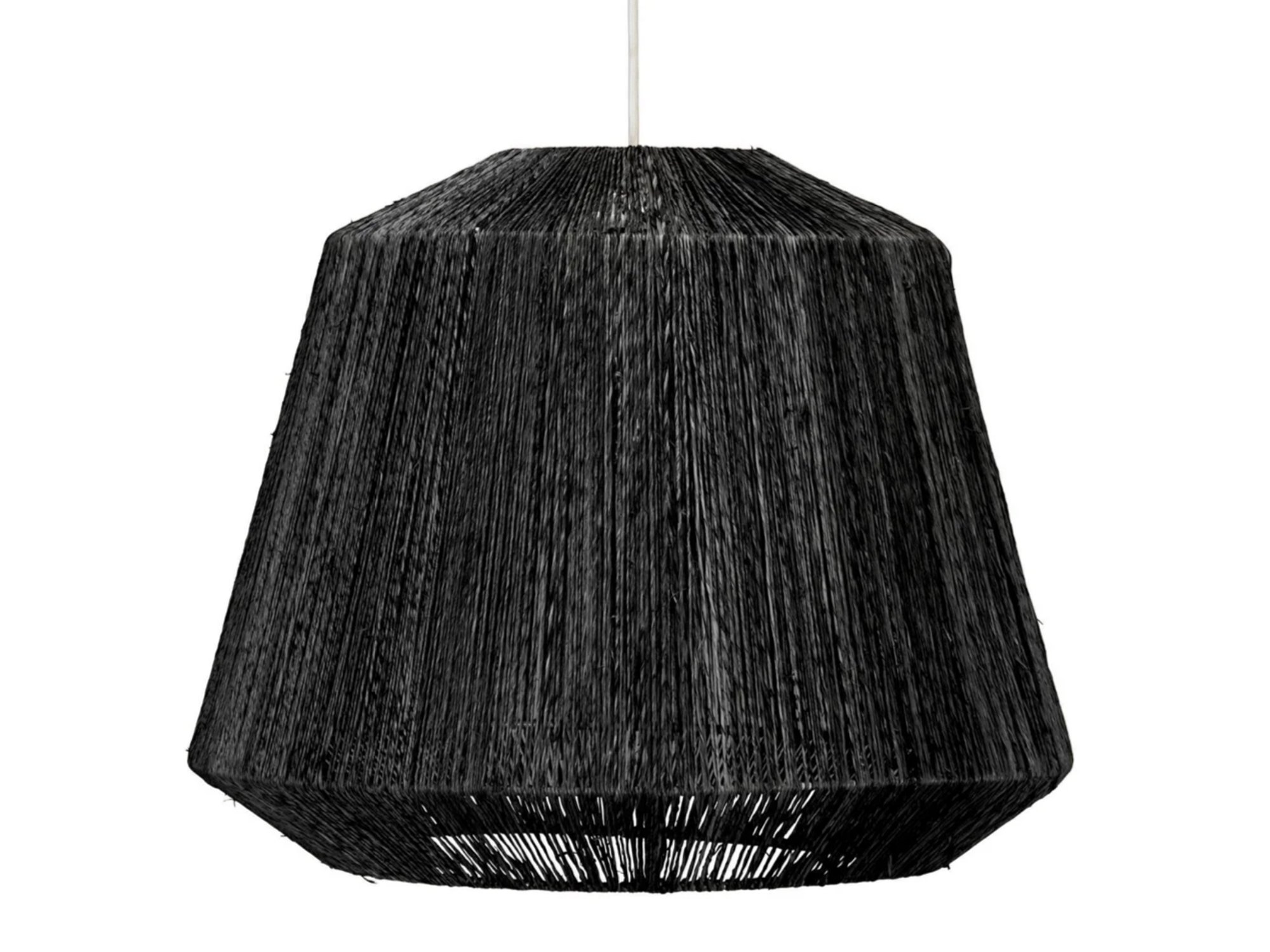
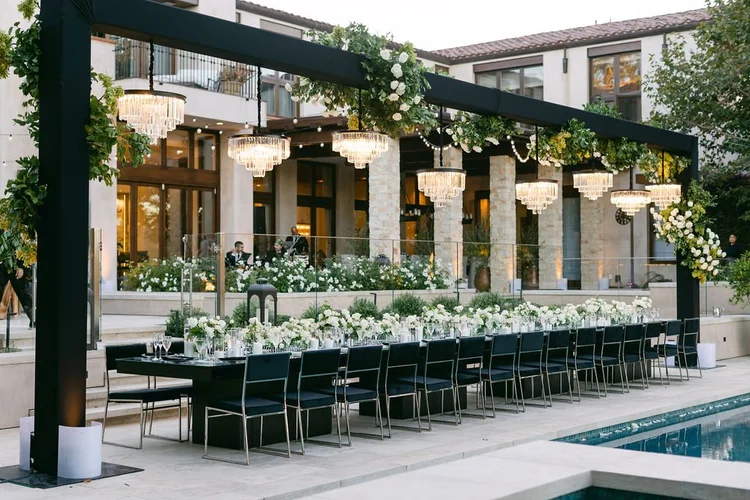
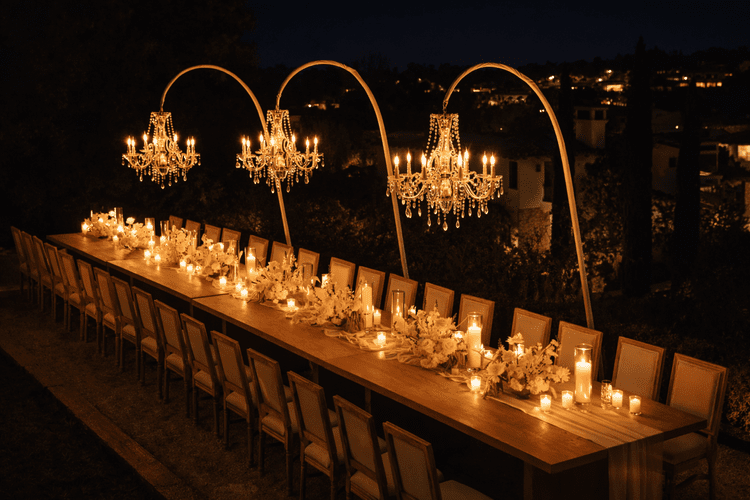
This is the centerpiece of the lighting design. Inside a barrel room, the goal is usually to dim the existing house lights and layer in romance: chandeliers or pendants over the head table, pin spots on every dining table to make florals and place settings pop, and warm uplighting around the perimeter to soften the architecture. Outdoor receptions under a tent or open sky benefit from the same approach, with the addition of a market light or twinkle light canopy overhead to define the room.
A monogram gobo projected onto a barn wall or onto the dance floor is a small detail that consistently delivers a high return on investment.
Dance Floor and Late Night
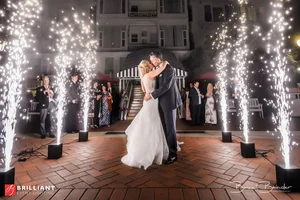
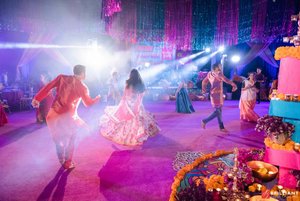
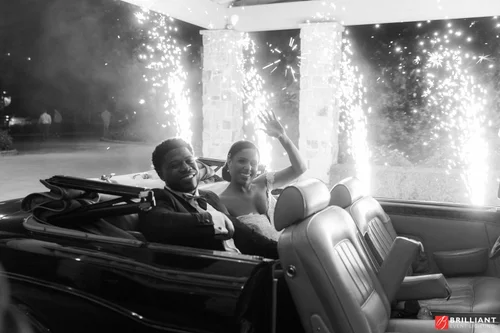
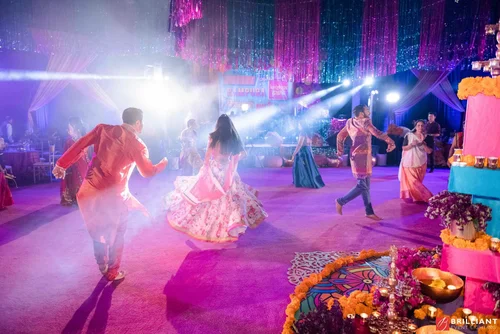
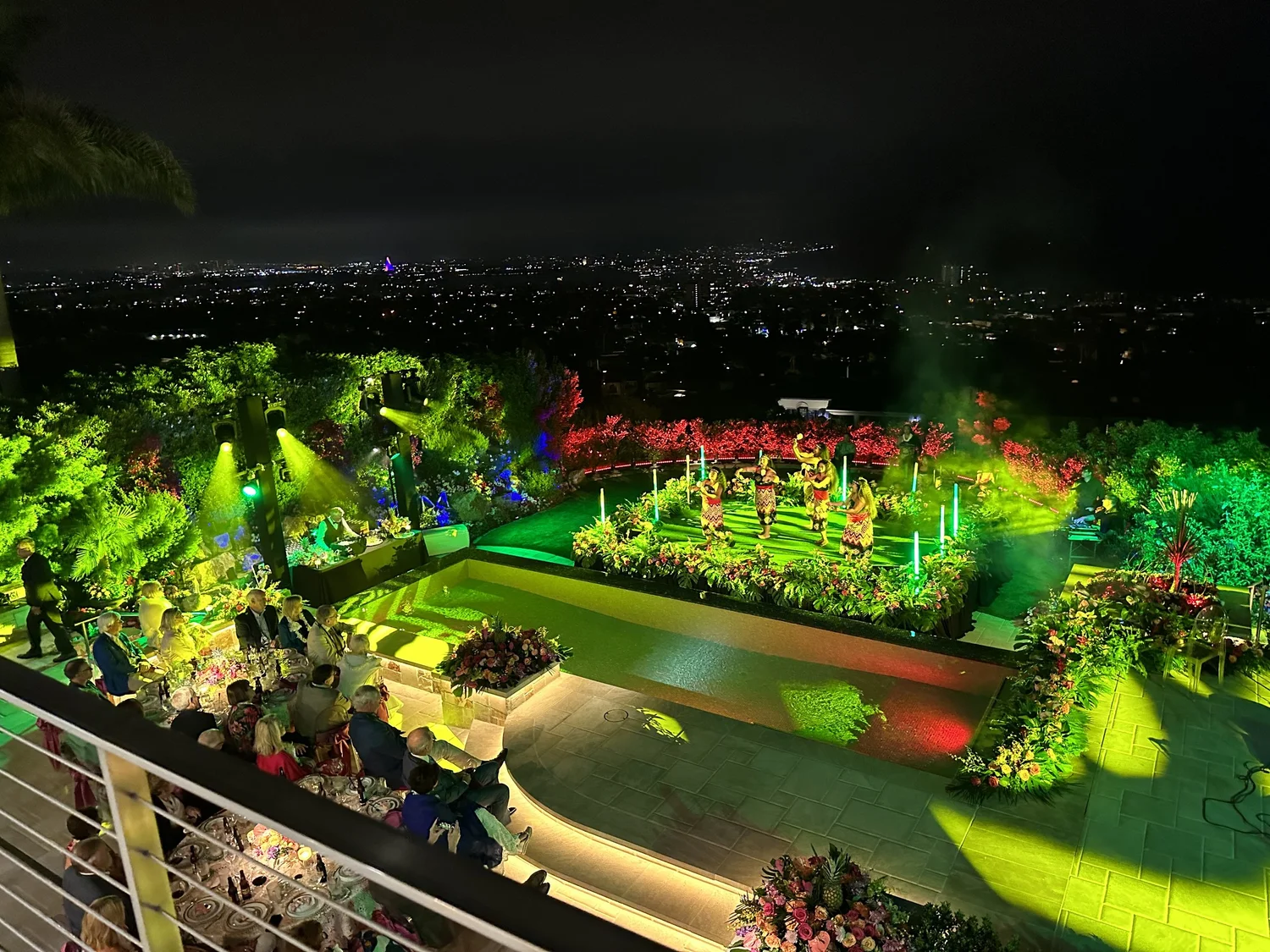
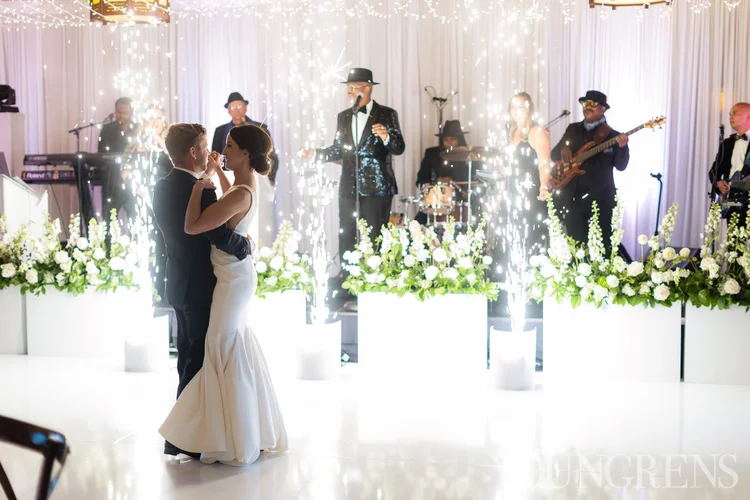
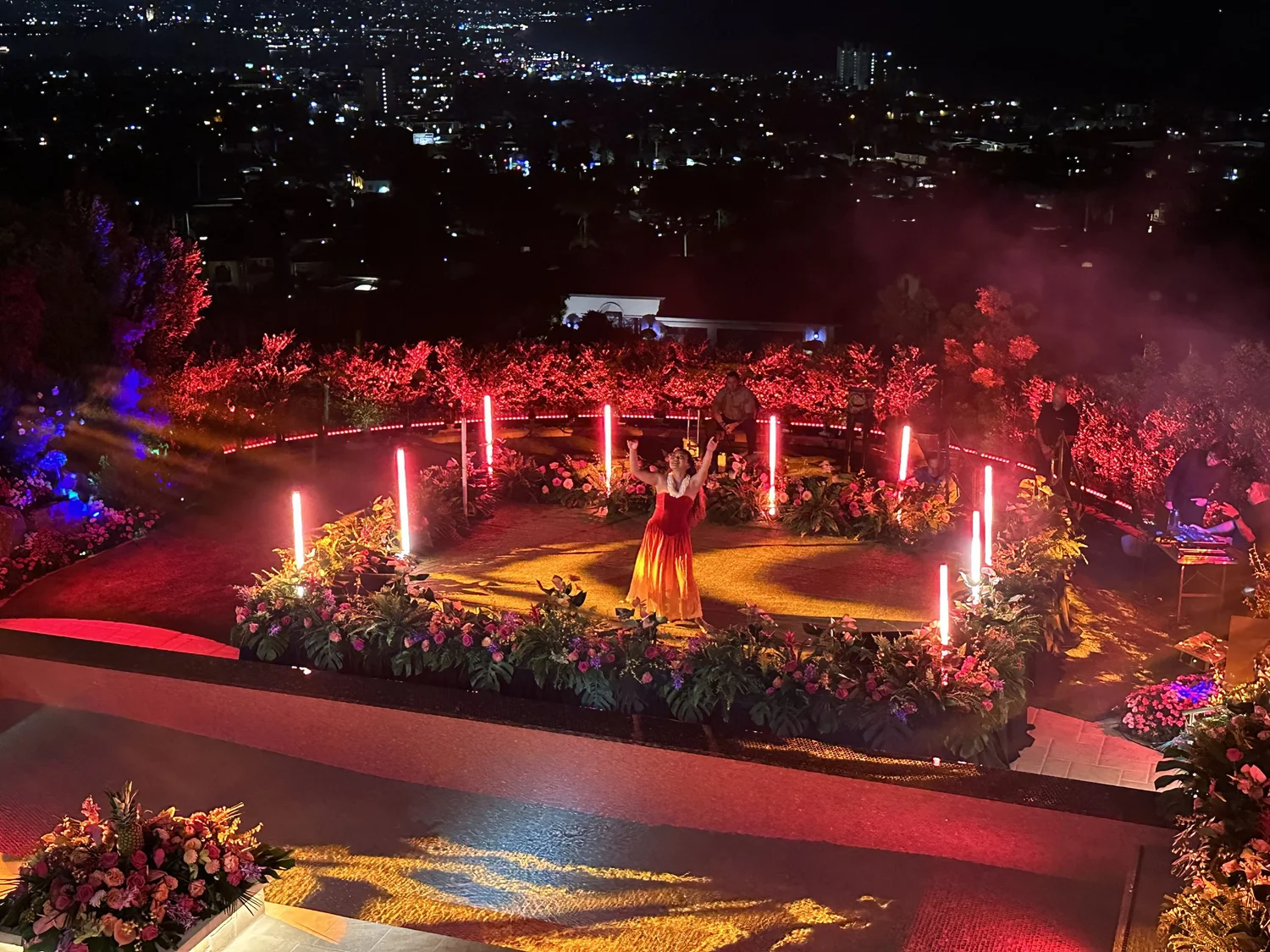
Once dinner ends, the energy needs to shift. A dedicated dance floor lighting package, separate from the dinner lighting, is what makes that transition feel intentional. Moving heads, color washes, and dance lighting cued to the band or DJ turn the same room from elegant dinner into an actual party. Cold sparklers for the first dance or grand exit are increasingly popular at Temecula venues that prohibit traditional sparklers due to fire risk.
Lighting Considerations at Popular Temecula Venues
Every winery in the valley has its own quirks. A few examples couples ask about often:
Ponte Winery and Wilson Creek Winery both have large outdoor reception spaces that benefit from significant market light coverage and structural rigging to define the space. Falkner Winery's pavilion has existing market lights but typically needs supplemental uplighting and dance lighting to feel finished. Callaway Vineyard and Winery's courtyard, which overlooks the Cabernet Sauvignon vines, becomes magical with uplighting on the surrounding architecture and string lights overhead. Leoness Cellars and Europa Village have multiple usable areas, which means a layered lighting plan that handles ceremony, cocktail, and reception in three separate locations. Mount Palomar and South Coast Winery offer barrel rooms and tasting rooms that respond beautifully to pin spotting and chandelier rentals.
A site visit with a lighting designer is the single most useful step a couple can take. Photos online never reveal where the power drops are, where the wind hits, or where the ceiling rigging points actually exist.
Practical Considerations Wine Country Couples Should Know
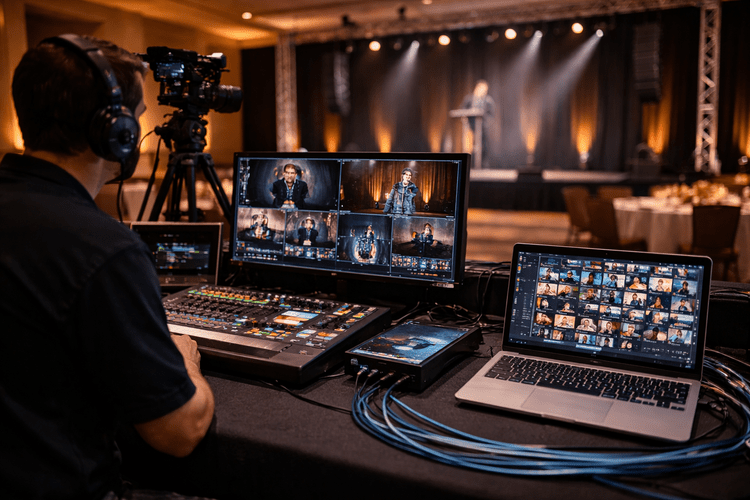
Power is almost always the first conversation. Most Temecula wineries do not have enough dedicated electrical service to run a full lighting and AV package off house power alone. A quiet generator or distro plan is standard for larger weddings and should be factored into the budget early.
Permits and venue restrictions vary widely. Some wineries restrict where rigging can attach, prohibit ground stakes in certain areas, or have noise ordinances that affect dance lighting cues. A lighting company that regularly works in Temecula will know these rules without having to learn them on your event.
Weather is the other variable. Spring and fall evenings in Temecula can drop fifteen to twenty degrees after sunset, and summer afternoons can deliver real wind. Lighting plans need to be built to handle both, with appropriately rated fixtures, weighted bases for outdoor uplights, and rigging that does not flex in a gust.
What to Budget for Temecula Winery Wedding Lighting
A modest Temecula winery wedding lighting package, with bistro lighting over a cocktail or dinner area, uplighting, and basic dance floor lighting, typically starts in the low four figures. Full-production weddings with custom rigging, generators, multiple zones, pin spotting, monogram gobos, and dance lighting can range significantly higher depending on the venue and the design.
The right number depends entirely on the venue, the guest count, and how much of the event happens after dark, which in Temecula is most of it.
Ready to Design Your Temecula Winery Wedding Lighting?
Vineyard weddings reward thoughtful lighting more than almost any other venue type in Southern California. The landscape gives you a beautiful starting canvas, and the right lighting design carries that beauty through the entire night.
Brilliant Event Lighting has designed lighting for weddings at wineries across Temecula Valley, as well as luxury venues throughout San Diego, Orange County, and Los Angeles. If you are planning a vineyard wedding and want a lighting design built specifically for your venue, request a free estimate at brillianteventlighting.com/estimate and our team will walk you through the options.