



















Uplighting for Weddings: Colors, Costs, and Design Ideas
Uplighting is one of the simplest and most dramatic ways to transform a wedding reception. By placing LED fixtures at the base of walls, columns, or architectural features, uplighting washes your venue in color and creates a warm, immersive atmosphere that photographs beautifully. Whether you’re planning an intimate garden reception or a grand ballroom celebration, uplighting sets the mood for every moment of your evening.
At Brilliant Event Lighting, we’ve designed uplighting for hundreds of weddings across San Diego and Southern California. This guide covers everything you need to know about wedding uplighting — from choosing the right colors and understanding costs to design ideas that will make your venue unforgettable.
What Is Wedding Uplighting?
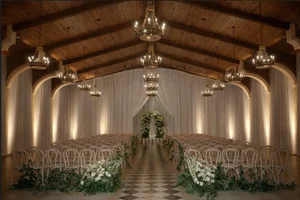
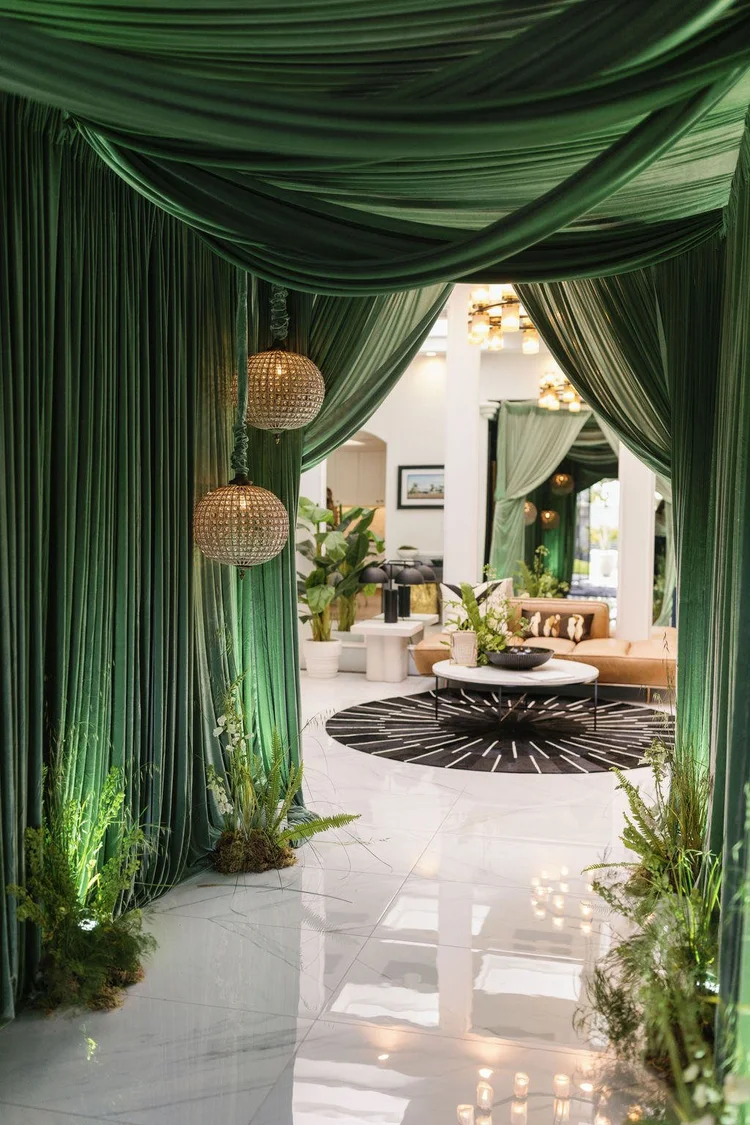
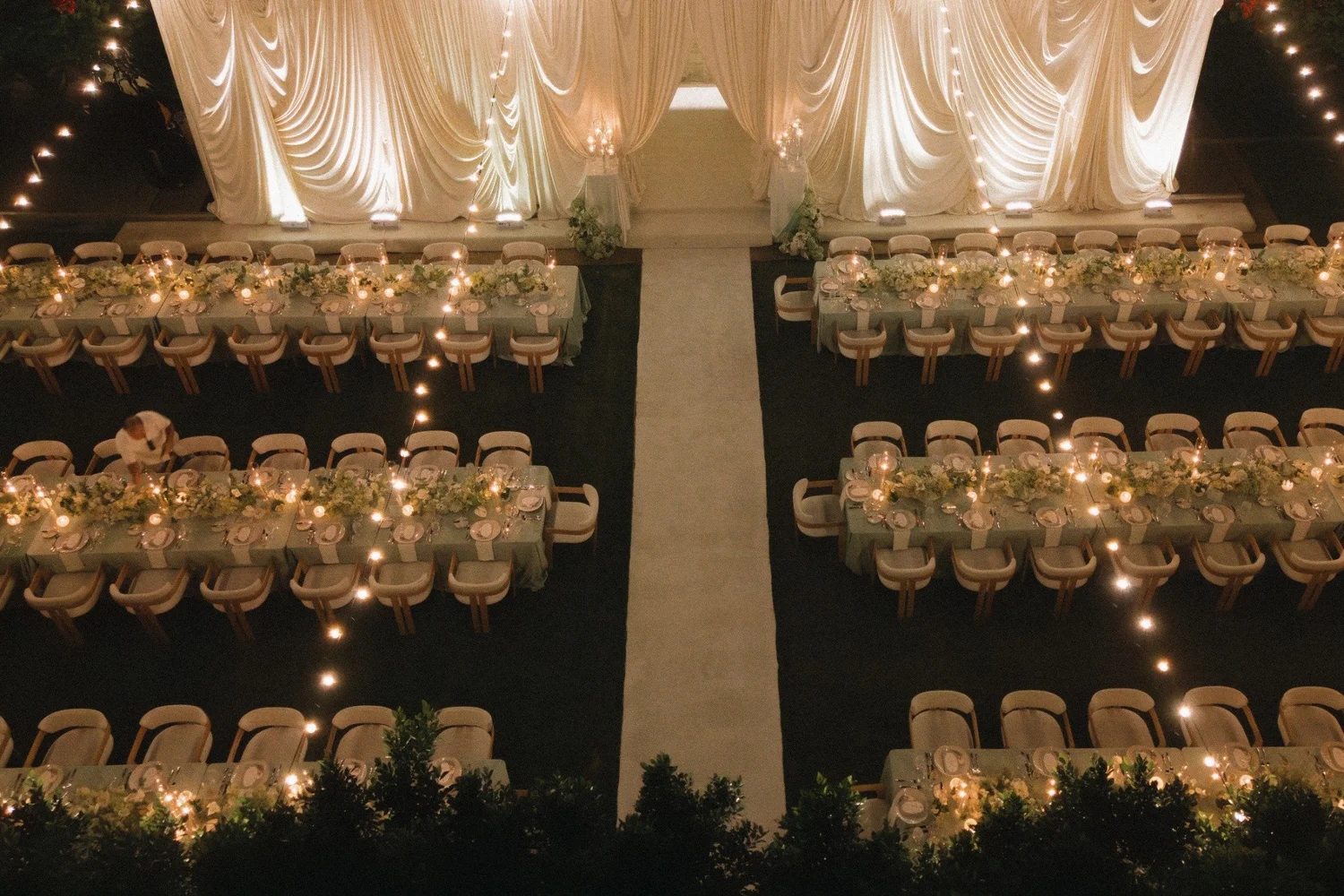
Uplighting uses LED fixtures placed on the ground and aimed upward to wash walls, pillars, draping, and other surfaces in colored light. Unlike overhead lighting that illuminates from above, uplighting creates depth, dimension, and drama by casting light from the floor up. The effect softens harsh architectural lines, adds warmth to plain walls, and gives your reception space a completely custom look that matches your wedding palette.
Modern LED uplights are wireless, battery-powered, and capable of producing millions of colors. Your lighting designer can program them to display a single color all evening, transition between colors during different parts of your reception, or sync with your DJ’s music for the dance portion of the night.
How to Choose Uplighting Colors
The right uplighting color ties your entire reception design together. Most couples start by matching their uplighting to their wedding color palette, but the venue itself plays an equally important role in the decision.
Popular Uplighting Colors and Their Effects
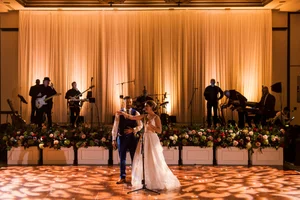
Warm amber and gold tones are among the most requested uplighting colors. They create a romantic, candlelit glow that flatters skin tones and works beautifully in ballrooms, barns, and outdoor tented receptions. Blush pink and soft rose add a feminine, romantic warmth that pairs well with floral-heavy designs and garden venues.
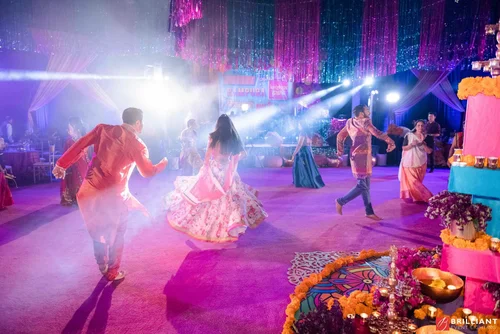
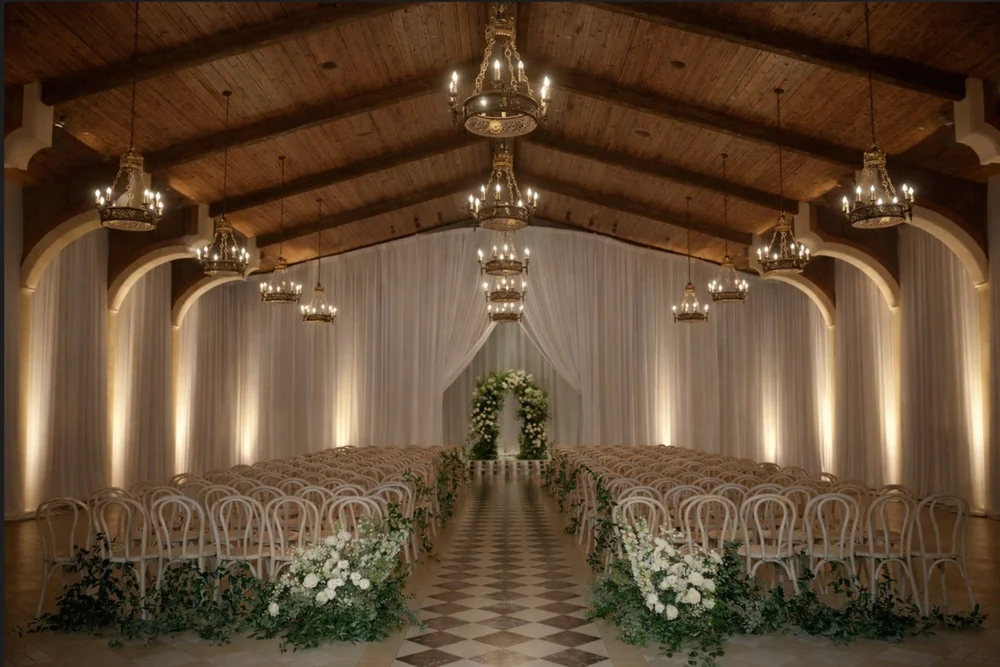
Deep purple and lavender create an elegant, luxurious atmosphere that looks stunning against white walls and draping. Navy blue and royal blue deliver a bold, sophisticated feel ideal for evening receptions and modern venues. Soft white and warm white are perfect for couples who want a clean, classic look without introducing color — this is especially popular at venues with beautiful existing architecture.
Matching Uplighting to Your Venue
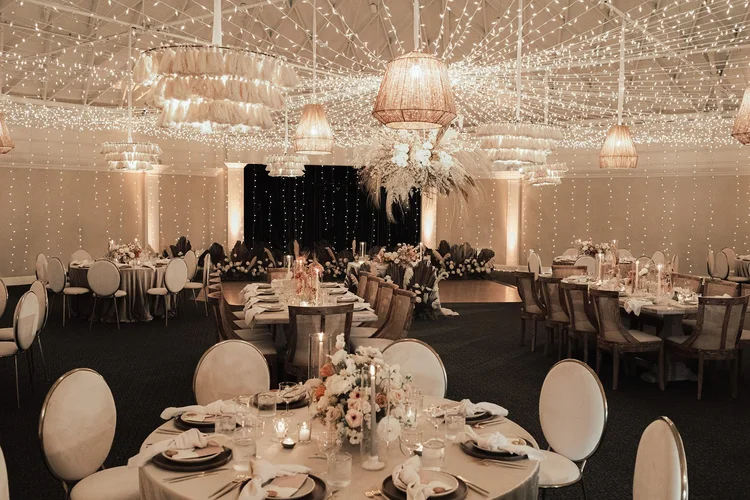
The color of your venue’s walls matters more than most couples realize. White and cream walls reflect uplighting accurately, so the color you choose is the color you’ll see. Darker walls, exposed brick, or wood paneling absorb light and mute colors, so you may need more fixtures or brighter settings to achieve the same impact. Your lighting designer should always do a site visit or review venue photos before recommending a final color plan.
How Much Does Wedding Uplighting Cost?
Wedding uplighting costs in San Diego typically range from $500 to $2,500 depending on several factors. The size of your venue is the biggest variable — a small reception space may need 12 to 16 fixtures, while a large ballroom or outdoor tent could require 30 or more. The number of fixtures directly affects pricing.
Other factors that influence cost include whether you want a single static color or programmed color changes throughout the evening, whether the fixtures need to be hidden behind decor elements, and whether your uplighting is part of a larger lighting package that includes pin spotting, string lights, or gobos. Most couples find that uplighting delivers one of the highest returns on their decor investment because it transforms the entire space rather than just a single focal point.
Uplighting Design Ideas for Your Wedding
Perimeter Wash
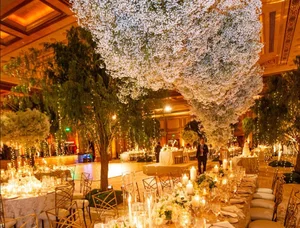
The most common uplighting design is a full perimeter wash, where fixtures are placed every six to eight feet around the entire room. This creates a consistent, immersive glow that completely transforms the space. A perimeter wash works particularly well in hotel ballrooms, banquet halls, and tented receptions where the walls or tent fabric become your largest design canvas.
Accent Lighting
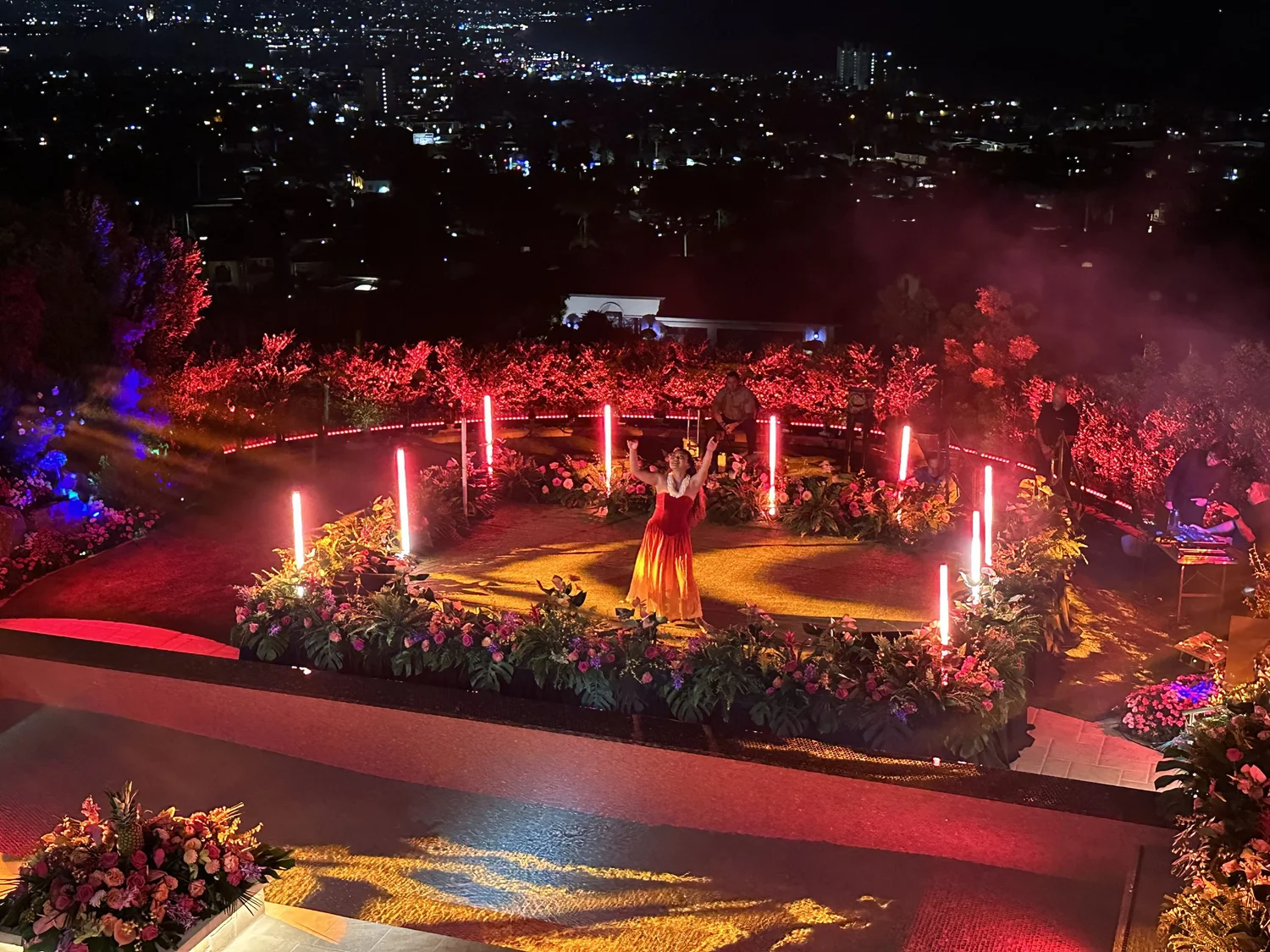
Rather than lighting the entire room, accent uplighting targets specific architectural features like columns, archways, alcoves, or textured walls. This approach creates dramatic focal points and works well in venues that already have interesting architecture, such as historic estates, wineries, and museum spaces.
Dance Floor Color Wash
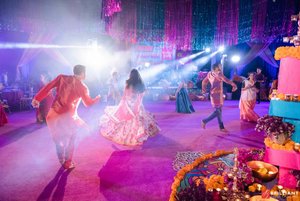
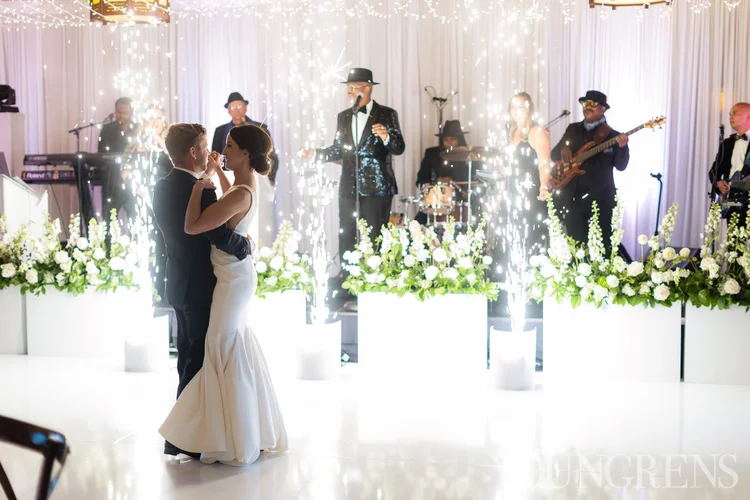
Concentrating uplighting around the dance floor creates an energetic, nightclub-inspired zone for the party portion of your reception. Many couples use softer colors during dinner and cocktails, then transition to bolder, more saturated hues when the dancing begins.
Uplighting for Outdoor Weddings
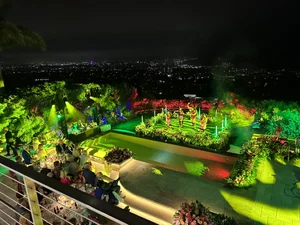
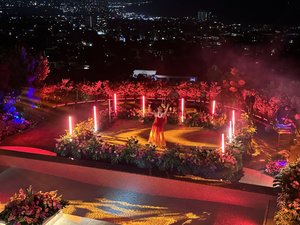
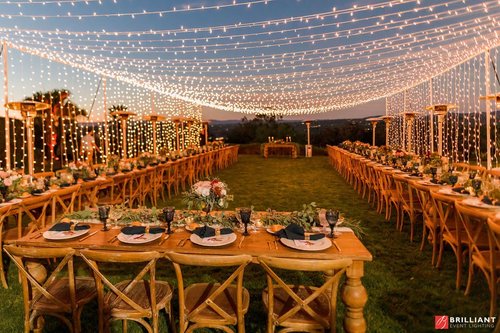
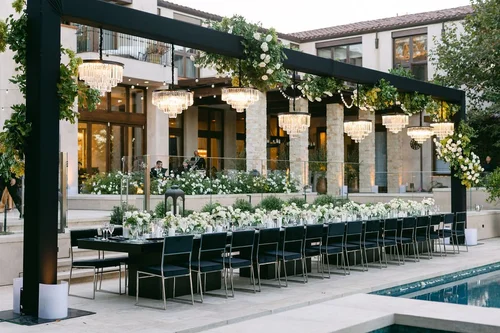
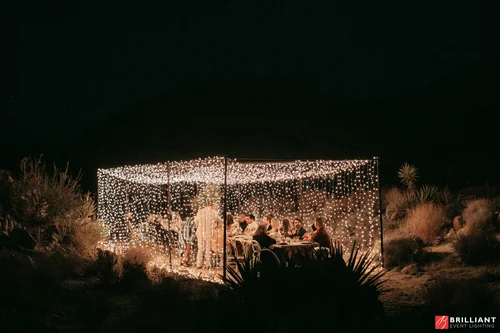
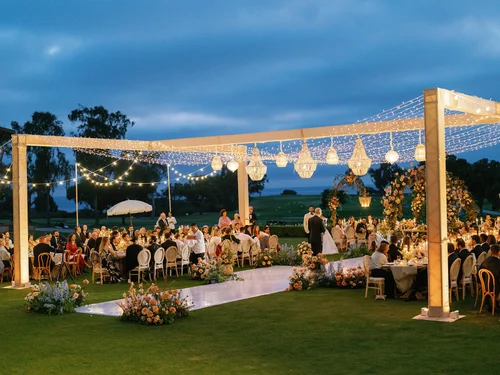
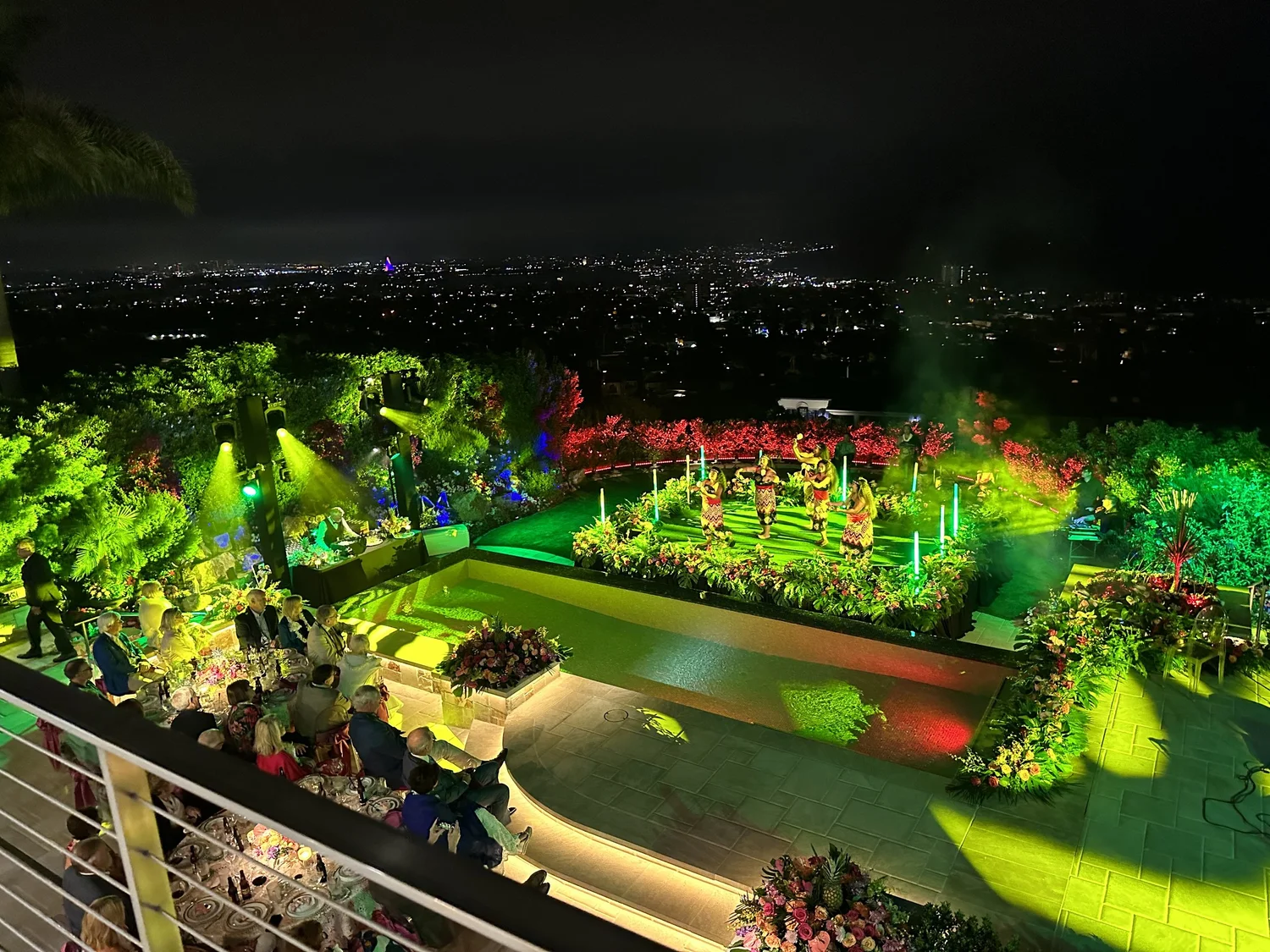
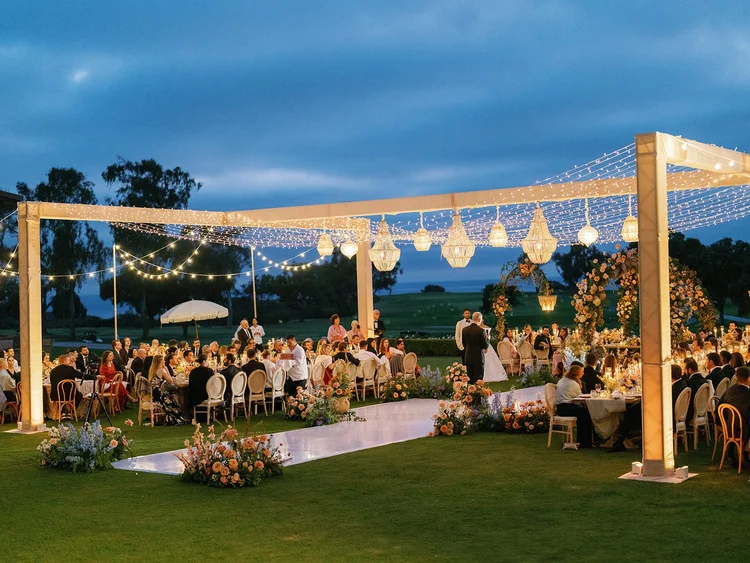
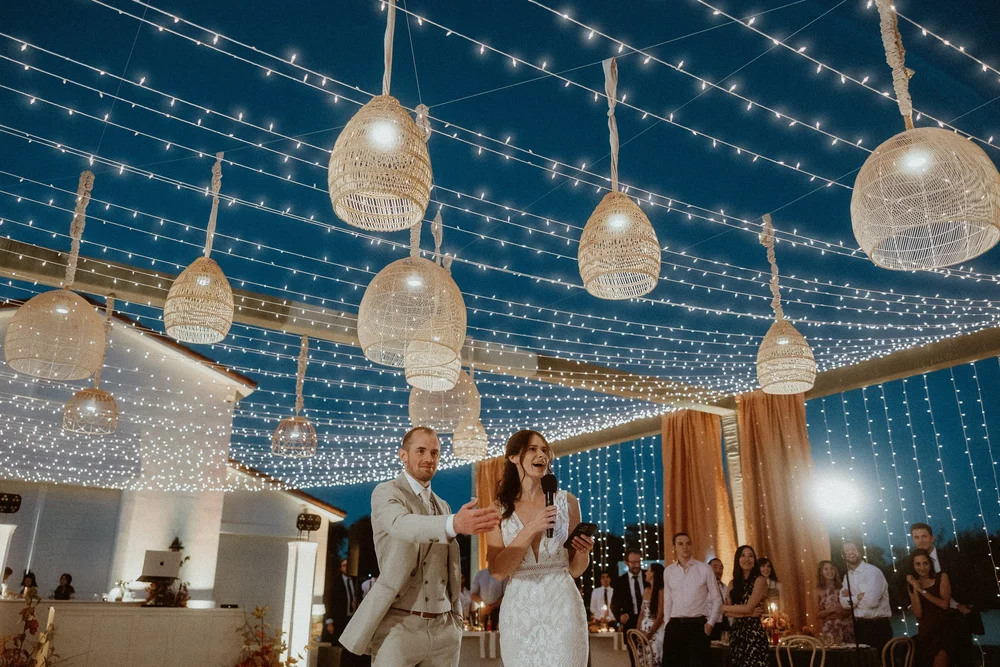
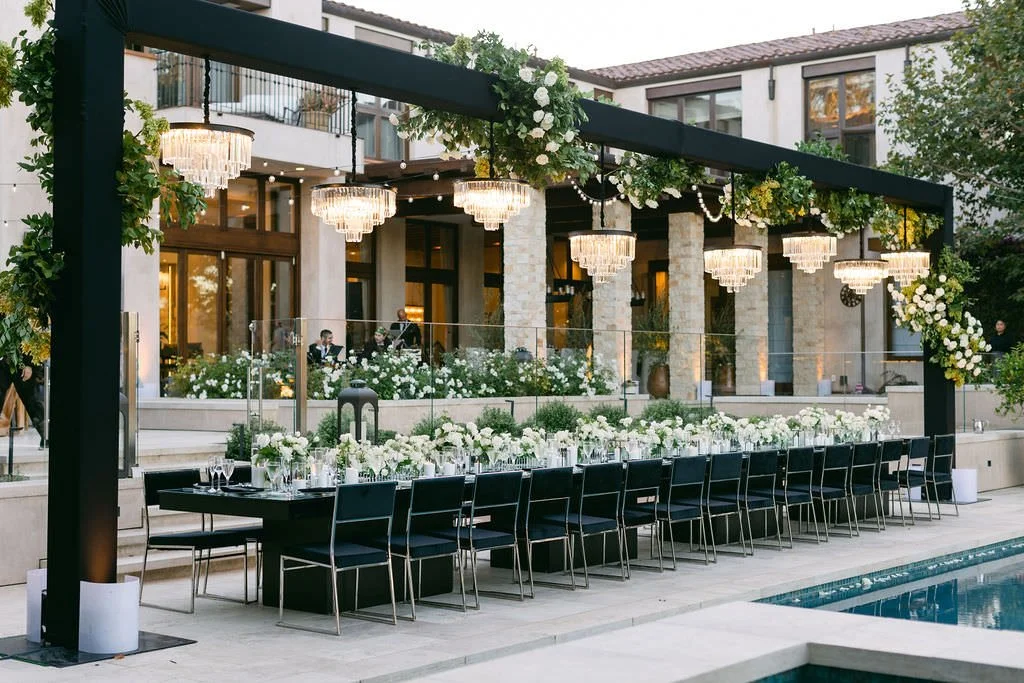
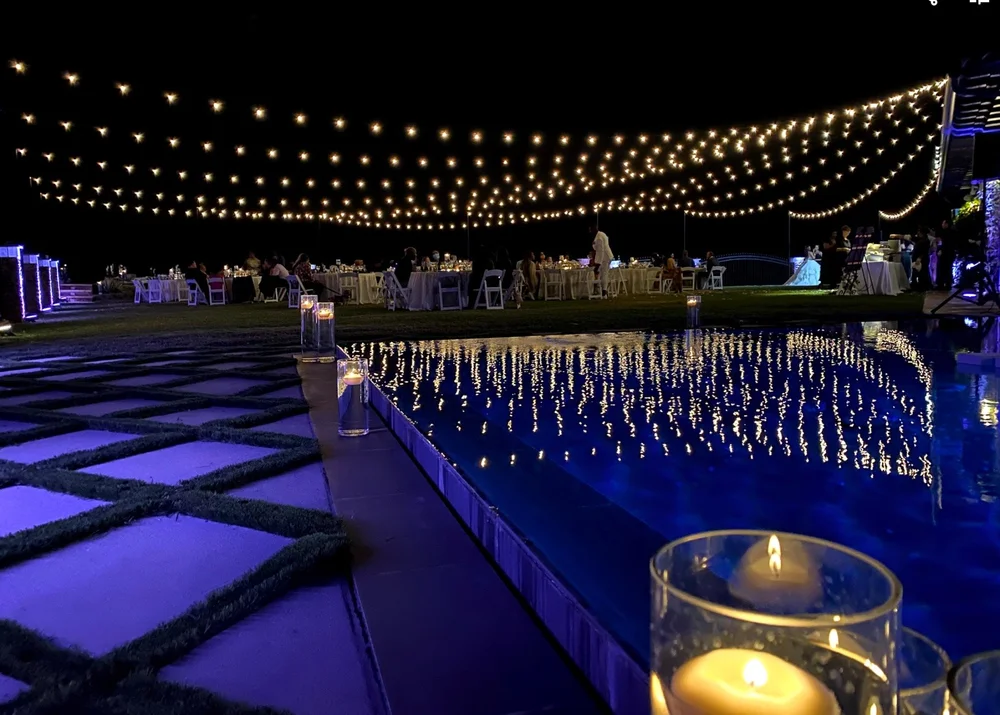
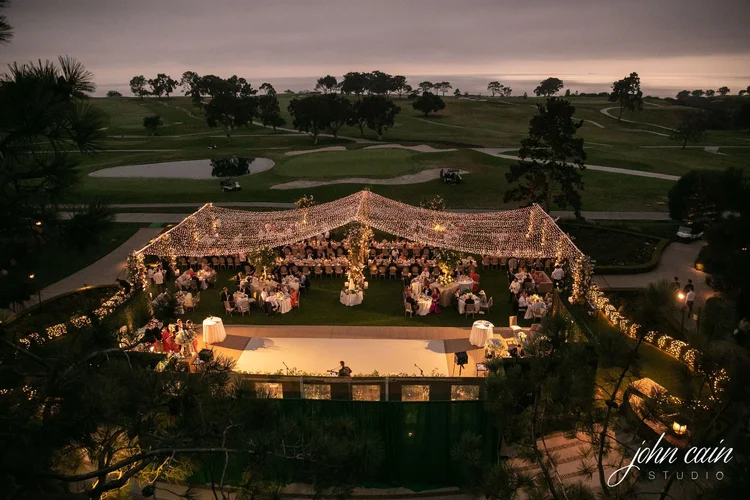
Uplighting isn’t limited to indoor venues. For outdoor weddings, uplights can wash tree trunks, garden walls, building facades, and tent poles in color. Battery-powered wireless LED fixtures make outdoor uplighting practical even in locations without nearby power outlets. The effect is especially striking at dusk and into the evening as natural light fades and the uplighting gradually becomes the dominant light source.
At outdoor San Diego venues like estate gardens, winery courtyards, and beachfront terraces, uplighting adds a layer of designed ambiance that distinguishes a professionally lit event from one relying solely on string lights or candles.
Why Professional Uplighting Makes a Difference
While DIY uplighting rental options exist, professional lighting design delivers a noticeably different result. A professional lighting designer considers your venue’s wall colors, ceiling height, natural light exposure, and overall design vision to create a cohesive plan. They use commercial-grade fixtures with accurate color rendering, and they handle all setup and programming so you and your planner can focus on everything else.
Professional uplighting also means on-site support during your event. If a fixture needs repositioning, a color change is requested, or a power issue arises, your lighting technician handles it in real time.
Get a Free Uplighting Quote for Your Wedding
Ready to transform your wedding venue with uplighting? Brilliant Event Lighting designs custom uplighting packages for weddings throughout San Diego, North County, Temecula, Orange County, Los Angeles, and the greater Southern California region. Contact us today at (760) 652-9939 or request a free quote online to discuss your vision and get a custom proposal for your wedding date and venue.