




















Wedding Lighting Cost in San Diego: What Drives the Price and How to Budget
Lighting is one of the few wedding line items that changes how every other investment looks. The florals, the venue architecture, the draping, and even the photography all depend on it. It is also one of the least understood parts of a wedding budget. If you have searched for wedding lighting cost in San Diego and found only vague answers, this guide explains what actually drives pricing, so you can build a realistic budget and ask better questions when you request quotes.
Why Wedding Lighting Cost in San Diego Varies So Widely
No two receptions need the same lighting package. A couple hosting 80 guests in a ballroom at a resort in Carlsbad has very different needs from a couple hosting 200 guests in a tented estate in Rancho Santa Fe. Wedding lighting cost in San Diego depends on the size of the space, the amount of equipment required, the labor to install and strike it, and the complexity of the design. Any quote that does not account for those variables is a guess.
The most useful way to think about pricing is as a combination of fixtures, power and infrastructure, and labor. Understanding each one makes it much easier to compare proposals fairly.
The Main Factors That Shape Your Lighting Budget
Venue Size and Layout
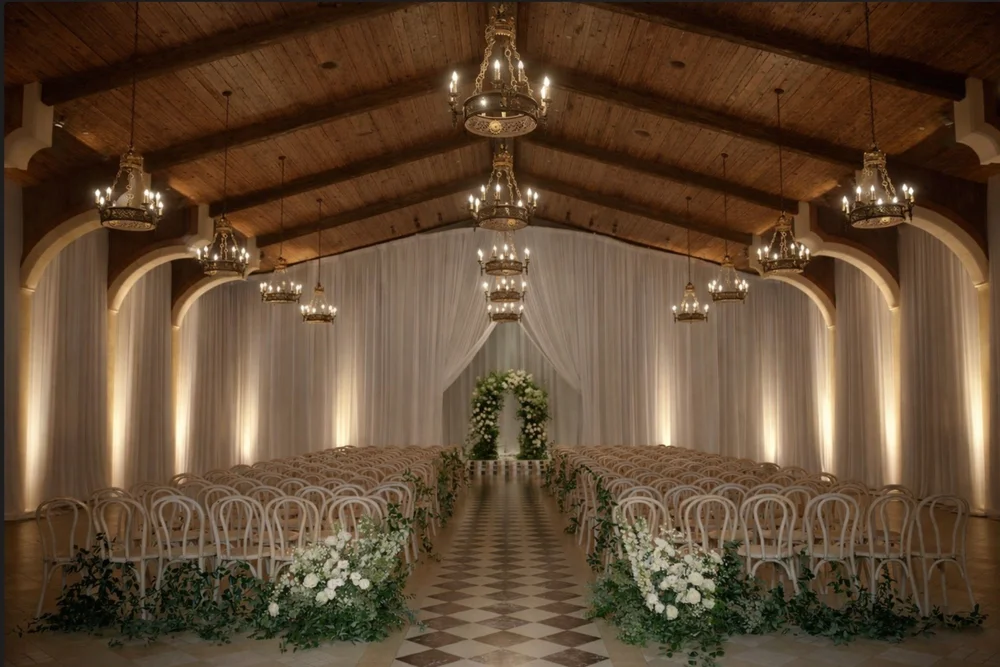
Larger rooms and open-air spaces need more fixtures to achieve the same effect. A ceremony, cocktail hour, and reception in three different areas means three separate lighting plans, not one. Ceiling height matters as well. A venue with a 30-foot ceiling requires more powerful fixtures and often rigging, while a low-ceiling ballroom may need only simple uplighting to wash the walls.
Type of Lighting
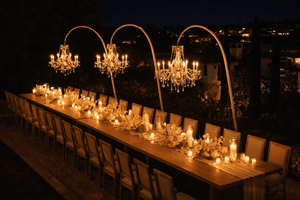
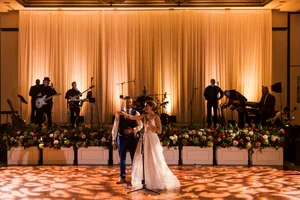
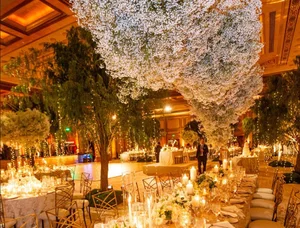
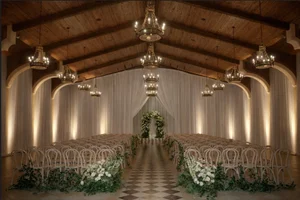
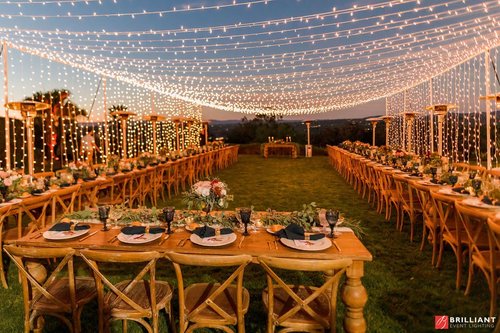
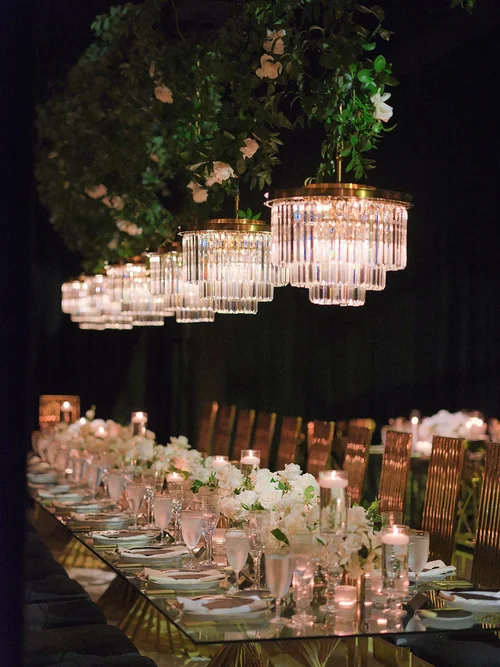
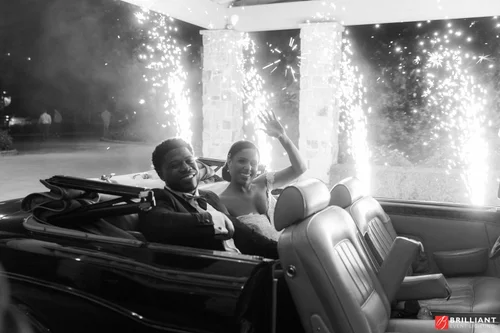
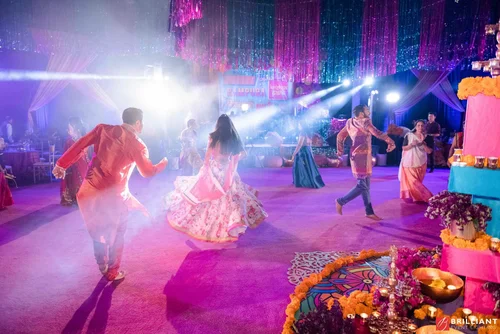
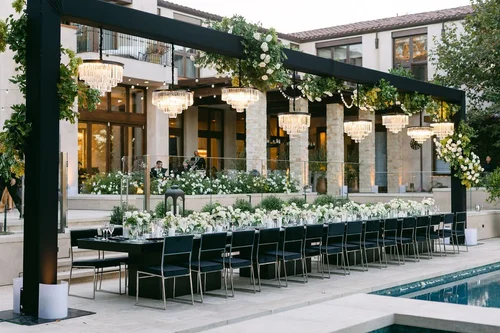
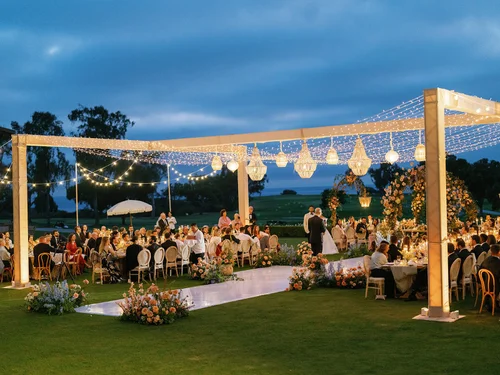
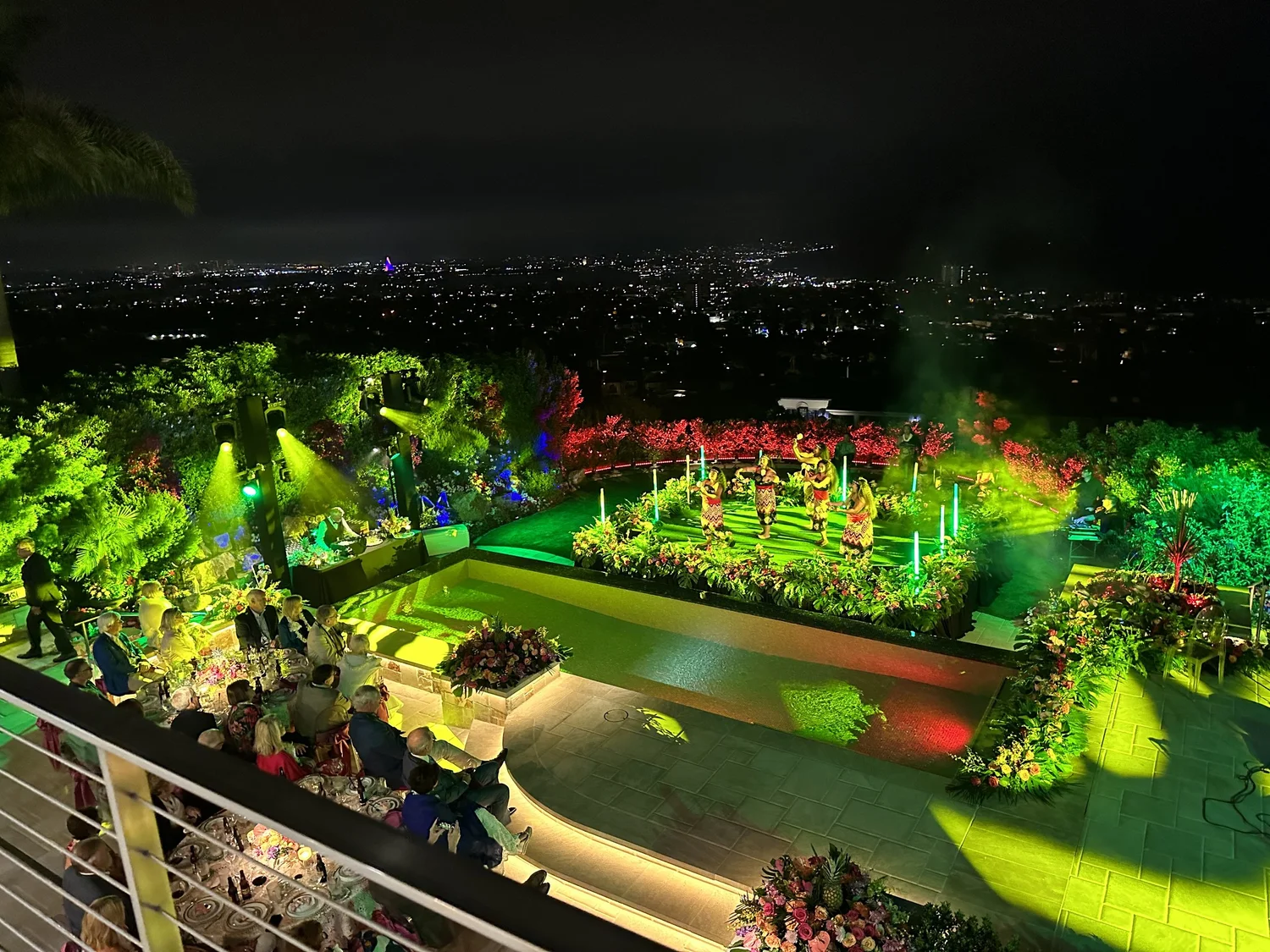
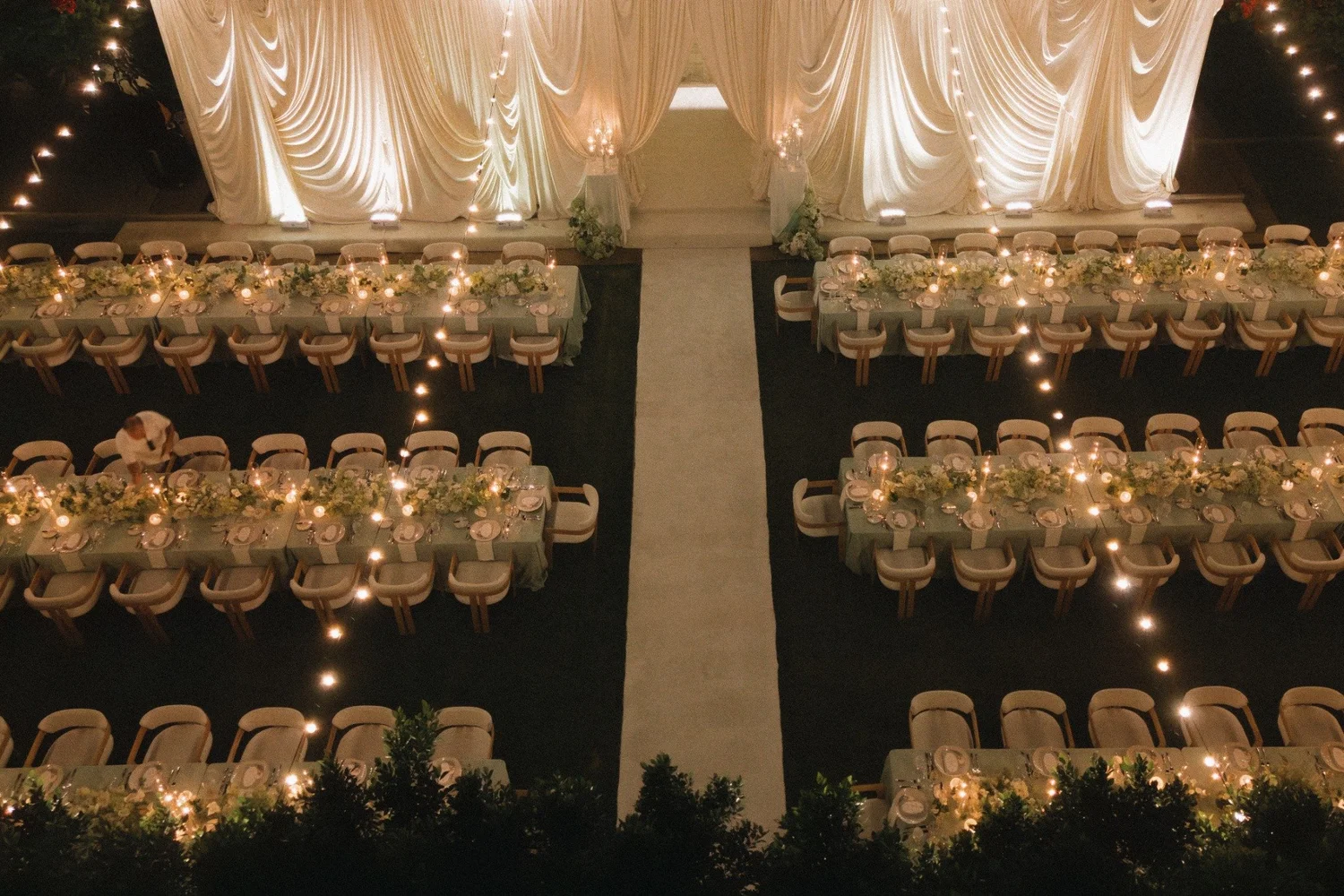
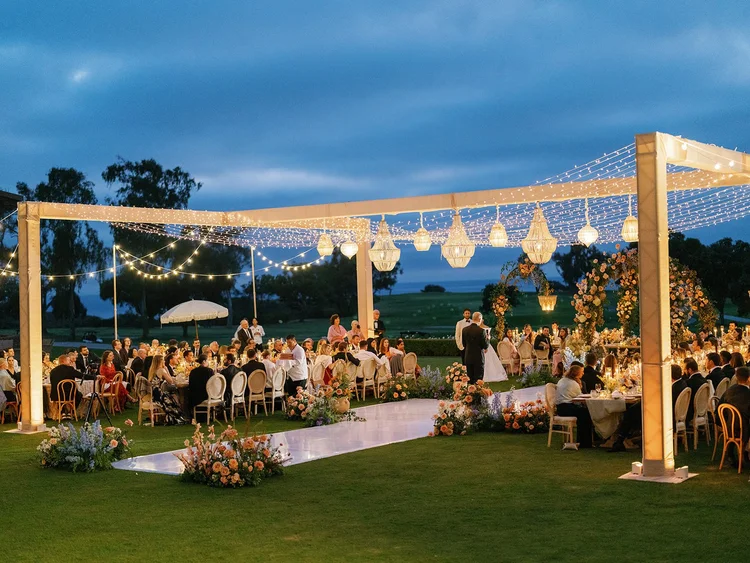
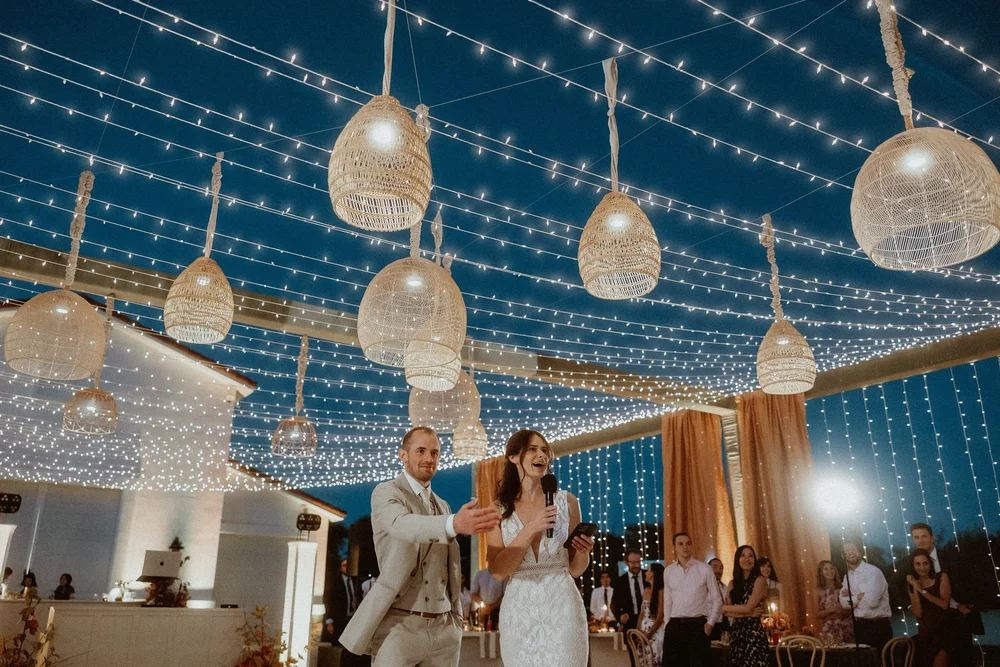
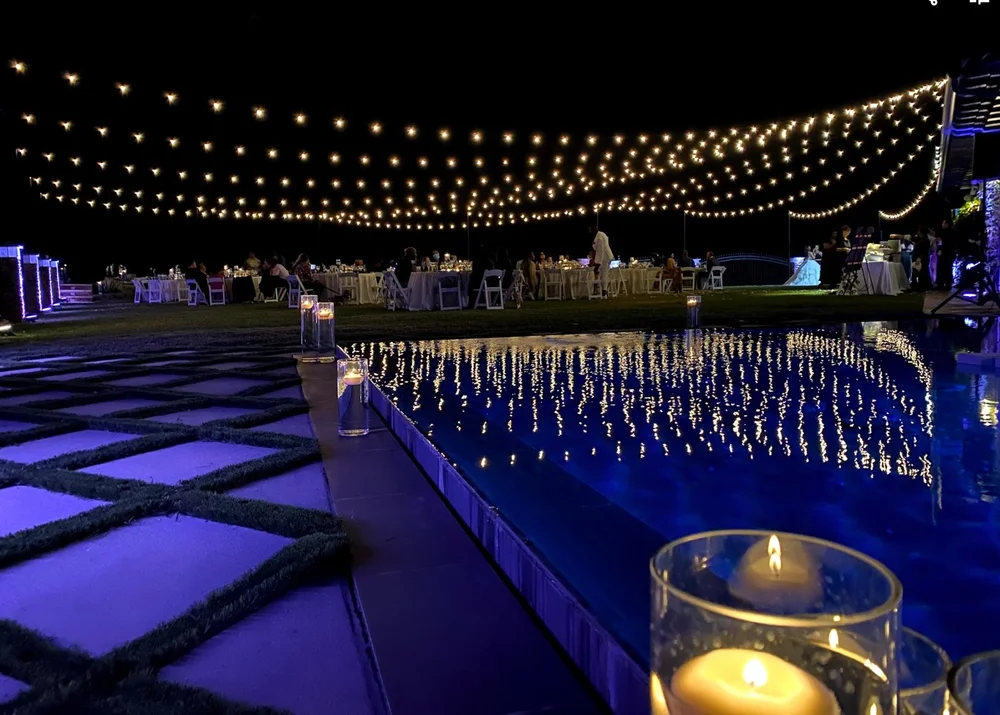
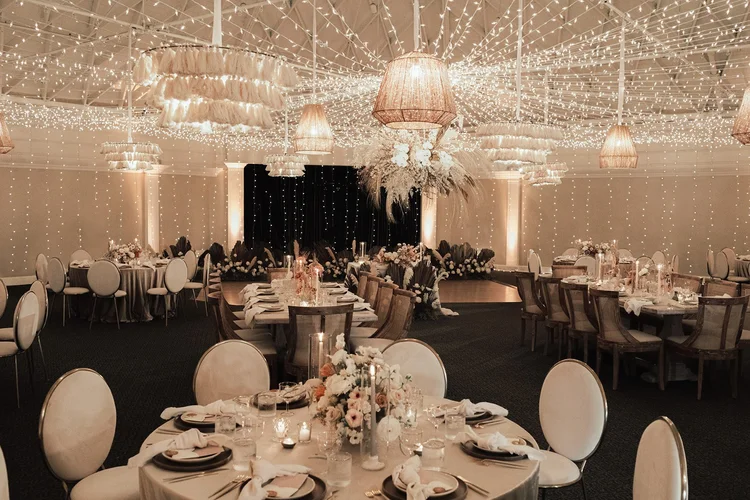
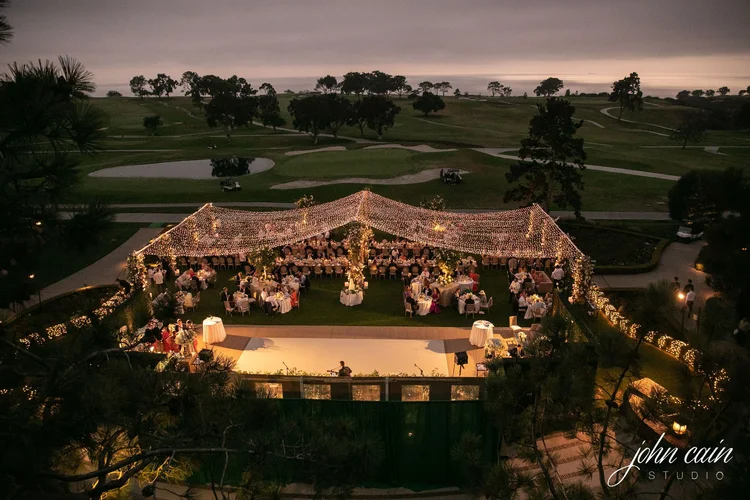
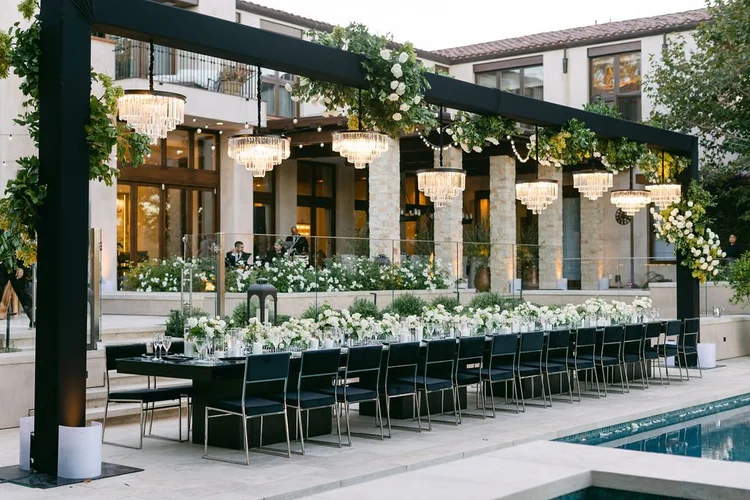
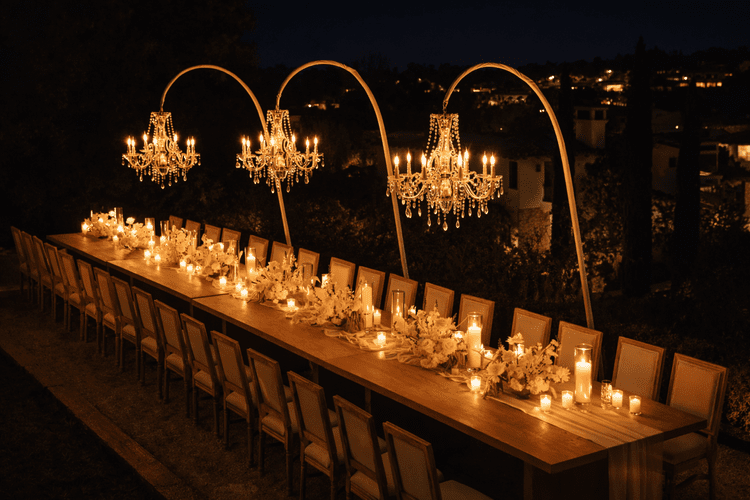
Basic wireless uplighting is the most approachable starting point and is typically the most affordable way to add color and warmth to a room. From there, the options scale up: pin spotting for centerpieces, custom gobo monograms, string lighting canopies, chandeliers, dance floor effects, and architectural lighting for tents and trees. Each layer adds equipment and design time, but each also adds a distinct visual result. Our guide on pin spot lighting versus uplighting explains when each one earns its place.
Power and Infrastructure
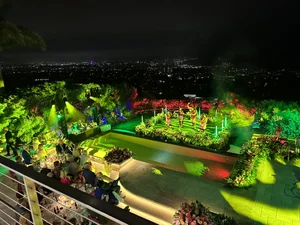
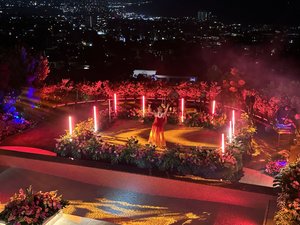
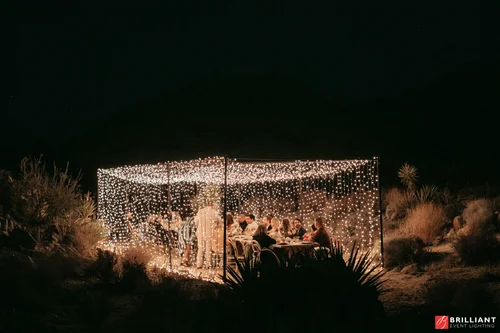
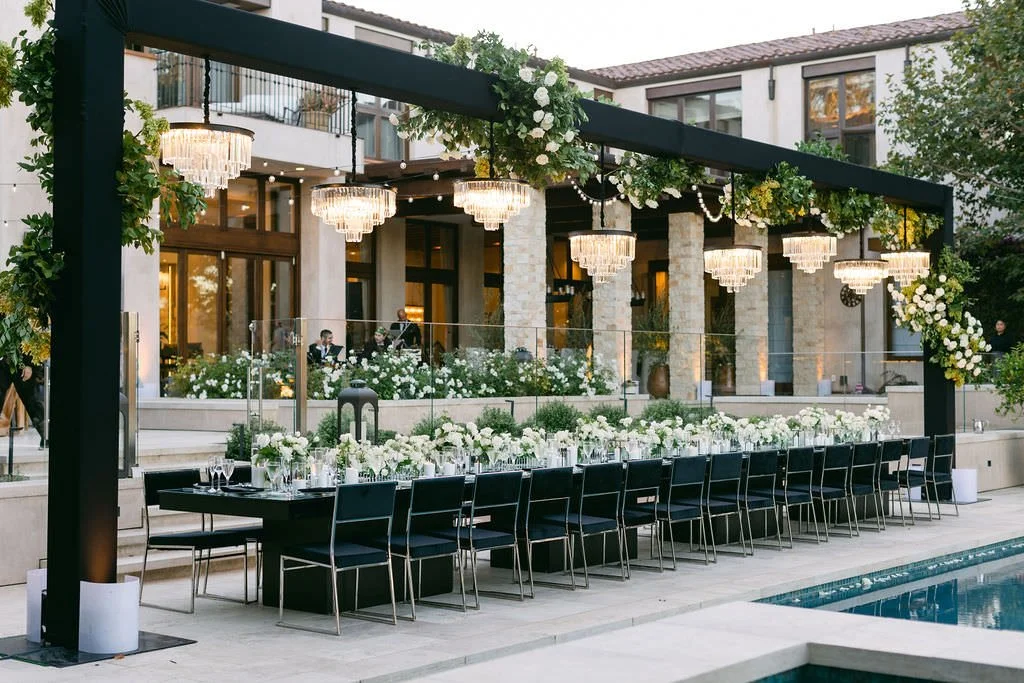
Outdoor and non-traditional venues often require generators, distribution, and cable management that a hotel ballroom already has built in. Estates, wineries, and backyards are beautiful, but they are also where hidden power costs appear. A reliable lighting vendor will survey the site early and tell you exactly what is needed rather than discovering the problem on event day.
Rigging and Ceiling Treatments
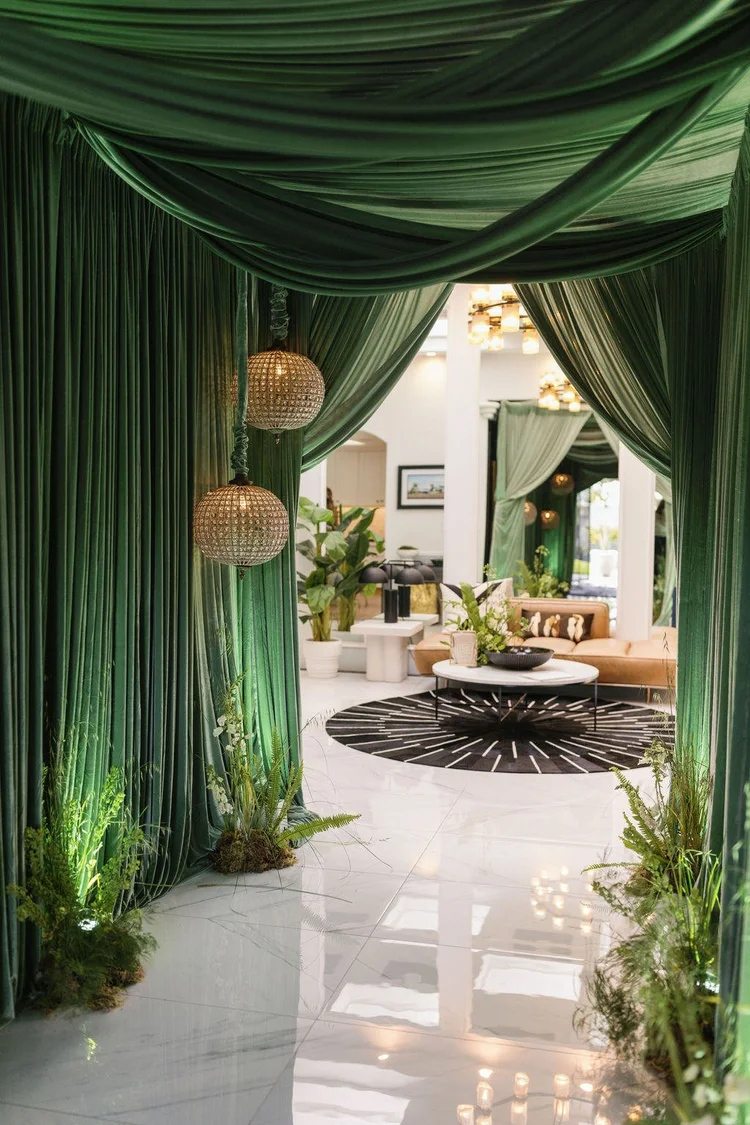
String light canopies, ceiling draping, and hanging installations require trained riggers, load calculations, and safe attachment points. This is skilled labor and a safety matter, which is why it should never be treated as a place to cut corners. Many venues in Southern California also have specific rules about what can be hung and who may do it.
Labor, Timing, and Access
Setup windows are often tight. If a venue only allows a few hours of load-in before guests arrive, more crew members are needed to finish on time. Late-night strikes, long travel distances, and difficult load-in routes such as stairs or long carts across a lawn all influence the labor portion of a quote.
Where to Spend and Where to Save
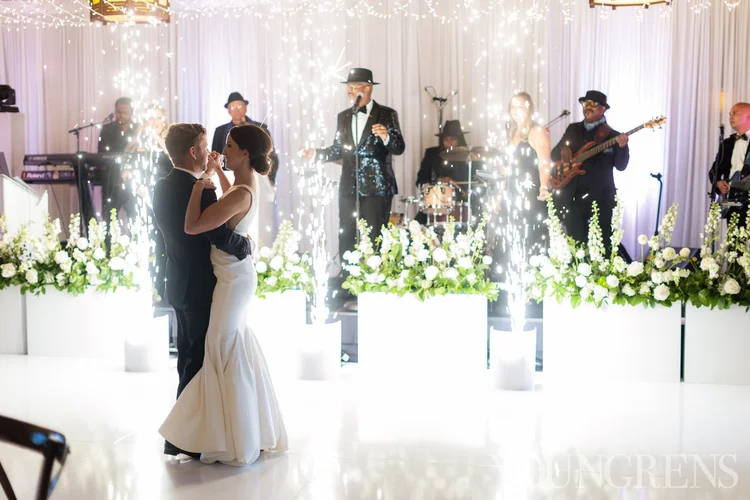
Not every lighting element has the same return. If your budget is limited, prioritize the elements guests will notice and photographers will use. Warm uplighting that washes the walls and softens the room, pin spots that make centerpieces glow, and a well lit dance floor tend to deliver the most visible impact for each dollar spent.
Savings usually come from simplifying the design rather than lowering quality. Choosing one strong feature, such as a monogram on the dance floor or a lit ceiling treatment, often looks more intentional than spreading the budget across many small effects. Bundling lighting with draping or staging from the same company can also reduce duplicated labor and coordination.
Questions to Ask Before You Accept a Quote
Ask what exactly is included, and whether delivery, installation, a technician on site, and strike are part of the price. Ask whether the quote assumes the venue provides power, and what happens if it does not. Ask how many hours of setup are planned and what the plan is if the venue access window changes. Finally, ask to see photos of similar events at your venue or at comparable ones. Experience at the specific location is one of the best predictors of a smooth load-in.
It also helps to ask who will be on site during the event. A dedicated technician who can adjust lighting as the evening shifts from dinner to dancing is part of what separates professional production from simple equipment rental.
Plan Early to Protect Your Budget
Booking your lighting early gives you more design choices and more room to adjust the plan as other decisions are finalized. Peak wedding dates in San Diego, particularly Saturdays in spring and fall, fill quickly. Early conversations also let your production team coordinate with your planner, florist, and venue so that nothing is added at the last minute at a premium.
Request Your Free Estimate
Every wedding is different, and the most accurate way to understand your lighting investment is to talk through your venue, guest count, and vision. Brilliant Event Lighting provides event lighting, draping, staging, and production for weddings and events across Southern California. Request a free estimate at brillianteventlighting.com/estimate and we will help you build a lighting plan that fits your celebration and your budget.